
National Issues
2026: Budgeting Is Not Enough; Releasing Funds Is the Real Test For Police Reform -By Adewole Kehinde
The Nigeria Police Force is actively pursuing reforms to enhance transparency and accountability, but significant hurdles remain. Overcoming them will require sustained political will, robust internal oversight, deeper public engagement, and the consistent, effective prosecution of misconduct.

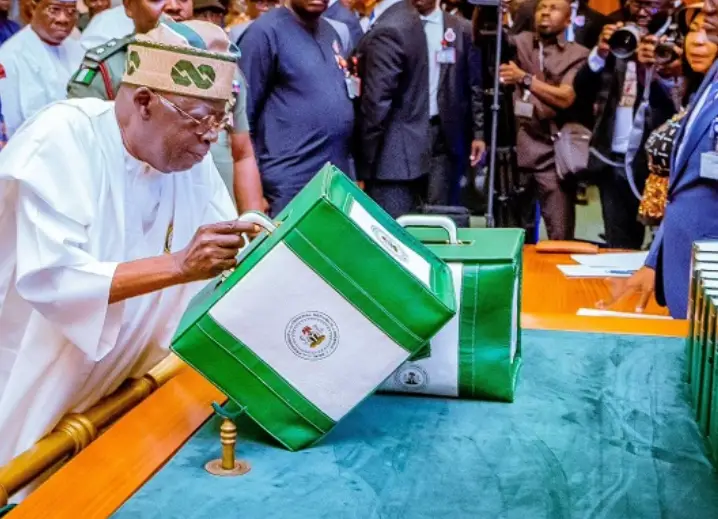
President Bola Ahmed Tinubu’s 2026 budget proposal sends a clear signal about the administration’s priorities. With ₦5.41 trillion allocated to defence and internal security, the largest sectoral allocation, the government has framed national security as the foundation for economic recovery, political stability, and democratic credibility.
Within this broad envelope lies the fate of the Nigeria Police Force, whose effectiveness in 2026 will shape not only everyday safety but also the integrity of the 2027 general elections, for which campaigns are expected to begin this year.
Yet budgeting alone is not reform. The decisive issue for the Nigeria Police in 2026 is not merely how much is appropriated, but whether budgeted funds are released on time and in full to execute focused, results-driven projects.
This year is critical. Delays, partial releases, or administrative bottlenecks would undermine carefully designed security plans at a moment when the country can least afford institutional hesitation.
The government’s stated security objectives, resetting the national security architecture, prioritising intelligence-driven policing, and treating armed groups as terrorists, require a police force that is modern, mobile, and technologically enabled.
Accordingly, police focus areas in 2026 must include modernising the Force, deepening intelligence-led policing, strengthening border security in collaboration with sister agencies, and deploying technology for surveillance, data analytics, and rapid response. These are capital- and training-intensive priorities that cannot be achieved solely on paper.
The security environment underscores the urgency. Banditry, kidnapping, and insurgency remain persistent threats across multiple regions, straining public confidence and economic activity. As Nigeria edges closer to the 2027 elections, political campaigns, often flashpoints for tension, will intensify in 2026.
A well-funded and operationally ready police force is indispensable to preventing violence, protecting political rights, and ensuring that elections are credible and peaceful.
Properly released police funding will go a long way toward professionalising the Force. It will support continuous training, specialised operations, logistics, and welfare, key ingredients for a disciplined, motivated, and impartial police service. Intelligence units require modern tools; investigators need forensic capacity; officers on election duty must be trained, equipped, and insulated from undue influence. None of this is possible if appropriations remain trapped in bureaucratic limbo.
That said, funding must walk hand in hand with accountability. Transparency and accountability in the Nigeria police force remain ongoing challenges, shaped by historical mistrust, corruption, and abuses of power. Important strides have been made through legal reforms, most notably the Police Act 2020, alongside internal restructuring, community policing initiatives, and the adoption of technology to improve oversight and complaint handling.
These efforts have begun to strengthen mechanisms for investigating misconduct and rebuilding public trust.
Under the leadership of the Inspector-General of Police, Kayode Egbetokun, tangible steps toward accountability have been recorded, including disciplinary action against erring officers, reinforced internal controls, and expanded training opportunities aimed at professionalism.
As 2026 unfolds, the message is straightforward: allocate, release, and account. Nigeria’s security ambitions, particularly for the police, will succeed only if funding is promptly released, projects are executed with discipline, and accountability mechanisms are enforced without fear or favour.
The Nigeria Police Force is actively pursuing reforms to enhance transparency and accountability, but significant hurdles remain. Overcoming them will require sustained political will, robust internal oversight, deeper public engagement, and the consistent, effective prosecution of misconduct.
In a year as pivotal as 2026, Nigeria cannot afford half-measures. The budget has spoken; now implementation must deliver.
Adewole Kehinde is a public affairs analyst based in Abuja. 08166240846. kennyadewole@gmail.com @kennyadewole


Why African Leaders Must Fix Governance Before Crying Sovereignty -By Isaac Asabor
One of the great contradictions of African leadership today is selective morality. Leaders speak passionately about international law while violating...


Baba Has Entered The Classroom -By Isaac Asabor
If what Trump is doing is walking into a noisy global classroom and insisting on discipline, then let us be...


As Trump Exposes Why Tinubu Must Go Sooner -By SKC Ogbonnia
The Nigerian president is not only culpable of heinous crimes, but he is also weakened beyond redemption. His continued stay...


How Lavrov’s Philosophy of “Ubuntu” Reflects on the Level of Africa’s Media Presence in Russia -By Kestér Kenn Klomegâh
The December 19–20 Ministerial Conference reaffirmed commitments to fully implement the Russia–Africa Partnership Forum Action Plan (2023–2026), adopted at the...
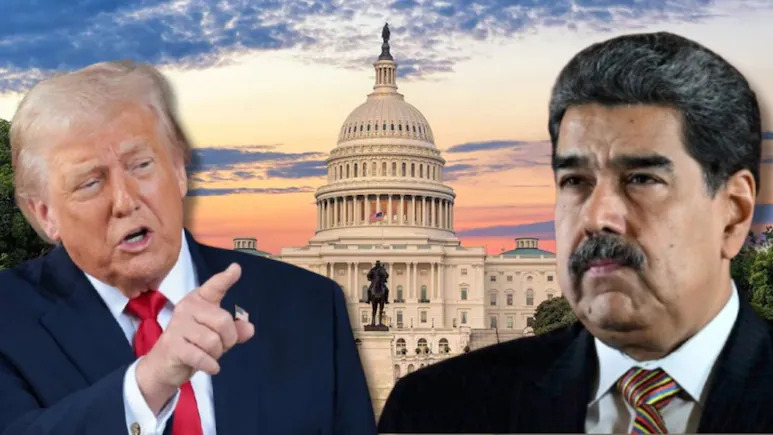
Why Trump’s Move Against Maduro Makes Sense -By Isaac Asabor
Trump’s decision also invites other nations to step up, to reconsider their passive complicity in the face of egregious abuse....