
Political Issues
2027: Asiwaju and the Dynamics of Political Authority -By Patrick Iwelunmor
The rise of the African Democratic Congress highlights how alternative platforms gain traction when citizens feel unrepresented. Parties such as the ADC become visible precisely when established forces appear unresponsive to pressing socioeconomic concerns. Local disputes and political crises, including tensions witnessed in Rivers State in 2026, have amplified public frustration and provided openings for opposition narratives.

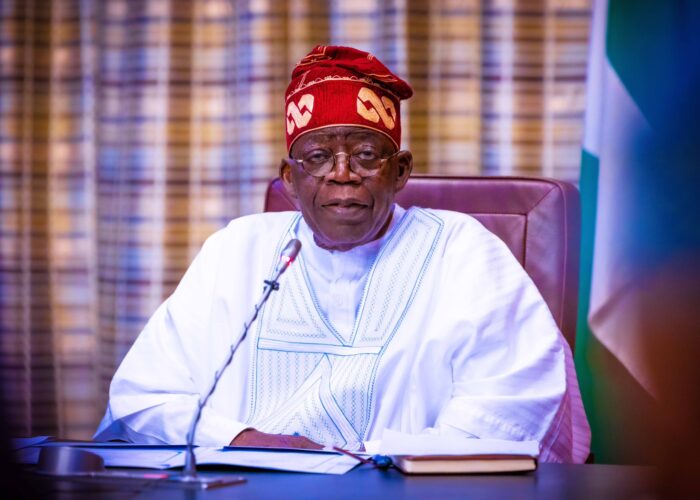
A humane political imagination is rarely shaped by ideology alone. It is formed through disciplines that insist on restraint, moral attentiveness, and engagement with the realities of those governed. Literature, in particular, resists the comfort of certainty. It reminds those in power that dominance is not permanence, that numbers do not exhaust meaning, and that silence cannot be assumed to signify consent. Across centuries and continents, literary works demonstrate that authority becomes fragile when it mistakes dominance for legitimacy. From this vantage, Nigeria’s political moment in January 2026 and the role of Asiwaju Bola Ahmed Tinubu within it deserve careful attention.
Few figures in Nigeria’s recent history have displayed mastery of political organisation comparable to Tinubu. His career reflects a sophisticated understanding of coalition building, timing, and institutional leverage. Yet mastery carries its own temptation. In Shakespeare’s Julius Caesar, Caesar’s downfall arises not from weakness but from his confidence in inevitability. He dismisses caution as superstition and assumes loyalty is permanent, mistaking affirmation for invincibility. Power falters when it stops listening.
Nigeria’s democratic experience reflects this insight. Governments have often risen on numerical strength only to struggle with moral authority once in office. The current dominance of the All Progressives Congress, which governs most state administrations, is widely interpreted as a sign of certainty ahead of the 2027 elections. To supporters, this reflects political skill; to critics, it may appear as unchecked self-assurance. Both readings risk obscuring a deeper truth: legitimacy remains contingent on how citizens perceive and respond to governance.
Political defections have long been a part of Nigeria’s democratic cycle, with officeholders drawn toward incumbency by access and influence. What distinguishes the present moment is how ordinary Nigerians experience governance amidst economic stress. For many, daily life is marked by elevated prices. Official data show that annual headline inflation remained elevated at 14.45 per cent in November 2025, reflecting persistent cost pressures that are most acutely felt in food and essential goods markets.¹
These economic pressures coincide with withdrawal from formal politics. The 2023 presidential election recorded one of the lowest voter turnouts since the return of democracy, with only about 26.7 per cent of the roughly 93.5 million registered voters participating.² This pattern shows that procedural participation alone does not signify broad civic confidence. Economic hardship and political disillusionment can compound voter withdrawal.
Trust in key democratic institutions remains fragile. According to Afrobarometer, only 23 per cent of Nigerians trust the Independent National Electoral Commission to some extent, while 78 per cent express little or no trust at all.³ This pervasive scepticism underscores a wider public detachment from political processes that cannot be ignored when assessing claims of authority.
The rise of the African Democratic Congress highlights how alternative platforms gain traction when citizens feel unrepresented. Parties such as the ADC become visible precisely when established forces appear unresponsive to pressing socioeconomic concerns. Local disputes and political crises, including tensions witnessed in Rivers State in 2026, have amplified public frustration and provided openings for opposition narratives.
Leaders at the highest levels must rise above such disputes, demonstrating that governance aligns with public interest rather than elite convenience. Empathic engagement with citizens, addressing everyday concerns, and demonstrating accountability can reduce the space for alternatives like the ADC to gain traction. Tinubu’s ability to sustain legitimacy therefore depends not only on coalition management but also on convincing Nigerians that the ruling party is attentive and morally invested in their welfare.
Public opinion data further reinforce this perspective. Afrobarometer findings show that 69 per cent of Nigerians believe the country needs many political parties to ensure real choice, indicating widespread appetite for representing diverse interests rather than imposed certainties.⁴ Such sentiments reflect a broader demand for responsiveness and inclusion in governance.
Tinubu’s supporters rightly emphasise his capacity for building alliances. Yet strategy has limits when it is not coupled with empathetic engagement. A political class that appears closed and self referential risks reinforcing the perception that governance has become an elite conversation. In a society where trust in institutions is fragile, public perception carries as much weight as procedural authority.
Historical and literary examples offer further guidance. Shakespeare warns that overconfidence blinds even the most capable. Chinua Achebe illustrates in Things Fall Apart how rigidity in leadership erodes authority when societal expectations shift and leaders fail to read changing moral landscapes. For Tinubu, these lessons translate into practical imperatives: ensure that coalition management and institutional influence are complemented by visible responsiveness, ethical conduct, and substantive engagement with ordinary Nigerians.
Ultimately, the central question is not whether Tinubu’s political architecture can secure victory in 2027 but what kind of mandate such a victory would carry. A triumph achieved without attentiveness to citizens’ concerns risks hollowing out the democratic spirit. Leaders must engage their electorate empathetically, address grievances that fuel the appeal of parties like the ADC, and detach themselves from political dramas that undermine public confidence. Doing so strengthens moral legitimacy and reinforces the perception that governance serves the public good rather than narrow interests.
As January 2026 progresses toward the next general elections, strategic choices will continue to shape the ruling party’s direction. The greater uncertainty lies with an electorate that is less predictable and increasingly distant. History and literature teach the same lesson: authority that assumes permanence too soon risks discovering its fragility too late. Across time and place, those who listen, adapt, and remain attentive to the realities of the people they govern are most likely to endure.
References
1. Nigeria inflation data, Trading Economics, November 2025.
2. Registered voter turnout, 2023 Nigerian presidential election.
3. Afrobarometer trust data, “Nigerians want competitive elections but do not trust the electoral commission.”
4. Afrobarometer survey on political parties and choice.



The Pragmatism of Principle: Redefining Loyalty in an Age of Change -By Florence Ozor
While I do not endorse political nomadism, one must acknowledge that strategic realignment can be expedient. Take Peter Obi: after...


Lessons for Today: MLK for Continental African Leadership – A Psychoafricalytic Mirror for Power, Dignity, and Continental Renewal -By Psychologist John Egbeazien Oshodi
When African leaders abandon indigenous wisdom, they often adopt the colonial logic of control. Citizens become subjects. Protest becomes treason....


The Poverty Crisis: A Global Challenge to Human Dignity and Development -By Jennifer Joab
The poverty crisis is not just an economic problem but a profound human tragedy that affects the social, political, and...

Good Governance as a Tool for National Development -By Blessing Matthew
Good governance prioritizes the interests and welfare of the people above personal or sectional interests. It encourages transparency, accountability, rule...


Role of Youths in Nation Building -By Kusompwa Lazarus Motiyedi
It is true that today’s youth did not experience the horrors of the Nigerian Civil War or the severe economic...