
Forgotten Dairies
2027 Elections: Gombe Between a Rock and a Hard Place -By Abdul Musa
If caution and foresight are abandoned, the confusion that once drove voters en masse into the APC could repeat itself in 2027. Citizens may be deeply dissatisfied with the ruling party, yet still find themselves unable to embrace the opposition due to the absence of a compelling alternative.

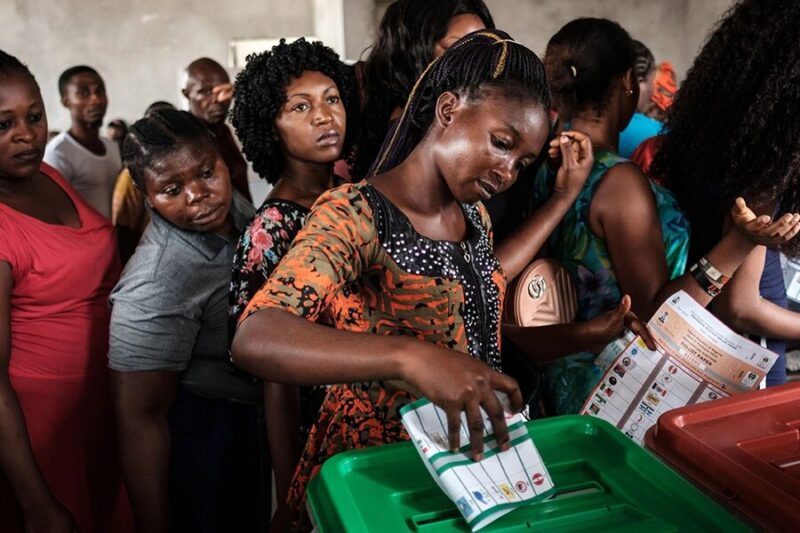
There is no denying the fact that Governor Inuwa Yahaya has alienated a significant number of people. Public resentment against his administration has deepened, and there is a growing determination among sections of the electorate to punish him politically—either by rejecting his anointed candidate or by withholding votes should he contest for the Gombe North Senate seat.
However, an uncomfortable truth is often ignored in this conversation.
Let us ask a critical question: within the APC today, who genuinely commands such overwhelming grassroots support that Governor Inuwa Yahaya would fear denying them a ticket? Who possesses a people-driven political base strong enough to spark resistance if sidelined? Not federal backing, not external influence—but raw popularity among ordinary people, from Jigawan Nafada to Filiya/Nyuar, from Wore-Dole to Maisaje.
Who built such a support base in Gombe State?
The honest answer is unsettling: there appears to be no such figure.
This reality explains the deep political dilemma confronting the people of Gombe as the 2027 elections approach. If citizens fail to think strategically, whatever Governor Inuwa Yahaya or the APC leadership decides may simply become inevitable. May Allah protect the collective destiny of the state from reckless political adventurism.
Ordinarily, the opposition should serve as a counterweight—strong enough to check the excesses of the ruling party and force accountability. But the opposition in Gombe today inspires little confidence.
The PDP, for all practical purposes, is politically dead in the state—its corpse unburied, but lifeless. Many of its elite figures have refused to properly migrate to the ADC or unite under a common platform. Instead, they continue to operate in ways indistinguishable from APC loyalists. Yet, they will still field candidates, not to win, but to fragment opposition votes. This alone confirms that the opposition front going into 2027 is dangerously divided.
The ADC itself is not immune from crisis. It lacks cohesion, discipline, and the strategic consolidation that once propelled the APC to dominance. Early expectations that figures like Isa Ali Pantami or Bala Bello Tinka could galvanize mass support have yet to materialize. Neither has fully committed to the ADC, though Bala Bello Tinka may still emerge later.
As for Pantami, considering the recent EFCC action against Abubakar Malami, SAN, and persistent reports of Malami being assigned a “special role” by the President, one must honestly ask: how realistic is Pantami’s entry into ADC politics in the near future?
Then there is Danbarde within the ADC. Realistically, how many politicians would abandon an Inuwa-backed candidate to work for him, given his long-standing conflicts with political actors and the self-inflicted reputational damage he suffered during the 2023 elections?
When weighed against potential APC candidates—such as Minister and Senator Saidu Alkali, Yunusa Yakubu, Sardauna, Aminu Yuguda, or whoever Governor Inuwa eventually endorses—it is difficult to argue that Danbarde enjoys broader acceptance, either in character, temperament, or political relationships.
What Gombe urgently needs is a firm, courageous, and credible opposition—if only to compel the ruling party to act responsibly and offer better leadership choices.
If the APC faces no real threat of internal revolt or electoral backlash regardless of the governor’s decisions, and the opposition fails to present a united front with a widely acceptable candidate, then the future of the electorate becomes bleak.
Gombe is truly at a crossroads.
If caution and foresight are abandoned, the confusion that once drove voters en masse into the APC could repeat itself in 2027. Citizens may be deeply dissatisfied with the ruling party, yet still find themselves unable to embrace the opposition due to the absence of a compelling alternative.
In the end, the people risk being trapped between two undesirable options—choosing not the best candidate, but merely the lesser evil; between a bloated rat and a crippled dog.


Africa Experiencing New Stage of Reawakening -By Kestér Kenn Klomegâh
The Russia-Africa summits earlier took place in Sochi (October 2019) and St. Petersburg (July 2023). Russia and Africa are currently...

The New York Times Misses the Forest for the Trees in Nigeria -By Nnamdi Prince
If the Times is so concerned about accurate data, perhaps it should direct its considerable resources toward independently investigating and...


The Pragmatism of Principle: Redefining Loyalty in an Age of Change -By Florence Ozor
While I do not endorse political nomadism, one must acknowledge that strategic realignment can be expedient. Take Peter Obi: after...


Lessons for Today: MLK for Continental African Leadership – A Psychoafricalytic Mirror for Power, Dignity, and Continental Renewal -By Psychologist John Egbeazien Oshodi
When African leaders abandon indigenous wisdom, they often adopt the colonial logic of control. Citizens become subjects. Protest becomes treason....


The Poverty Crisis: A Global Challenge to Human Dignity and Development -By Jennifer Joab
The poverty crisis is not just an economic problem but a profound human tragedy that affects the social, political, and...