
Breaking News
60 Years On: January 1966 Coup Was Inevitable — Major-Gen. IBM Haruna
Former ACF chairman, Major-Gen. Ibrahim Haruna, says Nigeria’s political and ethnic imbalances made the January 15, 1966 Nzeogwu coup inevitable, 60 years later.

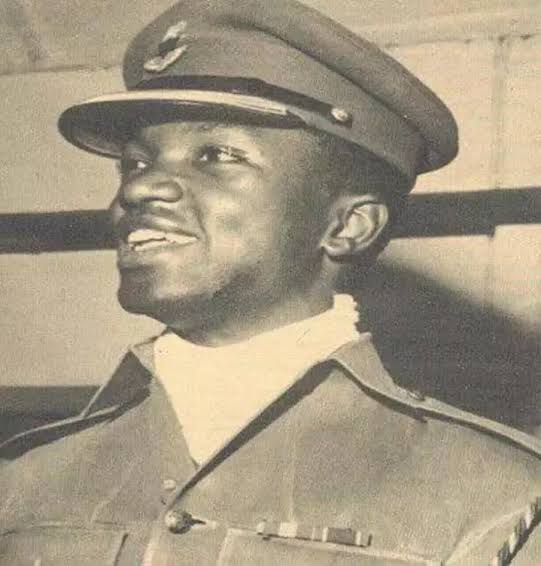
Major-General Ibrahim Bata Malgwi Haruna (retd), former Federal Commissioner for Information and Culture (1975–1977) and past Chairman of the Arewa Consultative Forum (ACF), has said the January 15, 1966 military coup led by Major Chukwuma Kaduna Nzeogwu was unavoidable, given Nigeria’s political and social realities at the time.
In an interview marking 60 years since the coup that terminated Nigeria’s First Republic and preceded the Civil War, General Haruna argued that deep-seated structural imbalances, ethnic tensions and political instability made some form of military intervention inevitable.
Speaking with Vanguard’s Regional Editor (North), Soni Daniel, Haruna said the events of 1966 and the civil war that followed were products of Nigeria’s troubled post-independence foundation.
Roots of instability after independence
According to him, Nigeria’s independence in 1960 came with unresolved contradictions.
“We ended independence with the identity of regions,” he said, noting that the three main regions — North, East and West — were unequal in size, population and resources. “We were given independence on the basis of a federation, but we operated as if we were between a confederation and a federation.”
He explained that these imbalances fuelled political rivalry, ethnic competition and distrust, which later manifested as religious and regional divisions.
Ethnic rivalry and political discord
Haruna said politics quickly assumed ethnic and regional dimensions, worsening tensions across the country.
“Political interest took the shape and pattern of ethnic warfare and struggles in large, diverse and unequal regions,” he said, adding that the dichotomy often appeared as Christian versus Muslim or minority versus majority, a situation that “didn’t augur well for peaceful political and economic evolution.”
Military, police rivalry and origins of the coup
At the time, the Nigerian military had about 10,000 personnel, and rivalry with the police further complicated internal security.
“The armaments of the police and the army seemed to be shared in a way that the military and the police felt they were competing for power,” he recalled.
Haruna said young military officers, influenced by the failures of political leadership, believed they could do better.
“The military felt they could do it better by uniting the country, fighting corruption and abuse of power by the politicians,” he said, adding that those challenges “have subsisted since then till today.”
On Nzeogwu and the coup plotters
Haruna, who was a major at the time and commanded the Ordnance Depot in Yaba, said many of the coup leaders were his contemporaries.
“Nzeogwu was just one or two years ahead of me at Sandhurst,” he said, noting that most of the officers involved were commissioned around independence and had risen quickly to command positions.
He acknowledged perceptions of ethnic imbalance in the coup but stressed that long-standing issues such as recruitment patterns, postings and power distribution within the military had already created deep resentment.
Did the coup derail Nigeria’s development?
Rejecting claims that the coup alone set Nigeria back, Haruna said the country was already grappling with serious divisions.
“Nigeria was not progressing anyway,” he said, citing ethnic-based political organisations and disputes that predated the coup.
“As long as we were constituted the way we were, it was inevitable,” he added. “If it did not happen, we probably would not be the way we are today.”
North–South divide and lessons of history
On the persistent North–South divide, Haruna said it was rooted in history and identity.
“It is difficult for the dichotomy to die,” he said, describing it as a challenge of governance, security and economic organisation.
Reflecting on lessons from the coups and civil war, he said Nigeria had learnt the dangers of perpetual military rule and now aspired to democratic governance through credible elections.
“We believe that the path of democracy and credible elections is the best for us,” he said.
Insecurity and foreign intervention
Haruna argued that insecurity has always existed in Nigeria, but modern communication has made it more visible.
“What has changed significantly is the means of communication,” he said, adding that conflicts existed long before they were labelled terrorism.
He was sceptical of foreign military intervention, warning that it often came with strategic and economic interests.
“It is never free,” he said. “To them, it is an investment.”
Looking ahead to 2027 elections
On the 2027 general elections, Haruna said his hope was for a credible and acceptable process.
“It is our aspiration… that we will have an election. And it will be credible, democratic and acceptable,” he said.
As advice to the president, he urged the government to safeguard the electoral environment.
“He should make sure at least that the atmosphere is fit for election and the electoral bodies are credible and empowered,” Haruna said, stressing the need to ensure security challenges do not undermine democracy.
Opinion Nigeria News



Why Obi Cubana Shouldn’t Have Given His Life to Jesus (Part 1) -By Ugochukwu Ugwuanyi
But then, why the fuss about Obi Cubana's repentance, what with the American Rap King, Snoop Dog, repenting from gangsterism...


Invincible Defence Technology: Consciousness-Based Solutions to Interstate and Intrastate Violence -By Dr. David Leffler
Technology refers to the systematic application of knowledge and tools. In the case of IDT, this brain-based “technology” is the...

Amnesty International’s Selective Outrage And The Sowore Narrative -By Kelvin Adegbenga
Amnesty International also appears to suffer from institutional amnesia. It is on public record that the Nigerian Army once called...

Russia’s Future Outlook With Africa Depends On Strategic Action Plan (2023-2026) -By Kestér Kenn Klomegâh
So many Russian speaking African experts who were trained by the Soviet Union can still bolster a Russian re-engagement with...

Manduro: How nations lose territories in peacetime – Lessons for Nigeria -By Ebuka Ukoh
Manduro reflects the same logic. Developing countries do not lose territory because their citizens suddenly change. They lose it because...