
Breaking News
$9m Lobbying Deal Sparks Fierce Debate Over Nigeria’s Global Image and Domestic Priorities
Nigeria’s reported $9m US lobbying contract has sparked sharp debate, with the APC defending it as standard diplomacy and opposition parties calling it wasteful amid insecurity and economic hardship.

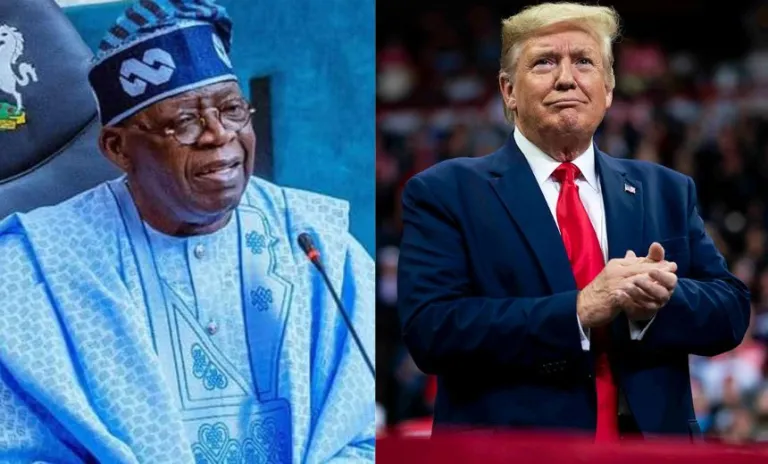
The Federal Government’s reported approval of a $9 million lobbying contract in the United States has ignited an intense political argument, pitting the ruling All Progressives Congress (APC) against opposition parties over whether Nigeria should invest heavily in managing its international image amid mounting internal challenges.
Supporters of the move describe it as a legitimate and strategic tool of modern diplomacy, while critics say it reflects misplaced priorities at a time when insecurity, economic hardship and social distress continue to affect millions of Nigerians.
At the heart of the controversy is a fundamental question: should Nigeria spend millions of dollars shaping perceptions abroad when many citizens argue that the country’s most pressing problems remain unresolved at home?
Opposition kicks against deal
The African Democratic Congress (ADC) has been one of the loudest critics, condemning the lobbying contract as a symbol of waste and poor prioritisation. In a statement signed by its National Publicity Secretary, Bolaji Abdullahi, the party argued that image management cannot substitute for effective governance.
“No amount of paid lobbying can cover up bloodshed or the government’s failure to safeguard lives and property,” Abdullahi said, insisting that restoring security and public confidence within Nigeria should take precedence.
The Peoples Democratic Party (PDP) echoed similar sentiments. Its National Publicity Secretary, Ini Ememobong, said the Tinubu administration appeared more focused on optics than on improving citizens’ welfare.
“The Tinubu administration appears more focused on appearances than governance. Improving the welfare of citizens remains the only sustainable way to enhance Nigeria’s global image,” Ememobong said, adding that lobbying would have little impact if inflation, unemployment and insecurity persist.
The New Nigeria Peoples Party (NNPP) also criticised the deal. According to its spokesman, Oladipo Johnson, Nigeria already has established diplomatic structures that should be strengthened instead of outsourcing image management.
“Rather than spending huge sums on foreign lobbyists, the government should focus on appointing and properly deploying ambassadors to key countries, including the United States,” Johnson said.
The Labour Party (LP), though less vocal through official statements, aligned with the opposition’s broader argument, questioning the morality of spending millions of dollars abroad while Nigerians grapple with rising living costs.
Collectively, opposition parties framed the lobbying contract as an attempt to “polish” Nigeria’s image without addressing the root causes of its challenges.
APC defends lobbying move
The Lagos State chapter of the APC has rejected the criticism, describing it as exaggerated and politically motivated. In a statement by its spokesman, Seye Oladejo, the party accused the opposition of misunderstanding—or deliberately misrepresenting—the realities of modern governance.
“Lagos APC has observed the orchestrated outrage and selective indignation of the opposition over Nigeria’s engagement of a U.S.-based lobbying firm. This agitation, though loud, betrays either a grave ignorance of modern governance or a deliberate attempt to mislead the public,” Oladejo said.
He argued that lobbying is a lawful and widely accepted instrument of statecraft, used globally to advance national interests, attract investment, correct misinformation and strengthen diplomatic ties.
“From advanced democracies to emerging economies, governments routinely engage lobbying and public affairs firms—particularly in strategic capitals like Washington—to promote national interests. Nigeria’s action is neither novel nor improper; it is standard global practice,” he said.
According to the APC, countries across Africa, Europe, Asia and the Middle East openly use such firms to influence policy, boost trade and secure development assistance.
‘End to demarketing Nigeria’
Beyond legality, the Lagos APC framed the lobbying contract as a political response to what it described as years of opposition-led “demarketing” of Nigeria abroad.
“What this engagement clearly signifies is the end of the opposition’s unrestrained demarketing of Nigeria before the comity of nations,” Oladejo stated.
He alleged that opposition figures have historically portrayed Nigeria negatively on the international stage, only to express disappointment when dire predictions failed to materialise.
“The Federal Government is not unaware of the enormous resources the opposition has historically deployed to talk the country down internationally,” he said.
According to him, the lobbying effort would ensure that “the true Nigerian story” is told through “a positive, factual and forward-looking perspective.”
Lobbying as global practice
Globally, lobbying is an established feature of diplomacy. Under the United States’ Foreign Agents Registration Act (FARA), governments and organisations openly hire firms to advocate their interests before policymakers.
Several African countries, including South Africa, Egypt, Morocco and Ethiopia, have at various times retained US-based lobbyists to influence narratives around security, trade, sanctions and development aid.
Proponents of Nigeria’s deal argue that in a competitive global environment, silence can be costly, as perceptions often influence investor confidence, security cooperation and foreign policy decisions.
Critics insist: fix home first
Opposition figures remain unconvinced. They argue that Nigeria’s image crisis is fundamentally rooted in domestic realities and cannot be fixed through foreign contracts.
As Abdullahi put it, “You cannot launder a nation’s image abroad while citizens are being killed at home.”
Similarly, Ememobong maintained that “good governance speaks louder than any lobbyist, no matter how expensive.”
A wider dilemma
The debate reflects a deeper challenge in Nigeria’s democracy: the absence of consensus on how national interests should be projected beyond partisan divides. While many countries treat foreign image management as a bipartisan issue, in Nigeria it has become another arena for political confrontation.
For the Lagos APC, the choice is straightforward. “Strategic international advocacy is not a crime; it is a necessity in a competitive global order,” Oladejo said, urging Nigerians to look beyond what he called “manufactured hysteria.”
Whether the $9 million lobbying contract delivers tangible gains—such as improved investor confidence or stronger partnerships—remains uncertain. What is clear is that it has reignited an enduring debate: should Nigeria fix its image first, or fix itself and let the image follow?
For now, perspectives differ sharply—largely depending on whether one sits on the government bench or in opposition.
Opinion Nigeria News



Role of Youths in Nation Building -By Kusompwa Lazarus Motiyedi
It is true that today’s youth did not experience the horrors of the Nigerian Civil War or the severe economic...

Putin Receives Newly Appointed Foreign Ambassadors in Bolshoi Kremlin Palace -By Kestér Kenn Klomegâh
According to him, the foundations of these relationships were laid back during the struggle of African peoples for freedom and...


Why Obi Cubana Shouldn’t Have Given His Life to Jesus (Part 1) -By Ugochukwu Ugwuanyi
But then, why the fuss about Obi Cubana's repentance, what with the American Rap King, Snoop Dog, repenting from gangsterism...


Invincible Defence Technology: Consciousness-Based Solutions to Interstate and Intrastate Violence -By Dr. David Leffler
Technology refers to the systematic application of knowledge and tools. In the case of IDT, this brain-based “technology” is the...


Amnesty International’s Selective Outrage And The Sowore Narrative -By Kelvin Adegbenga
Amnesty International also appears to suffer from institutional amnesia. It is on public record that the Nigerian Army once called...