
Global Issues
A Blueprint on Containing Nuclear Weapon Proliferation -By Moshood Olajide
Libya government led by Muammar Ghaddafi had give up its nuclear programme in 2003 in exchange for economic aids and lifting of sanctions but seven years later, Ghadaffi’s government was toppled. Bashir Al Assad of Syria, Imran Khan of Pakistan, and Kim Jong Un of North Korea have often cited these reasons secretly on why they won’t give up their nuclear weapon. What happen to Gaddafi after giving up his Nuclear programme?

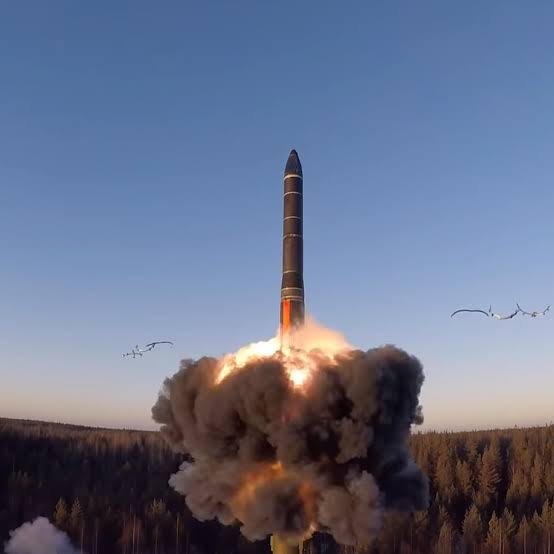
Nuclear weapon was first deployed by the United States in 1945 when the Imperial Japan Navy attacked Pearl harbor leaving over 2000 Americans dead with battleships destroyed, in retaliation, the American government under the leadership of Harry Truman attacked the Japanese city of Hiroshima and Nagasaki with atomic bomb, killing over 105, 000 people according to estimate from Atomic Archive.
Industrialized and powerful countries recognize how this weapon will be strategic in strengthening their military, diplomatic, and economic power. This is when the battle for the soul of nuclear weapons was initiated with the Soviet Union conducting its nuclear test in 1949, the United Kingdom 1952, France and China in 1960 and 1964 respectively.
Efforts to prevent the spread of nuclear technology by the five superpowers failed as Israel, Pakistan, India and North Korea possess this dangerous weapon without signing the Non-Proliferation Treaty.
While the West and the United Nations continue to push for total denuclearization of the Korean – Peninsula, Iran and containment of it in other countries, these moves have been largely unsuccessful, why are genuine moves against nuclear proliferation failing despite heavy UN sanctions against authoritarian regimes pursuing nuclear programmes in North Korea, Syria and Iran? Here are 4 Reasons why the denuclearization policy is failing and how it can be better pursued.
Trust – Ever since the NATO backed invasion of Muammar Ghadaffi government in 2011, authoritarian governments with the agenda of nuclear weapons have refused to back down. Libya government led by Muammar Ghaddafi had give up its nuclear programme in 2003 in exchange for economic aids and lifting of sanctions but seven years later, Ghadaffi’s government was toppled. Bashir Al Assad of Syria, Imran Khan of Pakistan, and Kim Jong Un of North Korea have often cited these reasons secretly on why they won’t give up their nuclear weapon. What happen to Gaddafi after giving up his Nuclear programme? Official from these countries have often queried. For denuclearization to be achieved, climate of trust needs to be improved on.
Sanctions Need to be Reviewed – Oil export, aeronautical, automotive, freezing of assets, and financial sanctions against Iran and North Korea has not deterred both countries from pursuing nuclear expansion programmes. Multidimensional sanctions across all sectors should be explored extending to limited International diplomacy.
Win – Win Deal – Political solutions aimed at getting North Korea denuclearized through the peace summit between Kim Jong Un and Donald Trump in Singapore and Hanoi in 2018 and 2019 failed to yield results but political solutions can be better explored in a win – win approach negotiation. The US under George Bush in 1999 for example lifted nuclear sanctions on Pakistan after the country provided security cooperation with the US after September 11 terrorist attacks on Newyork and Washington. Security cooperation in exchange for lifting of sanctions to aid economic development is a win – win deal for both parties which can be the standard prototype for future negotiation, rather than the use of threat.
Policy of Regime Change should be discarded – United States invasion of Iraq in 2003 and the toppling of Gaddafi’s government in Libya by Western backed forces in 2011 encourage authoritarians to be resilient in pursuing nuclear programmes as a last resort of survival. Dialogue, diplomatic sanctions and other democratic instruments should always be employed in dealing with autocrats and in convincing governments with nuclear weapons towards disarmament. In fact, the policy of regime change should be discarded.
The International Atomic Energy Agency (IAEA), Policy makers, and authorities should consider these measures as part of plans in getting positive results achieved in denuclearization and contain unceasing rearmament from both developed and developing countries.
Moshood Olajide, a Policy Development Analyst, can be reached via, moshoododunayoolajidemoshood@gmail.com



Moscow University Museum Presents Insights into African Artistic Culture -By Kestér Kenn Klomegâh
In his contribution, Louis Gouend, Chairman of the Commission for Work with African Diasporas at Moscow State University's Russian-African Club,...


Justice, Peace And Integrity Of Creation Prerequisite To Good Living -By Melissa Thomas
There are many ways to promote peace in our world of today but perhaps the best way is to promote...


Africa Squeezed Between Import Substitution and Dependency Syndrome -By Kestér Kenn Klomegâh
The key buyers of Russian grain on the continent are Egypt, Algeria, Kenya, Libya, Tunisia, Nigeria, Morocco, South Africa, Tanzania...

Accelerating Intra-Africa Trade and Sustainable Development -By Kestér Kenn Klomegâh
The AU Private Sector Forum has held several forums, with key recommendations. These recommendations provide valuable insights into the challenges...


Human Rights Day 2025: Advancing The Right To Food And The Rights of Africa’s Farmers -By Prof. Uche Ofodile
One of the most essential human rights is the right to adequate, safe, nutritious, and culturally appropriate food. This right...