
Forgotten Dairies
A Commendable Stand by the IGP on Press Freedom -By Ismail Yusuf
The IGP deserves praise for this bold and timely action. It reflects a commitment to professional policing, respect for the rule of law and protection of press freedom. At a time when trust in public institutions is fragile, such actions help to rebuild confidence and reinforce democratic values in Nigeria.


The decision of the Inspector-General of Police, Kayode Egbetokun, to order the sanction of a police officer involved in the arrest of a journalist with the Foundation for Investigative Journalism (FIJ) is a welcome development and a strong signal of responsible leadership. It is a big feather to the cap of the IGP and a clear proof that he respects press freedom and insists on compliance with human rights.
The arrest of the journalist, which reportedly involved the use of his wife and infant child as bait, rightly attracted public outrage. Many Nigerians, especially media professionals and civil society groups, saw the incident as an abuse of power and a threat to freedom of expression. At such moments, silence or inaction from leadership often worsens public distrust. However, the IGP acted swiftly and decisively by ordering the release of the journalist and directing that the officer responsible be sanctioned.
This action speaks volumes. It shows that under IGP Egbetokun, the Nigeria Police Force is not comfortable with illegality, intimidation or excesses, especially against journalists who play a vital role in holding power to account. It also reassures the public that the police leadership is willing to correct its own mistakes and discipline erring officers when they cross the line.
In a democracy, journalists must be free to do their work without fear of harassment or unlawful arrest. While the police have a duty to investigate crimes, that duty must always be carried out within the limits of the law and with respect for human dignity. By intervening in this case, the IGP reaffirmed these basic principles and demonstrated that human rights are not optional under his watch.
This commendable step also sends a strong message to officers across the country that misconduct will not be covered up, no matter who is involved. It strengthens public confidence in the police and shows that accountability is possible within the system.
The IGP deserves praise for this bold and timely action. It reflects a commitment to professional policing, respect for the rule of law and protection of press freedom. At a time when trust in public institutions is fragile, such actions help to rebuild confidence and reinforce democratic values in Nigeria.
Ismail Yusuf is a Public Affairs Analyst.



The Impact Of Social Media On Youth Mental Health -By Jemimah Hezekiah
Governments and tech companies also have a role to play. Enforcing anti-cyberbullying policies, offering digital literacy programs, and providing mental...
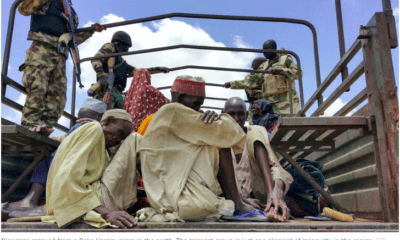

Every Night We Pray to Survive: Voices from Insecure Communities -By Rinret istifanus
As the nation debates policies and strategies, these voices remind us that insecurity is not just a headline it is...
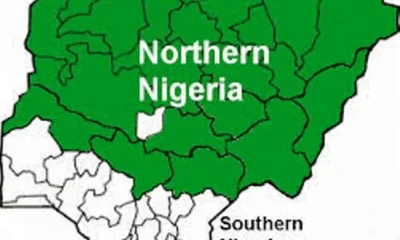

The Cost of Building: Reflections from Inside Northern Nigerian Governance -By Naufal Ahmad
We need a new ethic of engagement. I’m not saying don’t question leaders. I’ve been an internal critic for most...


Genotype Confirmation: Why It Must Be Included As Part Of The Elements Of Marriage -By Tajudeen Abdulrauf Dasuki
Sickle cell is not a mere disease , that we count as minor issue, it is only those have it,...

Between The Palace And The Police: Where Does Justice For Don Pedro Obaseki Lie? -By Isaac Asabor
Justice cannot lie in fear. It cannot lie in mobs. It cannot lie in silence. Justice lies in a firm...