
Breaking News
Abebe Selassie to Retire as Director of African Department at IMF -By Kestér Kenn Klomegâh
Concessional financing to counter rising borrowing costs, with Africa paying up to 5 times more in interest than advanced economies (AfDB, 2023). Fair representation, pushing for IMF quota reforms to reflect Africa’s $3.4 trillion collective GDP—yet the continent holds less than 5% of voting shares in Bretton Woods institutions.


The International Monetary Fund (IMF) has announced the retirement of its director of the African department, Abebe Aemro Selassie, on May 1, 2026. Since his appointment in 2016, Abebe Selassie has served in this position for a decade. During his tenure, IMF added a 25th chair to its Executive Board, increasing the voice of sub-Saharan Africa.
As a director for Africa, he has overseen the IMF’s engagement with 45 countries across sub-Saharan Africa. Abebe and his team work closely with the region’s leaders and policymakers to improve economic and development outcomes. This includes oversight of the IMF’s intensified engagement with the region in recent years, including some $60 billion in financial support the institution has provided to countries since 2020. Reports indicated that under his leadership, his department generally reinforces the organization’s role as a trusted partner to many African countries.
Abebe Selassie has worked with both the regional economic blocs and the African Union (AU) as well as individual African states. The key focus has been the strategic articulation of Africa’s development priorities in reshaping economic governance, mobilizing sustainable investments, and addressing systemic financial challenges.
It is important noting that the IMF has funded diverse infrastructure projects that facilitated either export-led growth or import substitution industrialization models of development. Further to that, African states have also made numerous loans and benefited from much-needed debt relief.
Summarizing the IMF’s key focus areas, among others, for Africa: (i) reforming the global financial architecture in an effort to improve the structure, institutions, rules, and processes that govern international finance in order to make the global economy more stable, equitable, and resilient.
Concessional financing to counter rising borrowing costs, with Africa paying up to 5 times more in interest than advanced economies (AfDB, 2023). Fair representation, pushing for IMF quota reforms to reflect Africa’s $3.4 trillion collective GDP—yet the continent holds less than 5% of voting shares in Bretton Woods institutions.
(ii) Unlocking Investments for Jobs and Sustainable Growth. With Africa’s working-age population set to double to 1 billion by 2050, the African states spotlight: The African Continental Free Trade Area (AfCFTA), projected to boost intra-African trade by 52% and create 30 million jobs by 2035 (World Bank, 2024). Infrastructure partnerships, targeting sectors such as renewable energy, where Africa receives only 2% of global clean energy investments despite its vast solar and wind potential (IEA, 2024).
(iii) Climate Finance and Debt Relief for Resilience: Africa contributes less than 4% of global emissions but bears the brunt of climate shocks, losing 5–15% of GDP per capita to climate-related disasters annually (African Development Bank, 2024). These are strictly in alignment with Agenda 2063’s aspirations for inclusive growth, maximizing multilateral cooperation and enhancing global engagement with the continent.
“I am deeply grateful for Abe’s visionary leadership, dedication to the Fund’s mission, and unwavering commitment to the members in the region,” Ms. Kristalina Georgieva, Managing Director of the International Monetary Fund (IMF). “The legacy he leaves on the Fund’s work in Africa is one of alignment with the aspirations of people, especially the youth, for good governance, strong economies and lasting prosperity. His trusted advice has been invaluable to me personally, and his leadership has strengthened our mission.”
“A national of Ethiopia, Selassie first joined the IMF in 1994. Over his remarkable 32-year career, he held senior positions including Deputy Director in AFR, Mission Chief for Portugal and South Africa, Division Chief of the Regional Studies Division, and Senior Resident Representative in Uganda. Earlier, he contributed to programs in Turkey, Thailand, Romania, and Estonia, and worked on policy, operational review, and economic research.”
Under his ten-year leadership and as director of the African Department (AFR), Abebe Selassie helped to reinforce the Fund’s role as a trusted partner with sub-Saharan African members. The International Monetary Fund (IMF) is an international organization that promotes global economic growth and financial stability, encourages international trade, and reduces poverty.

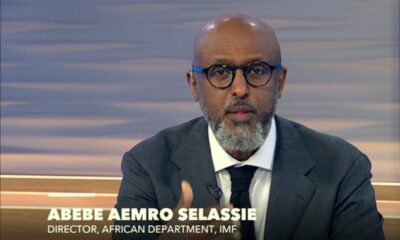

Abebe Selassie to Retire as Director of African Department at IMF -By Kestér Kenn Klomegâh
Concessional financing to counter rising borrowing costs, with Africa paying up to 5 times more in interest than advanced economies...

Singapore’s Leaders Built An Economy; Nigeria’s Keep Building Excuses -By Isaac Asabor
Singapore paired economic growth with social stability. Through the Housing Development Board, the government built large-scale public housing, providing affordable...

Tax Considerations for CFD Traders in South Africa: What Experienced Traders Should Know
What looks like a sweet profit on your platform screen can shrink fast once the tax bill hits. When you're...

Russia–India Dialogue Provides Platform for Strengthening Bilateral Entrepreneurship -By Kestér Kenn Klomegâh
The Dialogue was organized by the Indian Business Alliance, the Business Council for Cooperation with India, the Government of Moscow,...


The Kampala Declaration: How African Youth Can Lead Food System Transformation to Accelerate the Achievement of Zero Hunger by 2030 -By Emeka Christian Umunnakwe
If Africa is serious about achieving Zero Hunger by 2030, these perceptions must be confronted with deliberate action. Young people...