
Forgotten Dairies
Africa’s New Battleground: Drones, Terror, And The Race The State May Be Losing -By Idris Saminu
The strategic implication is clear. Drones are no longer force multipliers alone; they are instruments of territorial control. By dominating airspace at the micro level, villages, highways, and supply routes, armed groups can effectively immobilize states without holding territory in the conventional sense. This is warfare designed not to conquer capitals but to suffocate economies and erode public confidence.

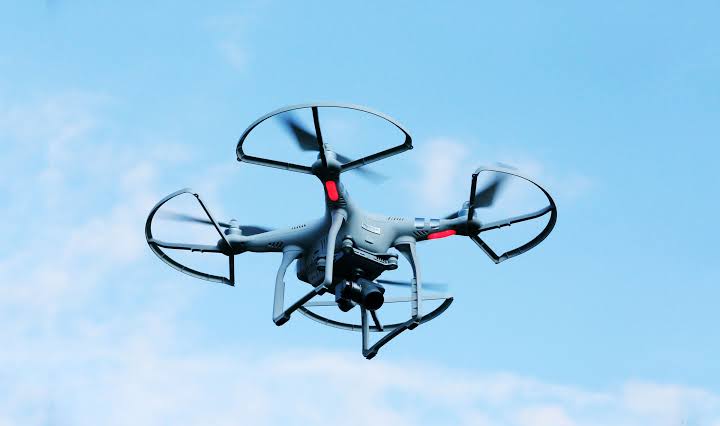
Africa has entered a new era of warfare, quiet, aerial, and devastatingly efficient. The battlefield is no longer confined to forests, deserts, or borderlands. It now hovers above roads, fuel depots and routes, mining corridors, and civilian communities. Drones have become the defining military technology of the moment, and across the continent, states and violent non-state actors are locked in a dangerous race for aerial dominance.
As at 2025, nearly 80 percent of African countries have adopted drone technology in one form or another. What began as a tool for border surveillance, intelligence gathering, and counterterrorism has rapidly evolved into a core component of modern warfare. Several African states, such as Nigeria, Morocco, Algeria, Tunisia, Libya, Egypt, Ethiopia, and South Africa, are no longer mere consumers but active producers of drones. This signals technological ambition and strategic foresight. Yet it also masks a far more troubling reality: armed groups are learning faster, adapting quicker, and exploiting drone technology with ruthless creativity.
Today, at least nine African countries have confirmed cases of drones being used by violent non-state actors. Nigeria, Mali, and Burkina Faso are among the most affected. The Sahel, in particular, has become a testing ground where insurgents refine tactics that are increasingly difficult for conventional militaries to counter. This is not incidental, it is structural. The diffusion of drone technology has lowered the barrier to entry for asymmetric warfare, giving insurgents the ability to see, strike, and terrorize from the air.
Ironically, Nigeria stands at the top of Africa’s drone ownership ladder. With an estimated stock of 18 military drones, Nigeria outranks Algeria (15), Ethiopia (12), Morocco (11), and Egypt (7). On paper, this should confer strategic superiority. In practice, it has not translated into a decisive advantage. Drone quantity has not kept pace with drone doctrine, counter-drone capability, or intelligence fusion. Owning drones is no longer enough; mastering the drone battlespace is what matters.
Across the continent, most military drones have been acquired from global suppliers, Turkey, China, Israel, and the United States dominate the market, with smaller contributions from countries such as the UAE, etc. These platforms have undoubtedly improved state surveillance capacity. But while governments focus on procurement, armed groups focus on application. They weaponize commercial drones, adapt military-grade tactics, and integrate aerial tools into everyday operations.
Groups such as Jama’at Nusrat al-Islam wal-Muslimin (JNIM) have dramatically altered their mode of engagement. Rather than direct confrontations with state militaries, JNIM increasingly relies on drones for surveillance, intimidation, and logistical disruption across Mali, Burkina Faso, and now parts of coastal West Africa, including Togo. Roads are blocked not with checkpoints but with fear. Fuel supply routes are disrupted. Trade corridors are paralyzed. Suspected mineral consignments moving from Niger toward ports in Togo have reportedly faced severe disruption, undermining both state revenue and regional commerce.
Nigeria is not immune. Boko Haram factions and a few bandit groups have begun integrating drones into their operational ecosystems. The recent explosion in Zamfara State raises alarming questions. Evidence suggests that armed groups may now be using drones either to remotely detonate improvised explosive devices (IEDs) or to guide their placement with greater precision. If confirmed, this would mark a significant escalation in the sophistication of non-state violence in Nigeria.
The strategic implication is clear. Drones are no longer force multipliers alone; they are instruments of territorial control. By dominating airspace at the micro level, villages, highways, and supply routes, armed groups can effectively immobilize states without holding territory in the conventional sense. This is warfare designed not to conquer capitals but to suffocate economies and erode public confidence.
Nigeria, and Africa more broadly, must confront an uncomfortable truth. The drone race is not about who owns more platforms, but who adapts faster. Counter-drone systems, electronic warfare capabilities, real-time intelligence integration, and doctrinal reform are no longer optional. Neither is regional cooperation. Insurgent drone tactics do not respect borders; countermeasures cannot remain nationally siloed.
This moment demands urgency. The skies above Africa are no longer neutral. They are contested, weaponized, and increasingly hostile. Nigeria must learn from the warning signs in Zamfara, Mali, and Burkina Faso, and act decisively. Failure to do so risks allowing the continent’s newest battlefield to become its most uncontrollable one.


Africa’s Crisis of Military Coups and Insecurity -By Safiya Zakari Muhammad
The erosion of democracy has also weakened regional and international security cooperation. In some cases, juntas have expelled traditional partners...


Governor Uba Sani’s Resolute Commitment On Rural Development -By Abdulrashid Sani Gimi
In the long run, the 2026 fiscal strategy transcends conventional budgetary practice. With a total outlay of ₦985.9 billion, a...


Lack of Financial Support Holding Back Russia’s Economic Influence in Africa: A Case Study of Missed Opportunities in Nigeria -By Kestér Kenn Klomegâh
As Africa's largest economy, Nigeria cannot afford another decade of promises without projects. The future of its development lies with...


The Impact Of Social Media On Youth Mental Health -By Jemimah Hezekiah
Governments and tech companies also have a role to play. Enforcing anti-cyberbullying policies, offering digital literacy programs, and providing mental...

Every Night We Pray to Survive: Voices from Insecure Communities -By Rinret istifanus
As the nation debates policies and strategies, these voices remind us that insecurity is not just a headline it is...