
Agriculture
Alliance Urges Clarity and Phased Rollout of Shea Nut Export Ban to Protect Investments and Livelihoods
In a statement by its Chairman, Hon. Dele Kelvin Oye, the Alliance expressed support for the government’s broader objective of promoting local processing and transforming the shea industry into a $6.6 billion value chain that fosters industrialization, rural development, and gender empowerment.

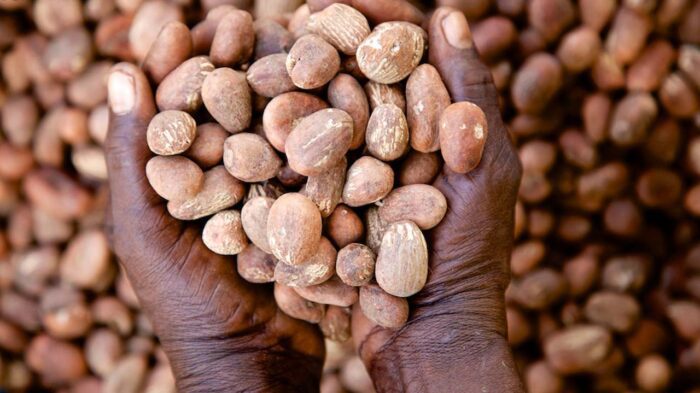
The Alliance for Economic Research and Ethics Ltd/GTE has called on the Federal Government to urgently clarify the recent ban on raw shea nut exports, emphasizing the need for a phased implementation plan to avoid disrupting investments and livelihoods tied to the sector.
In a statement by its Chairman, Hon. Dele Kelvin Oye, the Alliance expressed support for the government’s broader objective of promoting local processing and transforming the shea industry into a $6.6 billion value chain that fosters industrialization, rural development, and gender empowerment.
However, the group warned that sudden policy shifts without proper consultation or transition strategies could derail existing contracts, financial commitments, and international trade relations.
“We need to draw attention to the potential risks of poor implementation of a good policy,” Oye said. “A clear communication strategy, phased implementation with measurable milestones, and multi-stakeholder consultations are essential to avoid losses and ensure smooth transition.”
To mitigate potential disruptions, the Alliance proposed a gradual rollout supported by government intervention—such as purchasing unsold raw stock—to curb market shocks and prevent smuggling. It also recommended support for local processors through financing, training, and technical assistance.
The group underscored the need to maintain Nigeria’s credibility in global trade by continuing bilateral engagements and ensuring a stable, predictable policy environment for international buyers.
Drawing from case studies in Ghana, Malaysia, and India, the Alliance noted that those countries successfully implemented similar reforms by giving producers time to upgrade refining, packaging, and quality control standards without breaching existing trade contracts.
The group called on the government to outline a clear transition period, including processing capacity targets and export diversification benchmarks, while ensuring protections for vulnerable players in the value chain.
“We believe in the potential of Nigeria’s shea industry, but policy changes must be guided by robust monitoring, digital market intelligence, and stakeholder feedback,” Oye concluded. “A managed transition will help build a sustainable, thriving shea sector that benefits all Nigerians.”


Did America Happen to Ademiluyi? -By Zayd Ibn Isah
If we must fix Nigeria, it will not be by glorifying foreign lands or demonising our own, but by confronting...


The Children We Hide: Why Society Must Stop Shaming Special Needs Children -By Bello Humulkhair
A small boy sits at the corner of his classroom not because he cannot play, not because he does not...
International Day of Persons with Disabilities 2025: Addressing Africa’s Disability Divide -By Prof. Uche Ofodile
The 2018 Protocol to the African Charter on Human and Peoples’ Rights on the Rights of Persons with Disabilities in...


Shifting Waves Fine-tuning Russia’s Economic Agenda -By Kestér Kenn Klomegâh
Feedback and ongoing dialogue with the business community and investors are key to improving the business climate and strengthening investment...


Guinea-Bissau’s PlayBook: Sustainable Development and Accountable Leadership -By Kestér Kenn Klomegâh
Guinea-Bissau's population was 2.1 million in 2023. With its arable land and water surfaces, agriculture is the backbone of the...