
Forgotten Dairies
American Missiles, Nigerian Fault Lines: Why Our Insecurity Cannot Be Bombed Away -By Arc Aliyu Tanimu
We must provide better allowances and adequate remuneration to frontline troops to motivate them and strengthen their esprit de corps. This will help prevent Trump from using twisted narratives and false pretexts to justify another surprise missile attack during the festive season. We must also do away with the use of certain tribal or religious nomenclature to prevent profiling and victimization.

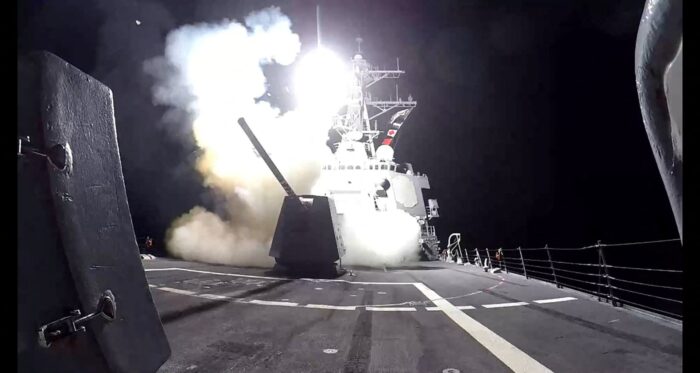
December 25th 2025, marked the first U.S. missile attack on Nigerian soil.
The strike left a massive crater — along with shockwaves of fear, uncertainty, and confusion — in the hearts and minds of residents in Jabo village. In the days that followed, a flurry of propaganda messages flooded social media, with mainstream media also amplifying the narrative. The U.S. boasts missiles with a high degree of accuracy and precision, but we are yet to see the bodies of the terrorists. Is it a case of misfire or something else? There were also reports of terrorists moving to Benue, which are yet to be verified. Despite Trump’s claims of success, information on the ground suggests otherwise. The Nigerian government quickly released an official statement claiming it was aware of the attack. However, showman Trump took full credit, presenting it as a unilateral action and falling short of acknowledging Nigeria’s cooperation — particularly in intelligence sharing and other forms of collaboration.
The attack came after months of threats and twisted narratives by Trump, using the alleged massacre of Christians as a pretext. On that day, he followed through on his threat, targeting Africa’s behemoth — Nigeria.
In the first place, the attack happened because we have treated bandits, terrorists, and their financiers with kid gloves — emboldening them to carry out large-scale kidnappings and attacks. These acts have turned families into paupers, widows, widowers, and orphans.
The U.S. pushed the massacre propaganda, fully aware that it would gain the support of gullible and unpatriotic Nigerians. They knew exactly which trigger to pull — religion and tribalism. The attack may also have been a cunning tactic by Trump, either to please his support base or to divert attention from the recent unclassified documents implicating him in the Jeffrey Epstein scandal — involving a known paedophile and promiscuous billionaire accused of sexually abusing young women.
Now, enough about Trump. Let’s shift to the root cause of insecurity in Nigeria. To address it properly, we must start from the foundation — family values. Dysfunctional families often breed instability, and over time, that leads to anarchy.
It is considered a thing of pride to father many children in the North, especially among the Hausa and Fulani communities. Most of these children are left to fend for themselves, while some are sent to Islamiyya schools as *Almajirai*, where they beg for food to survive. They often bathe once a week, have unkempt hair, and wear tattered clothes. Deprived of parental love and care, many grow up angry and frustrated, directing their aggression toward society.
The Fulani are traditionally pastoral nomads who migrate from one region to another in search of grazing land for their cattle. This often puts them at odds with farmers, especially when their cattle destroy crops or are rustled. They typically live in thatched houses far from towns, and their settlements often lack basic amenities like clean water, schools, and healthcare facilities.
If they had access to education, they might understand the importance of securing financing to establish ranches or reserves, where grass could be cultivated sustainably. With veterinarians stationed there, the cattle would be healthier, produce more milk, and the milk could be collected, refined, packaged, and even exported.
These individuals who pick up arms against the state were once babies, toddlers, preschoolers, and teenagers before reaching adulthood. What role did their parents play in shaping their current state? Where did they learn to hate, bomb, and maim — to take lives? Why is this particularly prevalent in the North? Is quality education and healthcare truly accessible there?
Families, neighbors, communities, and states make up a country. The first step to fixing a society is by fixing the family—instilling good moral values through parents, law enforcement, religious centers, schools, and the broader society. When a country rewards the bad and punishes the good, evil will thrive.
It’s safe to say that kidnapping for ransom has become a lucrative business among the youth. Some have brazenly opened TikTok accounts, flaunting huge wads of cash and even hosting giveaways on the platform. Their actions could lure or serve as role models to weak or impressionable minds. Although the Minister made a shocking claim that kidnappers are using sophisticated technology that makes them practically untraceable, the statement drew public rebuttals—especially from tech experts—who issued a rejoinder denying the Minister’s claims. What’s stopping the government from partnering with Starlink or collaborating with neighboring countries to trace these criminals, especially if they’re using foreign SIM cards? We must make kidnapping for ransom unattractive to the youth.
Nigeria is facing war on many fronts from within — bandits and the Lakurawa, ‘Yan Malam (a cult group in Sokoto State) in the Northwest; Boko Haram and ISWAP in the Northeast; IPOB and ESN in the Southeast; and the expansion of banditry, including groups like Mamuda, into the North Central region. Some of the insecurity can be traced to illegal mining, dysfunctional families, marginalization, religious intolerance, injustice, incitement, illiteracy, and acute poverty.
The root causes of our problems are multifaceted and cannot be pinned solely on dysfunctional families or moral decadence. The government also plays a major role in the state of quagmire we find ourselves in.
It is foolhardy to think that the United States of America has the answers to solve our insecurity. The solution lies within — with parents, communities, law enforcement, and the government, not external players. If American bombs could solve problems, countries like Somalia, Syria, and Iraq wouldn’t still be experiencing bomb blasts.
Nigeria continues to breed non-state actors who constitute a nuisance to the nation’s development. The country has become a fertile ground for terrorists, bandits, and unknown gunmen.
In a sane climate, nations produce skilled individuals, creativity, and sound minds because they have consistently invested massively in human capital—leading to innovation, invention, disruptive technology, and scientific breakthroughs.
If we truly want to join the league of $1 trillion economies, we must summon the political will to eliminate corruption, revamp the economy, and prioritize quality education—education that equips students with hands-on experience and practical skills to solve real-world problems.
The solution requires a collective effort from parents, communities, religious leaders, law enforcement, and the government.
From an international perspective, we must learn to choose our allies wisely—seeking relationships that are mutually beneficial, not predatory. The U.S. has been in decline, as more nations now embrace a multipolar world, and Africa increasingly pivots toward East Asia for Foreign Direct Investment.
This shift has triggered a new scramble for Africa—both for its mineral resources and geopolitical influence. In Niger Republic, the military toppled the president and is on the verge of decoupling its economy from France, expelling both U.S. and French military forces, its former colonial powers.
On the flip side, this has created a security vacuum in a country that shares a long border with Nigeria. It has also resulted in a massive inflow of small and light weapons through our porous borders.
We must open diplomatic channels and actively engage with neighboring countries like Niger Republic, Benin Republic, Chad, and Cameroon. This requires strategic and sustained diplomatic efforts.
We must provide better allowances and adequate remuneration to frontline troops to motivate them and strengthen their esprit de corps. This will help prevent Trump from using twisted narratives and false pretexts to justify another surprise missile attack during the festive season. We must also do away with the use of certain tribal or religious nomenclature to prevent profiling and victimization.
In conclusion, the government can consider negotiating with non-state actors who are willing to lay down their arms. The first condition for any peace talks must include disarmament, and a proper background check on the repentant individuals must be strictly adhered to before reintegration into the larger society. Their biodata, genetic information, and DNA should be documented. They should be enrolled in technical and vocational schools to acquire skills that can sustain them. Direct cash payments to them should be completely ruled out. We also need metal detectors, scanners, and CCTVs at all entry points, as well as military-grade satellite and drone imagery for 24-hour real-time surveillance of our borders to monitor the activities of gunrunners and the movement of cross-border criminals into our country. We currently lack some of these surveillance technologies due to limited technical know-how; however, we can outsource them with the support of countries that genuinely identify with our security challenges. Technology is an enabler, and it must be deployed strategically to empower our troops to eliminate these threats.
As a parting shot, in the words of Prof. John Mearsheimer, a distinguished political analyst, and I quote:
“When the U.S. explicitly frames a military intervention in Africa as a defense of one religious group against another, we are not putting out the fire—we are pouring gasoline on it. We are validating the very propaganda of groups like ISIS and Al-Qaeda, who claim the West is at war with Islam. By stepping into a sectarian quagmire—where the conflict is driven by deep-seated ethnic divisions, competition for land, and economic banditry in the Northwest—we are Americanizing the conflict. We are turning a local insurgency into a global target. Those Tomahawk missiles did not solve the problem; they just ensured that the next bomb that goes off might be aimed at an American embassy or business. We are manufacturing enemies in a region where we should have no enemies.
Aliyu Tanimu is an architect, entrepreneur, and writer with a passion for innovation and sustainable development. He leads Nexus Dynamic Resources Ltd, a growing real estate and infrastructure company based in Kaduna, Nigeria. His work spans across real estate, renewable energy, and agriculture, with a focus on practical solutions to modern challenges.


Africa’s Crisis of Military Coups and Insecurity -By Safiya Zakari Muhammad
The erosion of democracy has also weakened regional and international security cooperation. In some cases, juntas have expelled traditional partners...


Governor Uba Sani’s Resolute Commitment On Rural Development -By Abdulrashid Sani Gimi
In the long run, the 2026 fiscal strategy transcends conventional budgetary practice. With a total outlay of ₦985.9 billion, a...


Lack of Financial Support Holding Back Russia’s Economic Influence in Africa: A Case Study of Missed Opportunities in Nigeria -By Kestér Kenn Klomegâh
As Africa's largest economy, Nigeria cannot afford another decade of promises without projects. The future of its development lies with...


The Impact Of Social Media On Youth Mental Health -By Jemimah Hezekiah
Governments and tech companies also have a role to play. Enforcing anti-cyberbullying policies, offering digital literacy programs, and providing mental...

Every Night We Pray to Survive: Voices from Insecure Communities -By Rinret istifanus
As the nation debates policies and strategies, these voices remind us that insecurity is not just a headline it is...