
National Issues
As Buhari Steps Aside, He Leaves Corruption Worse than He Met It -By Timipere Felix Allison
It is unlikely that history will remember Buhari positively. After May 29 when he would have faded into the dusk, memories of him are certain to be his monumental anti-corruption failure akin to the failure of a hope-inspiring virologist who disappointingly, surrendered to the ravaging pathogen he vowed to defeat.

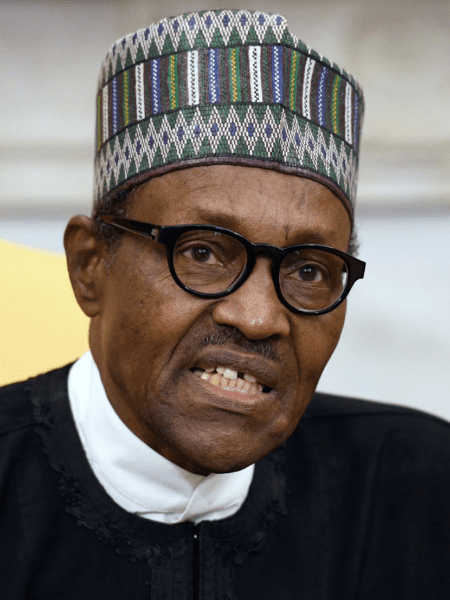
After May 29 when he would have faded into the dusk, memories of him are certain to be his monumental anti-corruption failure akin to the failure of a hope-inspiring virologist who disappointingly, surrendered to the ravaging pathogen he vowed to defeat.
President Muhammadu Buhari will vacate office on May 29 after a second and final term as Nigeria’s President. He exits the scene leaving behind a high level of corruption. For a president who rode to power on the weight of his anti-corruption avowal, his capitulation to Nigeria’s kleptocracy and superintendence over his own regime of corruption are particularly concerning. As he fades into the sunset, Nigeria will grapple with the consequences of his colossal anti-corruption failure.
“If we do not kill corruption, corruption will kill Nigeria.”
This refrain set apart Buhari’s presidential campaign ahead of the 2015 Presidential Election. The message met the moment. By 2014, Nigeria was on the brink; a failing economy, poor education and healthcare, rising insecurity, particularly the deadly activities of Boko Haram in the northeastern part of the country, and infrastructural decay amid huge earnings from oil. Buhari linked these to unbridled public sector corruption under the then-governing Peoples Democratic Party—PDP.
It can hardly be refuted that corruption flourished under the PDP from its rise to political dominance in 1999. Corruption under the party reached unbearable heights in the years just before the 2015 Presidential Election. On the ballot for the PDP was the second term-seeking President Goodluck Jonathan whose inclination to do nothing about corruption encouraged mindless pillaging. Graft and embezzlement were rife in the oil sector, the power sector, the security sector, the civil service, the financial sector, and the judiciary. Given the administration’s disinterest in anti-corruption, corruption was brazen. A notable case was the failure of the Nigeria National Petroleum Corporation (now Campany) to remit to the federation or account for the whereabouts of $ 20 billion in oil accruals. Another case was the direct withdrawal of $ 2.1 billion from the vault of the Central Bank of Nigeria by the then National Security Adviser Sambo Dasuki. Removed under the official claim of purchasing weapons to tackle Boko Haram insurgents, the money became political largesse for a few.
As the Jonathan administration fleeced the country, socioeconomic conditions worsened for ordinary Nigerians. No fewer than 11 million children were out of school, infant and maternal mortality were among the global worsts, unemployment stood at 23.9%, and the poverty rate was a staggering 46%. Nigeria’s performance on major corruption barometers reflected this reality. Between 2011 and 2015, the country’s average score on Transparency International Corruption Perceptions Index (TICPI) was a dismal 26 points.
Against this background, Buhari’s vow to deliver a death blow to corruption could not have been timelier. His bold anti-corruption stance galvanized a huge segment of the electorate, including the middle class, and especially ordinary Nigerians who were the major victims of corruption. Despite presenting himself as the presidential candidate of the All Progressives Congress—APC, a party birthed by the merger of opposition parties and PDP deserters, many of whom linked to corruption, voters had faith in what they viewed as Buhari’s “personal integrity” and “fearlessness.” This positive perception of the man was inspired by the aggressive 1983-85 anti-corruption program he pursued as a military head of state. His junta left nothing off the table, including arbitrary measures, to bring corrupt political and military elites to account. Given the impunity and obstinacy that characterized corruption by 2014, many voters felt only Buhari could once again bring relief.
Early anti-corruption strides
Upon taking the reins in May 2015, the Buhari administration rolled out major anti-corruption policies. One such policy was the consolidation of all federal revenue receipts in the Treasury Single Account – TSA, making possible the monitoring of financial inflows and outflows of government ministries, departments, and agencies. The administration also tackled payroll fraud in the federal civil service. The “Ghost Worker” syndrome, as this bureaucratic elite-led corruption is famously known, had been a drain on recurrent expenditure. Some influential civilian and military elites implicated in corruption in the previous administration eventually faced prosecution, leading to significant cash and asset recoveries, and in a few cases, imprisonment. These strides, however, were fleeting.
The return to business as usual
No sooner than the debate began over whether Nigeria may be turning a corner in the fight against corruption did doubts emerge about the sincerity of the Buhari war on corruption and if at all he had the temerity to confront the kleptocracy. To the chagrin of many, President Buhari felt no hesitation in appointing tainted politicians into cabinet and other key government positions. It was a complete volte-face to the old order when membership of the party in power or association with the presidency offered absolution and immunity from prosecution. Elites of the former ruling party—the PDP—who faced prosecution for corruption had their cases stalled following their defection to the APC. Some of these actors, as in the case of Orji Uzor Kalu, would go on to win election to the Senate on the platform of the APC and with President Buhari’s endorsement.
By targeting the opposition and sparing his associates, the Buhari anti-corruption crusade veered in the direction of previous anti-graft programs. Then-Senator Shehu Sani would remark on the floor of the Senate that President Buhari tends to use “insecticides” to fight corruption outside of his circle and “deodorants” when corruption is within his circle. The insecticide-deodorant metaphor partially captures objective assessments of the current failed war on corruption in Nigeria. Equally perturbing has been the president’s surprising indifference to corruption, especially in the final half of his administration.
How this duplicitous, pro-corruption and nothing-is-unacceptable disposition promoted corruption may best be measured by the pile of mindboggling corruption schemes that have come to light. Some examples include the alleged diversion of ₦47 billion ($102 million) from the Niger Delta Development Commission by the agency’s Director; the alleged theft of ₦109 billion ($236 million) by Nigeria’s Accountant-General; and the alleged ₦5.6 billion ($12.1 million) fraud at the Nigeria Incentive-Based Risk Sharing System for Agricultural Lending by its Managing Director. Others are the alleged padding of the 2016 national budget through expenditure falsification amounting to ₦481 billion ($1.044 billion); the alleged padding of the 2021 and 2022 national budgets through project duplication to the combined tune of ₦400 billion ($868 million); and the alleged ₦49.9 billion ($108 million) salary payment to ghost workers between January and June 2022. In the first seven months of 2022 alone, Nigeria lost $10 billion to oil thieves, a testament to the massive oil theft under the administration. No less than 437,000 barrels of oil criminally left Nigeria’s shores each day even as the country failed to meet its OPEC quota.
President Buhari has responded disappointingly to these concerns. Only in a few cases have bureaucrats involved been dismissed, but that happened only after intense public outcry. Little mention has been made of these issues afterwards or of the administration’s progress with the prosecution of the actors involved. For political elites implicated in these schemes, there is a painful lack of political will to carry on with their prosecution. No surprise that an administration that came to being with anti-corruption as its major plank has maintained abysmal standings on major corruption barometers. Nigeria’s average TICPI score for 2016 to 2022 is a disappointing 26 points, a clear testament to the administration’s failure to move the needle. The 2022 TICPI report shows that Nigeria maintained its 2021 score of 24, ranking among the most corrupt countries (150th out of 180 countries and territories). This is a four-point slip from 2021 when the country ranked 154th.
Nigerians who in 2015 thought that conditions could not be any worse now live in a far more precarious socioeconomic reality. The poverty and unemployment rates have exceeded the 2015 figures. While 133 million Nigerians now endure multidimensional poverty, 37% of the workforce is unemployed. Insecurity has become nationwide and overwhelming as armed non-state actors continue to overrun communities, kidnapping and killing thousands each year. Education and healthcare are almost non-existent. A recent report indicates that no fewer than 20 million children are out of school—an additional nine million children dragged into the pool.
Will history treat Buhari kindly?
While President Buhari continues to tout his integrity and incorruptibility in the twilight days of his administration, arguing that he cannot be accused of corruption himself, his self-evaluation has meant nothing to Nigerians who expected a tough war on corruption but now see corruption waxing stronger, deepening despair. Tolerance for corruption, public romance with corrupt elites, and lack of concern for optics and public perceptions remain the distinguishing characteristics of the Buhari administration. Many Nigerians felt insulted in 2022 when Buhari granted presidential pardon to two former governors – Joshua Dariye of Plateau State and Jolly Nyame of Taraba State – who had hardly gone halfway into their sentences for looting their states. Despite the storm of public outrage, both men now walk free and have been reinserted into national politics.
It is unlikely that history will remember Buhari positively. After May 29 when he would have faded into the dusk, memories of him are certain to be his monumental anti-corruption failure akin to the failure of a hope-inspiring virologist who disappointingly, surrendered to the ravaging pathogen he vowed to defeat.



When Matrimony Is Dead On Arrival, The Wedding Was Only A Ceremony -By Isaac Asabor
Marriage is not for everyone, and that truth needs to be said plainly. It requires emotional intelligence, self-control, humility, and...


Awards Without Impact: Rethinking ‘Good Governance’ In Bauchi State -By Yasir Shehu Adam
True good governance is not proven in Abuja halls or award plaques. It is proven in functional classrooms, well-equipped hospitals,...


When “Happily Ever After” Starts Expiring: A Deep Dive into the Alarming Rise of Failed Marriages -By Peace Adams Bitrus
Weddings have become theatrical performances. Months of planning, millions spent, lights, cameras, choreographed dances… but very little attention is given...
Cease The Unchecked Looting -By Abba Dukawa
To address this, the Independent Corrupt Practices and Other Related Offences Commission (ICPC) and the Economic and Financial Crimes Commission...


Moscow University Museum Presents Insights into African Artistic Culture -By Kestér Kenn Klomegâh
In his contribution, Louis Gouend, Chairman of the Commission for Work with African Diasporas at Moscow State University's Russian-African Club,...