
National Issues
Before It Is Too Late: Tinubu Must Confront Media Violence, Political Intimidation, and the Dangerous Psychology Emerging Around Wike -By Psychologist John Egbeazien Oshodi
Working with the police and security agencies, the NSA should map politically volatile regions, assess rhetoric capable of activating aggression, secure journalists and media assets during tense periods, quietly counsel political actors toward restraint, and ensure major political visits include structured de-escalation planning.

In a democracy, violence rarely begins with bullets. It begins with language — language that slowly transforms politics into confrontation, disagreement into danger, and public space into territory.
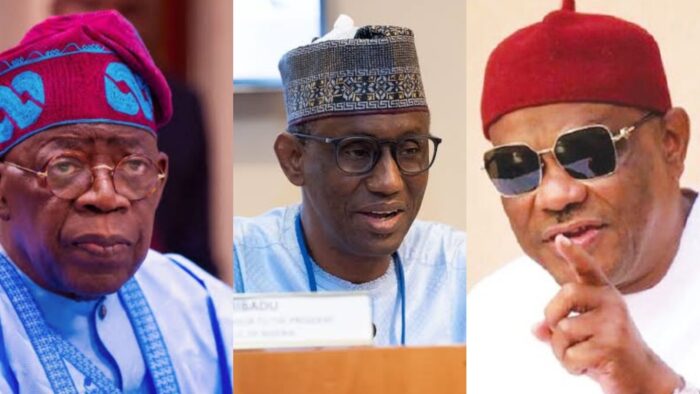
Over the past few days, Nigerians have watched a troubling pattern unfold. Former Rivers State governor and now Minister of the Federal Capital Territory, Nyesom Wike, re-entered the public arena with sharply confrontational rhetoric. Lines of battle were drawn. Opponents were named. Energy shifted from governance to competition.
Within forty-eight hours, a television interview in Port Harcourt dissolved into chaos. A hotel turned into a confrontation site. Journalists were threatened. Broadcasting equipment was seized. Rooms were broken into. Menacing voices echoed through corridors. People declared loyalty aloud while searching for someone to silence.
No one must accuse Wike of ordering any of this before we recognize what is happening. The psychology is already visible, and psychology often arrives before violence fully matures.
The psychology of permission
Political leaders do more than speak. They shape emotional environments.
When rhetoric sounds like mobilization, supporters begin to feel authorized. They do not think of themselves as criminals. They think of themselves as guardians. They believe they are defending power, protecting leaders, or rescuing a cause. Intimidation becomes loyalty. Violence becomes patriotism. Silence becomes obedience.
This shift always begins in the mind.
Those who stormed the ARISE TV setting likely believed they were acting for someone greater than themselves. That is what makes this moment dangerous: once violence becomes morally coded, restraint becomes harder to restore.
Silence from leadership creates tolerance
President Bola Ahmed Tinubu cannot interpret these developments as ordinary political tension. In political psychology, silence is rarely neutral. Silence signals space — and space quickly turns into permission.
We are standing at the beginning of a new year. It is only the first days of January 2026. The 2027 elections remain far ahead.
Yet emotions are already overheated.
If the temperature is this high now, what will happen when campaigns intensify, loyalties harden, and expectations collide? When violence becomes normalized early, it becomes harder to de-normalize later.
Wike’s presence as psychological signal
Another truth requires honesty.
As long as Nyesom Wike repeatedly leaves Abuja — the core of his federal responsibility — to re-enter Rivers State under the banner of “campaigning for Renewed Hope” and preparing political soil for reelection dynamics, tension will not dissipate.
Presence communicates meaning. Frequent presence communicates ownership. And in fragile spaces, perceived ownership invites guardianship.
Supporters do not merely see a visit. They see territory. They feel summoned. Combined with confrontational speech, such visits become psychological triggers: stand firm, watch enemies, defend turf.
In such atmospheres, one rumor, one provocation, one charged gathering may ignite events no one planned.
That is why this matter is no longer only political — it has entered the realm of national security judgment.
Rivers State is economically vital, emotionally intense, and historically sensitive. Repeated political agitation there, without deliberate cooling mechanisms, resembles repeatedly striking flint over dry leaves. You may not cause fire immediately, but you increase the probability each time.
Free speech must not require survival skills
Nigeria carries memories of eras where journalists suffered for speaking. Those memories live quietly inside citizens. When intimidation resurfaces, they awaken.
A nation that forces people to measure every word in fear is not strengthening democracy — it is weakening the human spirit.
A democracy collapses when truth feels dangerous and lies feel safer.
Media violence is not merely a press matter. It is a national risk variable. When the flow of truth is obstructed, power grows careless, and injustice finds darkness.
When ARISE TV was attacked, a message was sent
The disruption of ARISE TV’s live broadcast was more than an altercation. It was symbolic communication — intended or not.
Those journalists were not inciting violence. They were documenting reality. To storm them is to declare journalism a threat.
That has broader psychological consequences. Across the profession, reporters begin to wonder:
• Will telling the truth invite retaliation?
• Is it wiser to speak softly, or not at all?
• Whose name should never be mentioned?
Fear slowly rewrites journalism. Not by policy — by anxiety.
Because ARISE operates nationally, the shock echoes widely. When a major media outlet is attacked, the entire profession takes notice. If attackers boast and go unpunished, others learn a lesson: intimidation works.
When the press begins to withdraw, society breathes less oxygen. Corruption multiplies. Abuse hides. Citizens rely on rumor instead of verified knowledge. Countries do not weaken because journalists are too bold. They weaken because journalists become afraid.
Therefore, the line must be firm: cameras are not adversaries. Microphones are not weapons. Journalists are not combat participants. Treating them otherwise destabilizes the state itself.
And this danger is already visible in the headlines:
• “Suspected Thugs Attack Atiku’s Ally During Live TV Interview in Rivers” — Leadership
• “Political Thugs Storm Rivers Hotel, Disrupt ARISE News Live Interview” — ARISE News
• “Thugs Barge Into Rivers Hotel, Interrupt Live ARISE-TV Interview, Make Off With Camera and Gear” — The Nigerian Voice
These are not dramatic slogans — they are verified reports. Each headline signals that intimidation has moved from rumor into reality, from side conversations into national consciousness.
Headlines such as these reshape psychology. They teach citizens — and journalists — that speaking carries risk. And once people believe that speech is dangerous, democracy begins to suffocate quietly.
Why early enforcement matters — IGP and prosecution
This moment requires visible consequences — not emotional speeches.
The President must insist that the Inspector-General of Police trace every participant in the recent attacks, investigate those who identified themselves openly, and bring cases forward transparently in the courts.
This is not vengeance. This is psychological correction.
Society learns from outcomes. When intimidation faces law, the brain rewrites the rule: violence is not loyalty. When intimidation meets applause or indifference, the rule flips: violence is useful.
We are in the early stages. Early stages are when leaders prevent escalation — or accidentally permit it.
Where the NSA must step in
This is also the moment when the National Security Adviser must assume preventive coordination.
The NSA’s work is not about militarizing politics — it is about anticipating risk, cooling atmospheres, and ensuring institutional coherence.
Working with the police and security agencies, the NSA should map politically volatile regions, assess rhetoric capable of activating aggression, secure journalists and media assets during tense periods, quietly counsel political actors toward restraint, and ensure major political visits include structured de-escalation planning.
When a federal minister repeatedly returns to contested political space and each appearance heightens emotional charge, national security involvement is not dramatic — it is rational.
Prevention always costs less than aftermath.
Fubara’s contrasting posture matters
Governor Siminalayi Fubara repeatedly communicates peace, patience, and development. Those words matter. Leaders influence emotional climates. A society under pressure needs stabilizers, not accelerators.
Children watching now are learning a template for citizenship. They will either learn that politics is conversation — or that politics is combat. Nations are built differently depending on which lesson wins.
Words are atmospheres
Nyesom Wike remains influential. Influence carries moral weight. Words are not decorative — they are signals. They authorize behaviors. They comfort some people and alarm others. They create emotional realities.
When leaders speak like commanders, followers behave like combatants.
A democratic society cannot survive permanently in a psychological state of emergency.
National leadership must say the necessary words — and mean them
President Tinubu must speak as both statesman and guardian of national stability.
He should declare plainly that media intimidation, political violence, and attempts to silence debate will not stand — regardless of whose supporters are involved, or what political story is being told.
And then he must act consistently: through the National Security Adviser to stabilize the climate, through policing and courts to halt impunity, and through moral authority to call power back to humility.
This is not humiliation of any figure. It is prevention of a dangerous trajectory.
A warning — and a window of grace
Nigeria has suffered in past moments when warnings were ignored. Emotional climates hardened. Violence spread. Institutions bent. People lost trust.
But this moment is earlier than those were.
We are still early in 2026. We still have distance ahead before 2027 arrives. We still have time to prevent escalation from becoming habit.
Yet time only protects nations when leaders use it.
As long as Wike continues returning to Rivers in mobilizing fashion, tension will follow. Loyal crowds will interpret presence as command. Critics will interpret silence as danger. And journalists will calculate personal risk before pressing record.
That is how instability grows quietly — not through explosions, but through repeated rehearsals.
Leadership must instead introduce something different: calm, fairness, rule-based firmness, protection for media, and psychological peace.
A closing word — healing a young nation
Nigeria is still a young nation emotionally, still forming habits, still deciding what power means. Youth does not need harshness — it needs guidance.
A mature state protects its journalists, restrains its rhetoric, prosecutes those who weaponize chaos, and reminds political actors that service is nobler than domination.
If we choose patience, law, conversation, and respect, our young democracy will grow stronger. If we choose fear, spectacle, intimidation, and rivalry, it will grow brittle.
The future is not predetermined. It is shaped by voices, guarded by institutions, and healed by leaders who understand psychology as deeply as politics.
Before it is too late, we must calm our atmosphere, protect our truth-tellers, and hold everyone — even the powerful — accountable to the same laws, not because we dislike them, but because we want a nation that lasts.
And if we choose wisely now, Nigeria — still young, still learning — can grow into a society where fear no longer governs, where words heal instead of harm, and where power truly serves the people who entrusted it.
This writer, a psychologist, has no personal connection to any of the individuals mentioned. This commentary is written solely in pursuit of democratic accountability, justice, and good governance.
About the Author
Prof. John Egbeazien Oshodi is an American psychologist, an expert in policing and corrections, and an educator with expertise in forensic, legal, clinical, and cross-cultural psychology, including public ethical policy. A native of Uromi, Edo State, Nigeria, and son of a 37-year veteran of the Nigeria Police Force, he has long worked at the intersection of psychology, justice, and governance. In 2011, he helped introduce advanced forensic psychology to Nigeria through the National Universities Commission and Nasarawa State University, where he served as Associate Professor of Psychology.
He teaches in the Doctorate in Clinical and School Psychology at Nova Southeastern University; the Doctorate Clinical Psychology, BS Psychology, and BS Tempo Criminal Justice programs at Walden University; and lectures virtually in Management and Leadership Studies at Weldios University and ISCOM University. He is also the President and Chief Psychologist at the Oshodi Foundation, Center for Psychological and Forensic Services, United States.
Prof. Oshodi is a Black Republican in the United States but belongs to no political party in Nigeria—his work is guided solely by justice, good governance, democracy, and Africa’s development. He is the founder of Psychoafricalysis (Psychoafricalytic Psychology), a culturally grounded framework that integrates African sociocultural realities, historical awareness, and future-oriented identity. He has authored more than 500 articles, multiple books, and numerous peer-reviewed works on Africentric psychology, higher education reform, forensic and correctional psychology, African democracy, and decolonized models of clinical and community engagement.

Why Trump’s Move Against Maduro Makes Sense -By Isaac Asabor
Trump’s decision also invites other nations to step up, to reconsider their passive complicity in the face of egregious abuse....

From Aso Rock To The People: Governance Is Alive -By Danjuma Lamido
Nigerian politics is not for jesters or perpetual protesters; it is for serious-minded people with depth, experience, and a clear...

Bauchi Needs Governance, Not Distractions, as EFCC Does Its Job -By Yasir Shehu Adam
Bauchi State deserves progress, not distraction. Governance must take precedence over allegations, and service must outweigh self-defence. History will judge...

Game of Power: Throne Reclaim -By Abba Dukawa
Most Kwankwasiyya members are youths . Where were they when Kwankwaso parted ways with Hamisu Musa, Musa Gwadabe, and Dauda...
Silence Where It Matters: Bauchi’s Misplaced Priorities and Forgotten People -By Yasir Shehu Adam
A governor’s speech should reflect actual priorities. When basic human development sectors are absent from key policy messages, citizens have...