
Political Issues
Before Tomorrow Comes: The Case For Wike To Follow Peace With All Men -By Isaac Asabor
This is why the biblical call to peace is not weakness, it is strategy with foresight. A man who makes peace where he could have crushed earns something far more durable than fear: legitimacy. A leader who tempers authority with restraint builds alliances that outlive office. A politician who chooses reconciliation over humiliation preserves options for the future.

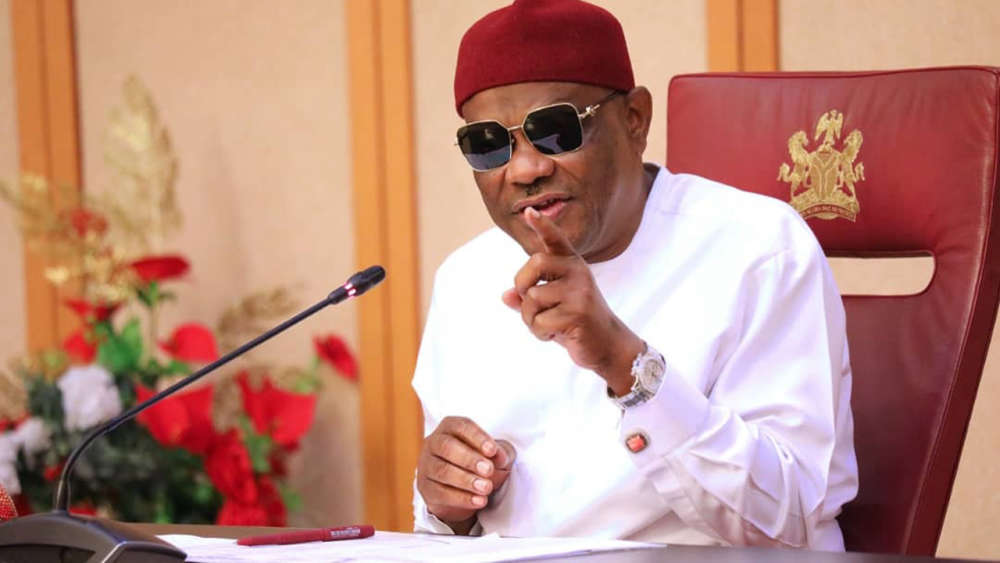
“Follow peace with all men, and holiness, without which no man shall see the Lord.” — Hebrews 12:14
“If it be possible, as much as lieth in you, live peaceably with all men.” — Romans 12:18
In as much as the foregoing scriptural injunctions have already threw light to what this piece is all about, it is germane to opine that there comes a point in public life when strength stops being measured by how loudly one can fight and starts being judged by how wisely one can restrain power. That point has arrived for Nyesom Wike.
This is not a sermon from the pulpit, nor is it a partisan hit job. It is an advisory opinion grounded in a simple biblical injunction that has survived kings, empires, revolutions, and fallen strongmen: follow peace with all men. Not because peace is fashionable. Not because conflict is inconvenient. But because tomorrow always comes, and it has a ruthless way of revisiting today’s choices.
Against the backdrop of the foregoing, there is no denying the fact that Wike’s political career has been built on confrontation. He thrives in it. He is most alive when there is an enemy to face down, a structure to dismantle, a foe to humiliate. For years, that posture delivered results: elections won, rivals subdued, authority asserted. But the very traits that once made him formidable are now fast becoming liabilities. With each passing day, the line between firmness and belligerence blurs; between decisiveness and needless provocation; between political courage and sheer cantankerousness.
The Bible is not naïve about power. Scripture does not deny conflict; it regulates it. Hebrews 12:14 does not say “admire peace” or “speak peace.” It says follow peace, actively, deliberately, persistently. Romans 12:18 adds a qualifier that is especially relevant to powerful men: “as much as lies in you”. In other words, when peace fails, let it never be because you refused to pursue it.
That qualifier is the problem. Increasingly, it is hard to argue that Wike is doing “as much as lies in him” to live peaceably with others.
He quarrels when silence would suffice. He escalates when restraint would serve him better. He dominates conversations that require tact. He burns bridges he may yet need to cross. This is not strength. It is political impatience masquerading as boldness.
History is littered with men who mistook perpetual combat for relevance. They believed enemies validated their importance. They assumed fear guaranteed loyalty. They forgot that power, unlike noise, has an expiry date. When it wanes, and it always does, what remains is memory. And memory is unforgiving.
Wike should understand this better than most. Nigerian politics is a long game. Today’s victor is tomorrow’s defendant before the court of public opinion. Today’s enforcer is tomorrow’s vulnerable elder statesman. Power in Nigeria does not end; it only changes hands. Those hands remember.
This is why the biblical call to peace is not weakness, it is strategy with foresight. A man who makes peace where he could have crushed earns something far more durable than fear: legitimacy. A leader who tempers authority with restraint builds alliances that outlive office. A politician who chooses reconciliation over humiliation preserves options for the future.
Wike’s current trajectory risks the opposite. He is becoming unnecessarily troublesome in a way that shrinks his coalition and expands his list of silent adversaries. Many may smile publicly, but politics is not theatre; it is memory management. Every insult, every needless confrontation, every scorched-earth tactic is archived. Tomorrow will demand access to that archive.
Peace is also about legacy. When the dust settles, how will Wike be remembered? As the man who could never disagree without detonating a bomb? As the politician who mistook perpetual warfare for leadership? Or as a strong actor who knew when to lower his sword?
Scripture is blunt about this. The pursuit of peace is tied to accountability beyond applause. Hebrews warns that without it, no man “shall see the Lord.” Strip away the theology, and the civic lesson remains: a life defined by endless conflict ends in isolation. No allies. No moral high ground. No sympathetic hearing when trouble comes.And trouble always comes.
Political relevance is temporary. Health is fragile. Public mood is fickle. Legal immunity expires. Age humbles even the loudest voices. The men who fare best when tomorrow arrives are those who did not spend today manufacturing enemies for sport.
This is not to suggest that Wike must become passive or surrender his convictions. Peace does not mean surrender. It means discipline. It means choosing battles, not fighting all wars. It means knowing that not every disagreement requires domination, and not every challenge is a threat to ego.
The biblical injunction allows firmness. It only forbids needless hostility.
Nigeria today is tense enough without leaders adding gasoline to every disagreement. The country is fatigued by conflict politics. There is a growing hunger for statesmanship, leaders who can disagree without destabilizing, who can assert power without poisoning the future.
Wike still has time to recalibrate. He still has leverage. He still has relevance. But relevance sustained by friction alone is a short-term loan with brutal interest.
Tomorrow will ask hard questions. Who stood with you when power shifted? Who spoke for you when you were no longer feared? Who remembered your restraint rather than your rages? Peace answers those questions in advance.
The counsel, then, is simple and unsentimental: follow peace with all men, not because they deserve it, but because tomorrow will demand it. The man who refuses peace today mortgages his defense tomorrow.
And tomorrow, whether welcomed or not, is already on its way.


The Kampala Declaration: How African Youth Can Lead Food System Transformation to Accelerate the Achievement of Zero Hunger by 2030 -By Emeka Christian Umunnakwe
If Africa is serious about achieving Zero Hunger by 2030, these perceptions must be confronted with deliberate action. Young people...


China Finances New ECOWAS Headquarters -By Kestér Kenn Klomegâh
In accordance with the agreement concluded between the ECOWAS and the Government of China, the building by the Shanghai Construction...


The Arrest Of Nicholas Maduro By The US And Other Matters -By Hajia Hadiza Mohammed
Since the advent of the current administration, the country has been weaken internally with self-serving leaders insensitive to the yearnings...


When Nations Break Their Reformers: Why EFCC Cannot Carry Nigeria’s Burden Alone — And Why Power Must Fear God -By Prof. John Egbeazien Oshodi
Public frustration with the EFCC over perceived selective enforcement is understandable. Nigerians see some arrests carried out suddenly and forcefully,...

Poor, Poor, Maduro -By IfeanyiChukwu Afuba
Little wonder his ouster elicited celebrations. The ease of his capture is telling. There is only one explanation for the...