
Political Issues
Beyond Politics: Obaseki and the Ethics of Governance -By Patrick Iwelunmor
Every administration brings its own vision and priorities. The current government inherited both opportunities and challenges and deserves the space to define its mission. Edo people benefit when new leadership builds upon existing foundations, improving systems, refining policies, and introducing innovations. This approach allows institutions to grow stronger while ensuring continuity in service delivery.

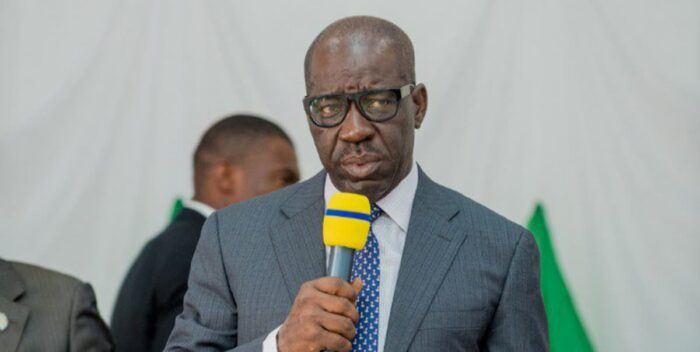
In Edo State, and indeed across Nigeria, politics has long been defined by opportunism, shifting alliances, and the relentless pursuit of personal gain. Public office is too often mistaken for personal inheritance, and integrity is frequently treated as an inconvenience. In such a climate, leaders who insist on governing with principle are misunderstood, maligned, or set up for political crucifixion. Yet within this difficult terrain, former Governor Godwin Obaseki stands out, not as a flawless man, but as a rare study in conscientious leadership, a reminder that disciplined governance remains possible even when the loudest voices pursue self-interest.
As a journalist, I feel compelled to bear witness to what I observed during Obaseki’s tenure, which ended on November 12, 2024. Silence in the presence of evidence would betray Edo people and the larger national hope for leaders who place citizens’ welfare above political expediency. Our politics is rife with transactional bargains, actors who treat loyalty as a commodity, and a system where public virtue is undervalued. Obaseki’s approach, steady, disciplined, and grounded in institutional respect, remains a notable example, demonstrating that principled governance can thrive even in challenging circumstances.
I had the privilege of meeting Obaseki in person, and that encounter left an enduring impression. He spoke with quiet certainty, a clarity of purpose neither boastful nor performative. At that meeting, he repeated with unwavering conviction, “I will not share Edo State’s money with anyone. The money belongs to the people of Edo State.” It was not a line for applause; it was a declaration of principle. His understanding of public finance and the sanctity of public trust stood out in a system often accustomed to backroom deals.
One of his close friends, who runs a major printing press in Lagos, reinforced my observations. He noted that Obaseki was never wasteful. In Edo State, payments for work followed strict due process, and those expecting shortcuts were disappointed. The governor abhorred transactional politics because he believed people-oriented governance could not coexist with a marketplace mentality. It was a reminder that public office is a duty, not a license for squandermania.
Obaseki’s discipline and principled leadership did not go unnoticed. His administration earned recognition from organisations valuing integrity and impact. In 2021, he received the Vanguard Governor of the Year Award. In 2022, the Zik Leadership Prize for Good Governance affirmed his ethical and professional standards. In 2023, the Nigeria Computer Society honoured him with the IT Gold Merit Award for digital governance strides, while the Rotary Club recognised his performance in public expenditure surveillance. ICAN ranked Edo State third nationwide in the 2020 Accountability Index. These accolades attest to a leadership style anchored in accountability, not proximity or patronage.
It remains my hope that Edo State continues to build on these foundations, strengthening institutions and advancing public welfare. After all, government is a continuum, and each administration has a duty to deepen the foundations it inherits.
Obaseki was not without human frailties. Some imperfections contributed to frictions with political associates who expected governance to bend to their whims. Yet focusing solely on his shortcomings would ignore the values he brought into office. His transparent, people-focused approach demonstrated that ethical leadership can persist, even in an environment often resistant to it.
Leadership comes with pressures, and courage is required to prioritise principle over short-term advantage. Those who resist transactional pressures can face challenges, yet lawful institutions exist to ensure accountability. Democracy thrives on dialogue and lawful scrutiny, not intimidation, which undermines governance and the dignity of Edo people.
Every administration brings its own vision and priorities. The current government inherited both opportunities and challenges and deserves the space to define its mission. Edo people benefit when new leadership builds upon existing foundations, improving systems, refining policies, and introducing innovations. This approach allows institutions to grow stronger while ensuring continuity in service delivery.
Obaseki’s tenure, in its discipline and refusal to conform to political theatrics, offers a timely lesson. Leadership is not measured by applause, political alliances satisfied, or personal wealth accumulated by the final term. It is measured by fidelity to principle, courage under pressure, and commitment to people. Edo State and Nigeria would do well to cultivate leaders who choose integrity over opportunism, dialogue over threats, and peace over conflict.
Celebrating Obaseki’s contributions does not diminish the promise or potential of the current administration. Edo State’s progress depends on each leader building on what came before, embracing transparency, innovation, and selflessness, and striving always to leave the baton in better shape for those who follow.



Guinea-Bissau’s PlayBook: Sustainable Development and Accountable Leadership -By Kestér Kenn Klomegâh
Guinea-Bissau's population was 2.1 million in 2023. With its arable land and water surfaces, agriculture is the backbone of the...


The New Wave Of Military Coups In Africa Continent -By Hajia Hadiza Mohammed
Here is the highlight of some of the reported coups in Africa recently. In 2021, Col. Assimi Goita seized power...


Washington and Moscow to Negotiate Peace for Ukraine -By Kestér Kenn Klomegâh
The two countries' teams have not yet held serious discussions but Russia and the US maintain contact, "including over the...
Another Look At Donald Trump’s Threat To Nigeria -By Hajia Hadiza Mohammed
We have reason to welcome American intervention if that is what will bring security and sanity in the land. America...


Oil and the Global Economy: Why Price Changes Matter More Than Ever
Oil still plays an enormously important role in the global economy. Read our blog to learn why oil price changes...