
Breaking News
Bill Gates: Nigeria will receive the largest intervention fund in Africa
He claims that the foundation’s prime goal is to assist eliminate health inequity globally, which includes eradicating illnesses like polio, malaria, and measles.

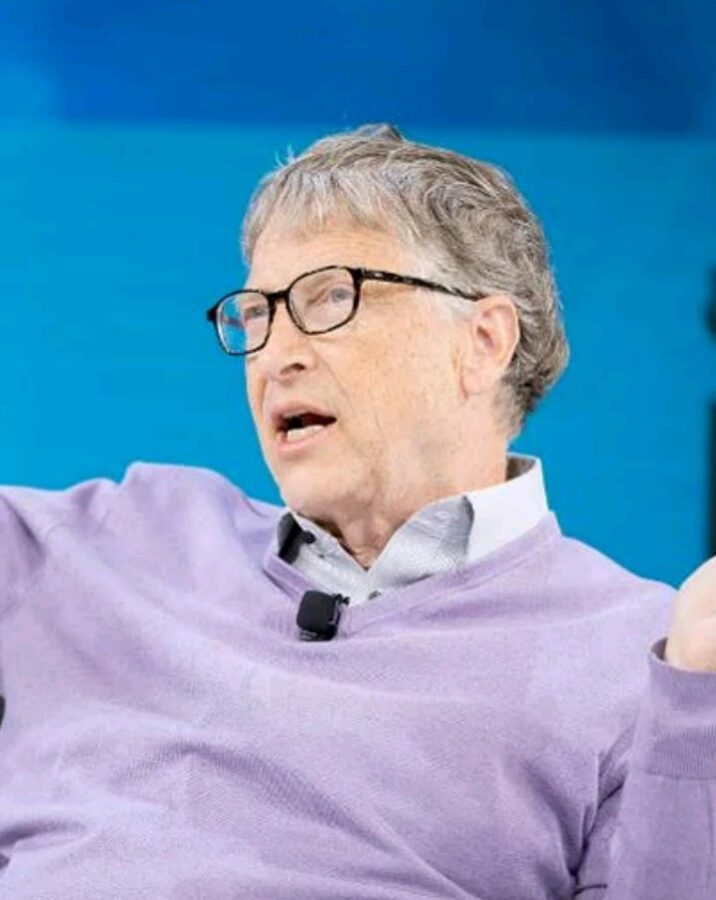
According to Bill Gates, co-chair of the Bill and Melinda Gates Foundation, Nigeria receives the majority of the foundation’s African intervention funding.
Gates made this statement on Tuesday in Abuja during a conversation with a limited group of journalists held in conjunction with the 2024 NutriVision Dialogue.
He claims that the foundation’s prime goal is to assist eliminate health inequity globally, which includes eradicating illnesses like polio, malaria, and measles.
“We spend a lot in Asia, but we spend even more in Africa. The country we spend the most in Africa is Nigeria.
“That makes sense because of the population and because of the incredible needs that are here.
“That means that I’ve literally spent billions in Nigeria.
“I feel glad that things like the child mortality rate have come down, but we could do a lot better,” he said.
Gates further said that the foundation planned to spend more in the future, disclosing that the funding would be centred on improving primary health care.
“Our work is almost entirely primary health care because the impact per dollar is dramatically greater than anywhere else,” he said.
He said that aside from health, the foundation also invests lots of money in the agric sector, noting that boosting agricultural productivity was critical to Nigeria’s economic development.
This, he said, would be achievable through access to high-yield and climate-resistant seeds, fertilisers, improved and timely information, and better weather predictions for farmers.
According to him, this will significantly boost agricultural output and lower food costs.
The philanthropist said that the foundation supports partners in implementing food fortification of some staple foods, noting that this improves the nutritional quality of food supply and provides a public health benefit.
He emphasised that having access to a variety of low-cost foods, especially, milk and eggs, is quite powerful in reducing malnutrition.
Gates noted that the time was apt to utilise innovative ideas and tools in the health and agricultural sectors to substantially reduce malnutrition.
The News Agency of Nigeria (NAN) reports that since its inception in 2000, the foundation has supported partnerships with African regional institutions, national governments, and local communities in 49 African countries.
The foundation contributes funding and scientific expertise in support of their agendas for change.
These partnerships have driven the success of numerous health, agriculture, equality, and anti-poverty initiatives.
The foundation has committed more than $7 billion through 2026 to support African countries and institutions working to develop and implement innovative approaches to confront hunger, disease, gender inequality, and poverty. (NAN)



Poor, Poor, Maduro -By IfeanyiChukwu Afuba
Little wonder his ouster elicited celebrations. The ease of his capture is telling. There is only one explanation for the...


Why African Leaders Must Fix Governance Before Crying Sovereignty -By Isaac Asabor
One of the great contradictions of African leadership today is selective morality. Leaders speak passionately about international law while violating...


Baba Has Entered The Classroom -By Isaac Asabor
If what Trump is doing is walking into a noisy global classroom and insisting on discipline, then let us be...

As Trump Exposes Why Tinubu Must Go Sooner -By SKC Ogbonnia
The Nigerian president is not only culpable of heinous crimes, but he is also weakened beyond redemption. His continued stay...


How Lavrov’s Philosophy of “Ubuntu” Reflects on the Level of Africa’s Media Presence in Russia -By Kestér Kenn Klomegâh
The December 19–20 Ministerial Conference reaffirmed commitments to fully implement the Russia–Africa Partnership Forum Action Plan (2023–2026), adopted at the...