
Forgotten Dairies
Building Bricks, Bridges, and Bushes in the Concrete City -By Ariwoola Samuel Akinwale
The implication of this for Lagos in the area of livability would include a continued rise in temperature levels, flooding, loss of biodiversity, and reduced social space. This is because soil no longer absorbing rain brings about flooding. The urban heat island effect, leading to hotter streets and homes, is caused by asphalted and over-cemented environments. A built environment brings about a loss of life for birds, insects, shade trees, and disruption in the ecosystem. These problems are further complicated by climate change, weak urban planning and execution policy, and anthropogenic activities.

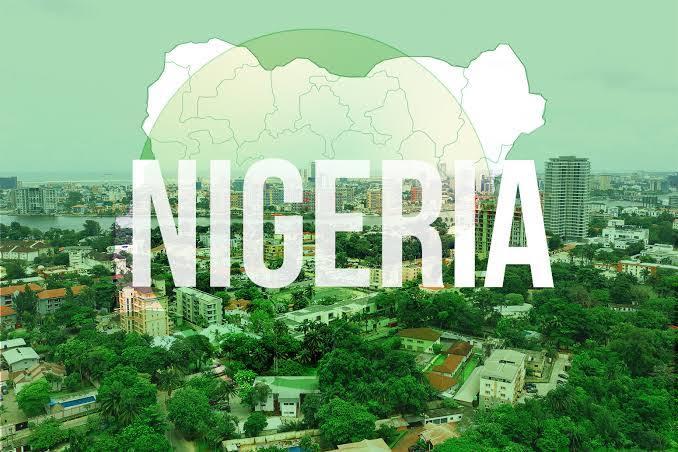
Compounds with cemented floors are now a symbol of wealth and social mobility in many parts of Nigeria. The culture of a green environment is fast dying. Bushes, bare floors, or ground are seen as “dirty,” “wild,” and “undeveloped” by many. In homes, offices, parks, and public places, sandy ground is replaced by interlocking stones. Resultantly, flooding, urban heat island effect (rise in temperature), and accidents are now common experiences in many cities due to impenetrable surfaces of concrete and asphalt.
This essay is informed by my personal observation of road and drainage expansion along Allen Avenue, a place I traverse daily to and from work. This project, I assume, is aimed at addressing frequent flooding in that area. However, in that area, a tree that served as shelter from the sun for road users was brought down at the bus stop. This got me thinking about how our conception of development impacts on environmental degradation. I argue here that our conception of development calls for a rethink and the need to revisit and strengthen the execution of our environmental regulatory frameworks in many of our cities. In this reflection, I examine our collective fascination with cemented structures: their causes, consequences, existing regulatory frameworks, and execution gaps in Lagos and other urban centres in Nigeria generally.
Demographic Changes and Challenges
According to World Population Review, Lagos’s 2025 population is around 17,156,400 with an annual growth rate of 3.75%, being the latest revision of the UN World Urbanization Projects. According to the World Economic Forum, Lagos tops the list of the fastest-growing cities in Africa. This portends a further complication of traffic congestion, industrial activity, housing deficits, road networks, interchanges, link roads, parks, and flyover bridges now and in the future of the city.
Meanwhile, all of these mean that more vehicles, asphalt, and cement are needed in building the mega city that Lagos is. There will be a need to erase shrubs, weeds, and the ecosystem that has continued to cool the city, reduce flooding, and lower noise in the environment. This is the current situation of Allen Avenue I referenced earlier.
Urban Liveability
The implication of this for Lagos in the area of livability would include a continued rise in temperature levels, flooding, loss of biodiversity, and reduced social space. This is because soil no longer absorbing rain brings about flooding. The urban heat island effect, leading to hotter streets and homes, is caused by asphalted and over-cemented environments. A built environment brings about a loss of life for birds, insects, shade trees, and disruption in the ecosystem. These problems are further complicated by climate change, weak urban planning and execution policy, and anthropogenic activities.
According to Thinkhazard, a World Bank Group website that provides a general view of the hazards for a given location, Lagos’s extreme heat hazard is classified as medium. This implies that there is more than a 25% chance that at least one period of prolonged exposure to extreme heat, resulting in heat stress, will occur in the next five years. Meanwhile, “(Lagos) river flood hazard is classified as high based on this; this means that potentially damaging and life-threatening river floods are expected to occur at least once in the next 10 years.” The wildfire hazard is classified as medium, meaning there is about a 10% to 50% chance of experiencing weather that could support a hazardous wildfire that may pose some risk of life and property loss in any given year. This calls for a rethink in what are called development efforts or initiatives at the moment.
Rethinking Development
Development is associated with solid structures among the leadership circle and residents of the state. Lagos is a megacity; cement is its modernity in popular opinion. Premises and compounds in gated communities, residential, and industrial areas that used to be sand and laterite floors are replaced by interlocking stones, poured cement, and asphalt.
The concept of development and modernity is associated with solid structures—floor tiles, interlocking pavers, skyscrapers, offices, malls, houses, and endless walls. Every vacant space is waiting to be built on. This has led to the vanishing of trees and bushes within the Lagos inner-city.
Open grounds are monetized for survival—as makeshift shelters, shops, markets, stalls, and informal sectors of the economy. Vacant spaces within the compound are converted to new use as extra rooms for rent and lease, pushing up the plot coverage to 80-90%.
Real estate is one of the most reliable investment portfolios in an unstable economic environment like Nigeria, where real estate value appreciates in direct proportion. Meanwhile, real estate value is often viewed by how much of the vacant space is put into concreted cement. Bare ground attracts lesser value because it is considered underdeveloped.
Also, government performance is still rated in terms of infrastructural developments and projects executed, as against the environmental impact on livability. The Lagos State Physical Planning Permit Regulations (2019) defines “development” as: “(1) the carrying out of any building, engineering, mining, or other operation in, on, over, or under any land; (2) the making of any material change in the use of any land, building structure, or conversion of land, building structure from its established or approved use, and/or including the placing or display of advertisement on the land, building, or structure; (3) the making of any environmentally significant change in the use of any land or demolition of building including felling of trees.”
One shortcoming of the above definitions is that they omit environmental conservation as part of development—a widely acceptable view. Although this document clearly recognizes the place of environmental conservation, as the rules showed, the implication of this conception is that the development of an environment or land is about putting it into use of any kind—significant and material change.
According to the same document, a “developer” means “a builder, contractor, creator, pioneer, and owner.” In the absence of a regulatory framework, such a conception is fatal to environmental conservation and sustainability.
Regulatory Framework
Thankfully, regulatory frameworks exist. The same document cited earlier, the Lagos State Physical Planning Permit Regulations (2019), specifies limits on plot coverage during construction. The act stipulates that for low-density residential areas, high-density residential areas, and commercial/industrial areas, 50%, 60%, and 70% applies respectively. Others shall be as specified in the 71 relevant Operative Development Plan or scheme for an area. The objective is to ensure 50-60% open space—yet enforcement and compliance are weak.
The Lagos State Building Control Agency (LSBCA) and the Ministry of Physical Planning and Urban Development enforce building approval standards. Town planners have had to decry poor regulation due to weak enforcement by concerned authorities, with many developers ignoring open space rules.
The Environmental Impact Assessment Act (1992) stipulates Environmental Impact Assessment standards for major projects before commencement. While the Federal Government Environmental Protection Agency Act (1998) set environmental safeguarding policy, the Lagos State Environmental Protection Agency (LASEPA) enforces EIA, waste management, drainage, and green space inclusion. So, what is missing?
Way Forward
Fundamentally, the concept of development in urban mapping, planning, and execution should change in light of the need to preserve and conserve greenery and the general ecosystem in modern cities in Nigeria. Existing regulatory frameworks must be strengthened through willful execution by authorities and the judiciary. Leadership optics in governance should improve the game of integrity against bribery and corruption as obstacles to law and order in the built environment. Consideration of greenery as a component of modernity needs advocacy by the media, civil societies, and public intellectuals.
Examples abound. The Lekki Conservation Centre offers an example of a preserved green space model within Lagos. This is managed by the Conservation Foundation. It protects about 78 hectares of wetland and biodiversity within the Lekki axis. Operation Green Lagos (LASPARK), started in 2008, planted over 7 million trees, created public parks, and converted degraded places into green corridors. Similarly, the Green Walls Experiment in Agege initiates vertical structures with plants to lower indoor temperature. These initiatives should be strengthened, supported and revitalised.
Conclusion
Social inequality is evident in the environmental livability across class. Wealthier and gated communities maintain pockets of greenery, while poorer districts suffer from floods and the hottest zones in the city. Greenery must be made general.
The benefits of conserving our environment include improvement in air quality, mental health, stress reduction, social interaction, and respiratory well-being. This also promises environmental resilience—biodiversity, water management, and preservation of public recreation areas.
Experts have advised the combination of traditional drainage systems with green assets for multifunctional infrastructure. Community engagement and local materials should be used in achieving a green Lagos. Cross-sector partnerships involving NGOs, private investors, and the government are needed to support green initiatives and development.
Ariwoola Samuel Akinwale wrote this from Lagos
08059120749
ariwoolaakinwale@gmail.com


When Nations Break Their Reformers: Why EFCC Cannot Carry Nigeria’s Burden Alone — And Why Power Must Fear God -By Prof. John Egbeazien Oshodi
Public frustration with the EFCC over perceived selective enforcement is understandable. Nigerians see some arrests carried out suddenly and forcefully,...

Poor, Poor, Maduro -By IfeanyiChukwu Afuba
Little wonder his ouster elicited celebrations. The ease of his capture is telling. There is only one explanation for the...


Why African Leaders Must Fix Governance Before Crying Sovereignty -By Isaac Asabor
One of the great contradictions of African leadership today is selective morality. Leaders speak passionately about international law while violating...


Baba Has Entered The Classroom -By Isaac Asabor
If what Trump is doing is walking into a noisy global classroom and insisting on discipline, then let us be...


As Trump Exposes Why Tinubu Must Go Sooner -By SKC Ogbonnia
The Nigerian president is not only culpable of heinous crimes, but he is also weakened beyond redemption. His continued stay...