
Global Issues
Building New Global Order: Challenges and Perspectives -By Kestér Kenn Klomegâh
Relations with United States
According to reports Russia’s and the United States “outlooks on numerous global problems do not converge,” but “for major powers, this is actually normal.” Solutions to the contradictions between Russia and the US that would satisfy both sides are possible: “Whatever the disagreements, if we treat each other with respect, then bargaining, even the toughest and most persistent, will still aim to reach a consensus, and this means that mutually acceptable solutions are possible.”

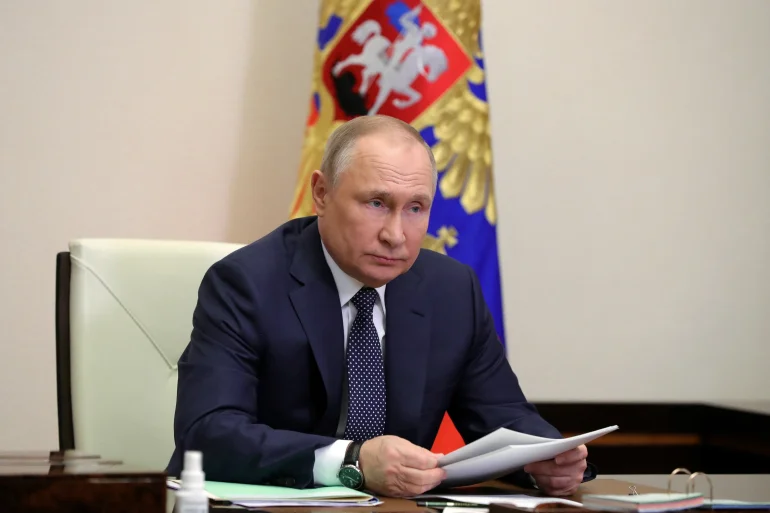
At the 22nd Annual Meeting of the Valdai Discussion Club, the focal topic centered on the challenges and perspectives of building a new global political and economic architecture, and that has, once more, become prominent in various discussions by participating foreign and Russian experts. These were handled earlier as panel discussions leading to the participation of Russian President Vladimir Putin, as a guest speaker, who, this time around, underlined the necessity to create a new foundation for the world society. The central idea here was to halt further the domination western hegemony, urging the need to understand the primary causes of Russia-Ukraine crisis, the importance and the power limits of NATO within the security dimension in the Baltics, which borders Russia. There were other issues which, Putin, annually, addresses and hammers home, in his speeches, at the Valdai gathering. That was not the first, but the 22nd time. Historical records indicate that Vladimir Putin decreed the establishment of Valdai Discussion Club as academic NGO and it has been meeting regularly since then.
Emerging Stakes for New World
President Vladimir Putin, in his speech at the Valdai plenary session, clarified, right from the beginning, that the current global environment, is explicitly marked by rapid and often dramatic changes, requires readiness for any development, and as the stakes in the current situation are extremely high, these development could originate from any part of the world.
“We have repeatedly stressed that we live in a time when everything is changing very quickly, and these changes are often dramatic. Of course, none of us can fully predict the future, but that does not relieve us of the responsibility to be prepared for anything that may happen,” Putin said. “Both practice and recent events show that we must be ready for anything. In such times, every person’s responsibility is especially great – responsibility for their own destiny, for the future of their country, and for the entire world. The stakes, in this case, are extremely high,” the president reiterated to an applause from the audience in the hall.
Putin’s Statements on Ukraine
There is one more question. How should bilateral Russian-Ukrainian issues, which were the natural outcome of the breakup of a vast country and of complex geopolitical transformations, have been resolved? By the way, it is believed that the dissolution of the Soviet Union was linked to the position of Russia’s then leadership, which sought to rid itself of ideological confrontation in hopes that now, with communism gone, Russia and Ukraine have to be brotherly former Soviet republics. Nothing of the sort followed. Other factors in the form of geopolitical interests came into play. It turned out that ideological differences were not the real issue.
As well-known, the Russia’s demilitarization was jointly approved by the State Duma and the Federation Council, which legally authorized the invasion of Ukraine since Feb. 24, 2022. Since then, multiple complex developments has already happened, thus complicating relations between Russia, on one side, and the United States and Europe on the other side. With the North Atlantic Treaty Organization (NATO) has its new voluminous book. That however, Putin referred to the conflict in Ukraine as constantly escalated by Europe, and simply described the West and their “servants in Kiev” who consider the people of Ukraine expendable material, a “destructive tool in others’ hands.”
While Kremlin has expressed hope that Kiev would find the strength to meet at the negotiating table, latest authentic reports show that Russian troops have captured two-thirds of Kupyansk in the Kharkov Region and have placed Kirovsk in the Donetsk People’s Republic under their full control. The settlement of Yunakovka in the Sumy Region is under the Russian army’s control and Volchansk in the Kharkov Region is half-controlled and its full capture is a matter of time. Russian troops have entered Seversk, Konstantinovka and Krasnoarmeysk in the Donetsk People’s Republic (DPR), and need to liberate just 0.13% of the territory of the Lugansk People’s Republic (LPR).
There is “confusion in the ranks of the Ukrainian military; they do not understand what is happening on the front line.” The Ukrainian army lost about 44,700 troops at the engagement line in September, with irretrievable losses accounting for a half of this figure. From January to August, a total of 150,000 Ukrainian servicemen deserted.
Relations with United States
According to reports Russia’s and the United States “outlooks on numerous global problems do not converge,” but “for major powers, this is actually normal.” Solutions to the contradictions between Russia and the US that would satisfy both sides are possible: “Whatever the disagreements, if we treat each other with respect, then bargaining, even the toughest and most persistent, will still aim to reach a consensus, and this means that mutually acceptable solutions are possible.”
The current US authorities state their interests directly, without unnecessary hypocrisy: “It’s always better to clearly understand what other persons are up to and what they’re trying to achieve than to try to discern the real meaning in a series of understatements, ambiguities, and vague hints.” Moscow is closely monitoring the escalating militarization of Europe, and Russia’s response measures “will not be long in coming. There are those who hold out hope to achieve their goals, to deliver, as they say, a ‘strategic defeat’ to Russia,” but even the “most obtuse hardheads” will soon realize that it is impossible.
“We see that the current US administration is guided primarily by the interests of its own country.” During the visit to Alaska, the restoration of bilateral relations was discussed, as they are “not just at an impasse, but at the lowest level in all of recent memory.”
American leader Donald Trump is a comfortable conversation partner; he knows how to listen and hear. Russia is ready to support US President Donald Trump’s proposal to resolve the conflict in the Gaza Strip if it leads to the creation of two separate states, as this step is the key to a “final resolution of the Palestinian-Israeli conflict.” Trump’s statement referring to Russia as a “paper tiger” may have been made ironically.
Multipolar Structure Shaping the World
Undeniably, the current geopolitical conditions are primarily and noticeably shaping the world. Countries, from Latin America down to Africa and cutting across Asian region, have joined the process of working toward a changing global environment. According to Putin’s interpretation a multipolar world has already taken shape: “Virtually nothing is predetermined. Everything could unfold in different ways. Much depends on the precision, deliberate-ness, restraint, and thoughtfulness of each international actor’s actions.”
In a multipolar world, all countries must seek common ground for their interests. No one is ready to play by rules set some place overseas.” Putin asserted: “The relationships within the global majority, the prototype of political practices necessary and effective in a polycentric world, are based on pragmatism and realism, a rejection of bloc philosophy, and the absence of rigid, unilaterally imposed obligations or models with senior and junior partners.”
The “bloc attitude” of some countries aimed at triggering a confrontation is senseless and anachronistic. New international organizations, such as BRICS and the SCO, are developing today in the “spirit of 21st-century diplomacy”: “They are not against anyone; they are for themselves.” It is precisely in this spirit – the spirit of 21st century diplomacy – that new institutions are developing. These include the expanding BRICS community, organisations of major regions such as the Shanghai Cooperation Organisation, Eurasian organisations, and more compact yet no less important regional associations. Many such groups are emerging worldwide.
Multipolarity and polycentrism are not just concepts; they are a reality that is here to stay. Today Russia’s partners include – the BRICS founders: China, India, Brazil and South Africa. This includes Belarus and, incidentally, North Korea. These are our friends in the Arab and Islamic world – above all, Saudi Arabia, the United Arab Emirates, Qatar, Egypt, Turkiye and Iran. In Europe, these include Serbia, Hungary and Slovakia. And there are many such countries across Africa and Latin America.
Nevertheless, the fundamentally new global atmosphere in which the tone is increasingly being set by the countries of the Global Majority, holds out a promise that all actors will somehow have to take into account each other’s interests when looking for solutions to regional and global issues. After all, no one can achieve their goals all by themselves, in isolation from others. Despite escalating conflicts, the crisis of the previous model of globalization and the fragmentation of the global economy, the world remains integral, interconnected, and interdependent, according to Putin’s explanatory words.
Paradoxically, one must be ready for multipolar, with an ambition to influence the most significant economic and political processes, both in a harmony and balance way, and perhaps, situation unique to developing countries that suffered from western hegemony, imposition of unilateral decisions. These countries have now and finally getting up from their indepth slumber, and stepping away from their own sluggish attitudes, and thoughtfulness, realizing that there is the need to work collective toward a change – a framework within which to interactively promote their ideas and suggest innovations in development and foreign policy. The barometer of public opinion indicates this across the board. Indeed, the power of the United States and its allies reached its peak at the end of the 20th century.
The Valdai Club has had the great privilege of organizing this meeting for 23 consecutive years, devoted to discussing the most topical issues around the world, and in relation to Russia’s domestic developments after Soviet’s collapse. This is not an easy task, but it is often achieved here at Valdai. From September 29 to October 2, 2025, Sochi hosted the 22nd Annual Meeting of the Valdai Discussion Club titled: “The Polycentric World: Instructions for Use.” The Club’s flagship international conference brought together 140 participants from 42 countries, including Algeria, Brazil, China, Egypt, Ethiopia, Germany, India, Indonesia, Iran, Kazakhstan, Malaysia, Pakistan, Russia, South Africa, the United Arab Emirates, the United Kingdom, the United States, Uzbekistan, and Venezuela.


The New York Times Misses the Forest for the Trees in Nigeria -By Nnamdi Prince
If the Times is so concerned about accurate data, perhaps it should direct its considerable resources toward independently investigating and...


The Pragmatism of Principle: Redefining Loyalty in an Age of Change -By Florence Ozor
While I do not endorse political nomadism, one must acknowledge that strategic realignment can be expedient. Take Peter Obi: after...


Lessons for Today: MLK for Continental African Leadership – A Psychoafricalytic Mirror for Power, Dignity, and Continental Renewal -By Psychologist John Egbeazien Oshodi
When African leaders abandon indigenous wisdom, they often adopt the colonial logic of control. Citizens become subjects. Protest becomes treason....


The Poverty Crisis: A Global Challenge to Human Dignity and Development -By Jennifer Joab
The poverty crisis is not just an economic problem but a profound human tragedy that affects the social, political, and...

Good Governance as a Tool for National Development -By Blessing Matthew
Good governance prioritizes the interests and welfare of the people above personal or sectional interests. It encourages transparency, accountability, rule...