
National Issues
Can the Defence Minister‑Designate General Musa Be Nigeria’s Last Hope for Security Renewal? -By Abba Dukawa
As Defence Minister‑designate, expectations are high. Nigeria stands to benefit from Musa’s mastery of counter‑insurgency operations, his experience managing joint military commands, and his insistence on accountability within the security system. If granted the political backing and operational freedom required, his leadership could strengthen the armed forces, close critical security gaps, and intensify pressure on insurgents, bandits, and violent criminals across the country.

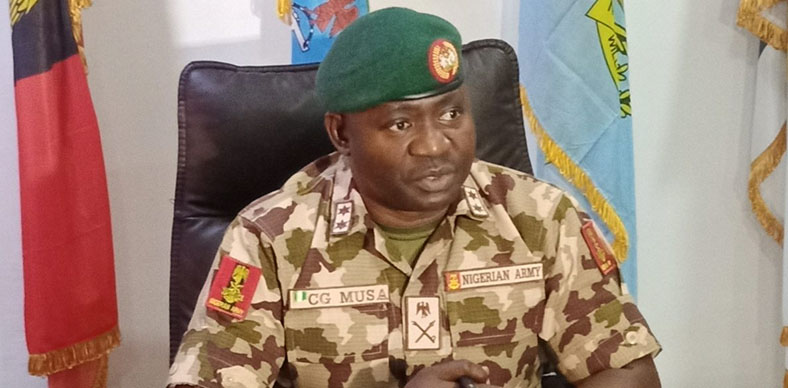
Nigeria stands at a tipping point, where insecurity threatens the very foundations of national stability and erodes public confidence in government authority. Last month, the country experienced some of its bloodiest days as terrorists and bandits unleashed violence on defenseless citizens across the Northeast, Northwest and North‑Central regions. During this period, terrorists abducted and publicly executed Brigadier General Uba and three of his men in Borno State.
In response to this urgent reality, President Bola Tinubu declared a nationwide security emergency, authorising the police and army to recruit additional personnel. The President also ordered the withdrawal of officers from VIP protection units for redeployment to conflict zones and urged Nigerians to remain calm, vigilant, and supportive of security efforts, emphasizing that “we are in this fight together, and together we shall win.”
This move is aimed at addressing the country’s security challenges, including recent mass kidnappings of schoolchildren and attacks on places of worship. The President also nominated retired General Christopher Gwabin Musa—the immediate past Chief of Defence Staff—as the new Minister of Defence. This nomination is far more than a routine political transition; it signals the government’s intent to confront insecurity with competence, clarity, and unwavering resolve.
General CG.Musa enters the role with a field‑tested reputation. His understanding of Nigeria’s security architecture is shaped by years of direct engagement in the country’s most volatile conflict zones. Before rising to Chief of Defence Staff, he played pivotal roles in the fight against Boko Haram and the Islamic State West Africa Province (ISWAP), commanding key formations in the northeast. His leadership in Operation Hadin Kai earned widespread recognition for improving operational discipline, strengthening inter‑agency collaboration, and weakening insurgent networks that once operated with near impunity. Under his command, the operation liberated over 1,500 hostages and reclaimed strategic territories in Borno and Yobe.
He oversaw the acquisition of advanced weaponry—from T‑129 ATAK helicopters to Bayraktar TB2 drones—and launched community‑engagement programmes that constructed 50 schools and 30 health‑care centres in conflict‑affected regions. He also initiated the National Youth Security Summit and scholarship schemes supporting 1,000 students annually.
As Chief of Defence Staff, Musa became known for his bluntness—a quality Nigerians often say they desire but rarely see in security leadership. He repeatedly warned that Nigeria must cut off the financial lifelines fuelling insurgency, stressing that terrorism thrives not only on ideology but also on steady funding streams, illicit supply routes, and porous borders. He frequently advocated for securing Nigeria’s borders through modern surveillance technology and reinforced patrol systems, insisting that no nation can defeat crime if its territorial boundaries remain exposed.
Throughout his tenure as Chief of Defence Staff, General Musa actively promoted the welfare and recognition of officers and troops as a strategy to boost morale and operational effectiveness. He consistently tasked senior officers to prioritize the welfare of their personnel, emphasizing that proper working conditions are essential. He instituted a system for rewarding exceptional service and acts of bravery, sometimes offering monetary rewards or commendation awards. During visits to operational areas, he frequently expressed appreciation for the troops’ conduct, making it clear that their efforts in maintaining national security were observed and valued by army leadership and the government.
Musa also championed a moral and professional revival within the Armed Forces, emphasizing discipline, dignity, and service. Under his watch, coordination among the Army, Navy, and Air Force improved significantly, accompanied by a renewed insistence that troops in harm’s way deserve better welfare, equipment, and institutional respect. Many officers privately acknowledged that morale rose under him because he led with clarity and made personal visits to crisis zones—often without fanfare or media coverage.
While some critics argue that Musa’s approach is too tough or uncompromising, supporters counter that his firmness reflects the reality Nigerians face daily: communities under siege, unsafe highways, and families mourning needless deaths caused by armed criminals emboldened by years of leniency. “Peace cannot be negotiated with those who reject peace,” he once said—a statement that resonated strongly with citizens tired of dialogue that produces no meaningful results.
As Defence Minister‑designate, expectations are high. Nigeria stands to benefit from Musa’s mastery of counter‑insurgency operations, his experience managing joint military commands, and his insistence on accountability within the security system. If granted the political backing and operational freedom required, his leadership could strengthen the armed forces, close critical security gaps, and intensify pressure on insurgents, bandits, and violent criminals across the country.
At the same time, Nigerians expect him to balance force with reform—addressing longstanding issues such as troop welfare, inter‑agency rivalry, equipment deficits, intelligence lapses, and the need to rebuild community trust in the security forces. Strengthening intelligence‑gathering and surveillance systems is essential to combat terrorism and banditry, while partnerships with regional and global security agencies must be reinforced. Emphasizing innovation and technology—such as advanced surveillance, AI‑driven threat analysis, and regional cooperation—will be crucial, as these measures can make guerrilla warfare more predictable and hold attackers more accountable.
A Defence Minister must not only direct battles but also create a strategic environment where peace can endure long after the fighting has stopped. General Musa now faces one of the most consequential assignments of his career. The nation hopes his appointment ushers in a new era where courage meets strategy, firmness meets accountability, and leadership meets the urgent need for national renewal. In a time of deep insecurity, he carries the weight of public expectation and perhaps the last credible chance for a decisive turnaround.
May God guide General Christopher Gwabin Musa as he steps into a role that demands strength, wisdom, and unwavering commitment to Nigeria’s peace and unity.
Dukawa writes from Abuja and can be reached at abbahydukawa@gmail.com.



The Pragmatism of Principle: Redefining Loyalty in an Age of Change -By Florence Ozor
While I do not endorse political nomadism, one must acknowledge that strategic realignment can be expedient. Take Peter Obi: after...


Lessons for Today: MLK for Continental African Leadership – A Psychoafricalytic Mirror for Power, Dignity, and Continental Renewal -By Psychologist John Egbeazien Oshodi
When African leaders abandon indigenous wisdom, they often adopt the colonial logic of control. Citizens become subjects. Protest becomes treason....


The Poverty Crisis: A Global Challenge to Human Dignity and Development -By Jennifer Joab
The poverty crisis is not just an economic problem but a profound human tragedy that affects the social, political, and...


Good Governance as a Tool for National Development -By Blessing Matthew
Good governance prioritizes the interests and welfare of the people above personal or sectional interests. It encourages transparency, accountability, rule...


Role of Youths in Nation Building -By Kusompwa Lazarus Motiyedi
It is true that today’s youth did not experience the horrors of the Nigerian Civil War or the severe economic...