
Forgotten Dairies
Connected To Darkness: How Mowe–Ibafo Became A Case Study In Nigeria’s Power Failure -By Isaac Asabor
Calling IBEDC to order is not about witch-hunting; it is about restoring balance. Electricity is not a luxury. It is a foundational input for modern life and economic development. Communities like Mowe, Pakuro, Ibafo, Arepo and Magboro are not asking for miracles. They are asking for consistency, fairness and basic competence. They are asking that if power is rationed, bills should reflect that reality. They are asking that faults be fixed within reasonable timelines. They are asking that communication be honest, not evasive.

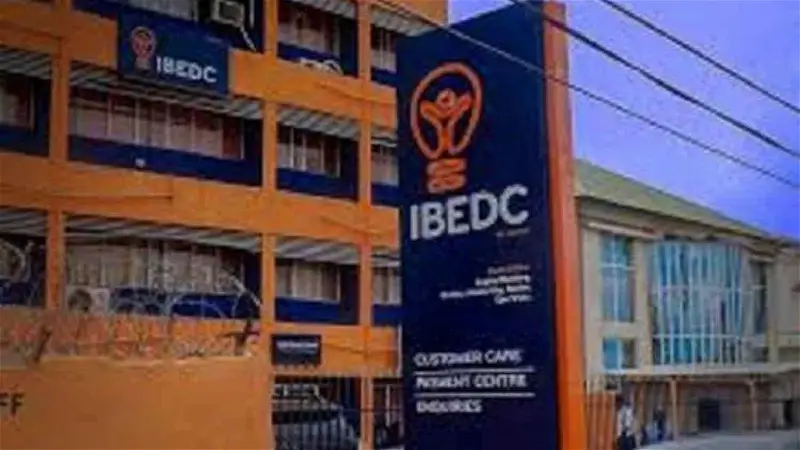
For close to two decades, communities along the Mowe–Ibafo axis lived in enforced darkness, completely cut off from the national electricity grid. Neighbourhoods such as Mowe, Ibafo, Arepo, Magboro, Asese, Loburo, and particularly surveyor axis of a community called pakuro, and the ever-expanding constellation of estates around them bore the brunt of this prolonged neglect. Power was not unreliable; it was nonexistent. Homes, schools, clinics, churches, mosques and small businesses survived on generators, candles and sheer endurance, while official promises of grid connection came and went with election cycles. Darkness was the only constant.
That long blackout was not an accident of geography or population size. These are not remote villages tucked away in the hinterlands. The Mowe–Ibafo axis sits strategically along the Lagos–Ibadan corridor, one of the busiest economic arteries in the country. It is home to civil servants, artisans, traders, factory workers, professionals and thousands of young families priced out of Lagos but still economically tied to it. The growth of the area has been explosive, yet basic infrastructure, most critically electricity, lagged shamefully behind.
When connection to the national grid eventually came, it was supposed to mark the end of an era of hardship. Instead, it exposed a deeper and more infuriating problem: connection without supply is nothing but a cosmetic victory. Relief proved short-lived. Electricity in the Mowe–Ibafo axis has remained epileptic, erratic and routinely rationed, leaving consumers frustrated, financially drained and psychologically exhausted. Light comes today, disappears tomorrow, and may not return for days. In some neighborhoods, power supply is reduced to a few hours every several days, often at odd hours when it is least useful.
Residents are blunt in their assessment. “We are connected in name only,” is a common refrain. “Light comes and goes as it pleases, yet the bills keep coming.” This is not exaggeration or emotional outburst; it is lived experience. Many households still rely heavily on generators despite being “on the grid,” spending a significant portion of their income on fuel in an economy already battered by inflation. For small businesses, barbers, tailors, welders, cold-room operators, cybercafés, the cost is even higher. Unstable electricity means lost customers, damaged equipment and reduced productivity. In practical terms, unreliable power is a silent tax on survival.
Compounding this frustration is the long-standing notoriety of the Ibadan Electricity Distribution Company (IBEDC), the Disco responsible for power distribution in the area. Across Mowe, Pakuro, Ibafo, Arepo and Magboro, IBEDC has earned a reputation not for service delivery, but for outages, load-shedding, estimated billing and poor customer response. Faults are reported and linger for weeks. Transformers fail and remain unfixed while communities improvise unsafe solutions. Customer care lines feel like rituals of futility, calls unanswered, complaints unresolved, and explanations reduced to vague references to “system challenges.”
What angers residents most is the imbalance between service and billing. Even in months of prolonged outages, bills still arrive, often estimated, often inflated, and rarely reflective of actual consumption. This breeds resentment and deep distrust. People ask a simple question: how do you bill for what you did not supply? It is a question IBEDC has consistently failed to answer convincingly. Instead of transparency, consumers are met with bureaucracy. Instead of accountability, they encounter silence.
The social consequences of this dysfunction are profound. Children struggle to study at night. Health centres operate under constant risk, especially when fuel runs out. Food items spoil. Water supply becomes erratic where boreholes depend on electric pumps. Nights are punctuated by the deafening roar of generators, polluting the air and eroding quality of life. For communities that waited nearly twenty years to be connected, this reality feels like a cruel joke.
Yet, this is not just an IBEDC problem. It is a systemic failure that reflects the deeper rot in Nigeria’s power sector. Distribution companies were privatized with the promise that efficiency, investment and competition would replace the lethargy of government monopolies. Years later, many Discos operate like entitled middlemen, quick to collect revenue, slow to deliver service, and perpetually shielded by weak regulation. The Mowe–Ibafo experience is simply one of the clearest examples of how this model has failed ordinary Nigerians.
This is where the Nigerian Electricity Regulatory Commission (NERC) must step out of the shadows and do its job. Regulation cannot remain theoretical while consumers endure rationed power, estimated billing and chronic inefficiency. NERC has the mandate to protect consumers, enforce service standards and sanction erring operators. It must call IBEDC to order, publicly, firmly and without excuses. Performance benchmarks must mean something. Penalties must hurt enough to force change. Without regulatory teeth, the entire power sector becomes a playground for inefficiency.
Calling IBEDC to order is not about witch-hunting; it is about restoring balance. Electricity is not a luxury. It is a foundational input for modern life and economic development. Communities like Mowe, Pakuro, Ibafo, Arepo and Magboro are not asking for miracles. They are asking for consistency, fairness and basic competence. They are asking that if power is rationed, bills should reflect that reality. They are asking that faults be fixed within reasonable timelines. They are asking that communication be honest, not evasive.
There is also a moral dimension to this crisis. When communities endure darkness for decades, finally get connected, and are then trapped in a cycle of unreliable supply and relentless billing, trust in public institutions erodes. People begin to disengage. Cynicism replaces hope. Compliance with payment declines, not out of stubbornness, but out of a sense of injustice. This ultimately harms the system itself, creating a vicious cycle of poor revenue, underinvestment and further decline.
The tragedy is that the Mowe–Ibafo axis has enormous potential. Its proximity to Lagos, growing population and entrepreneurial energy should make it a thriving suburban economic hub. Reliable electricity could unlock small-scale manufacturing, logistics services, tech hubs and agro-processing ventures. Instead, power failure keeps the area trapped in a survival economy, where energy is spent merely coping, not building.
After years of darkness and dashed expectations, the verdict from residents is clear: connection without reliability is a broken promise. IBEDC must stop hiding behind systemic excuses, and NERC must stop watching from the sidelines. If regulation cannot protect consumers in places like Mowe and Ibafo, large, visible and economically significant communities, then the promise of power sector reform rings hollow.
The people of the Mowe–Ibafo axis have waited long enough. They have endured enough. What they deserve now is not another announcement, another timeline or another excuse. They deserve light—steady, predictable and fairly billed. Anything less is simply darkness by another name.


The New York Times Misses the Forest for the Trees in Nigeria -By Nnamdi Prince
If the Times is so concerned about accurate data, perhaps it should direct its considerable resources toward independently investigating and...


The Pragmatism of Principle: Redefining Loyalty in an Age of Change -By Florence Ozor
While I do not endorse political nomadism, one must acknowledge that strategic realignment can be expedient. Take Peter Obi: after...


Lessons for Today: MLK for Continental African Leadership – A Psychoafricalytic Mirror for Power, Dignity, and Continental Renewal -By Psychologist John Egbeazien Oshodi
When African leaders abandon indigenous wisdom, they often adopt the colonial logic of control. Citizens become subjects. Protest becomes treason....


The Poverty Crisis: A Global Challenge to Human Dignity and Development -By Jennifer Joab
The poverty crisis is not just an economic problem but a profound human tragedy that affects the social, political, and...

Good Governance as a Tool for National Development -By Blessing Matthew
Good governance prioritizes the interests and welfare of the people above personal or sectional interests. It encourages transparency, accountability, rule...