
Democracy & Governance
Corruption Within Nigerian Judiciary: Causes And Solutions -By Ewulum Ifechukwu Christopher
The judiciary that is supposed to provide timely access to fair and impartial judicial services and uphold the rule of law, consistently display qualities of independence and impartiality, integrity, accountability and transparency against prevalent corruption in Nigeria, has also been found wanting due to the perceived corruption that has infiltrated its ranks.

Introduction
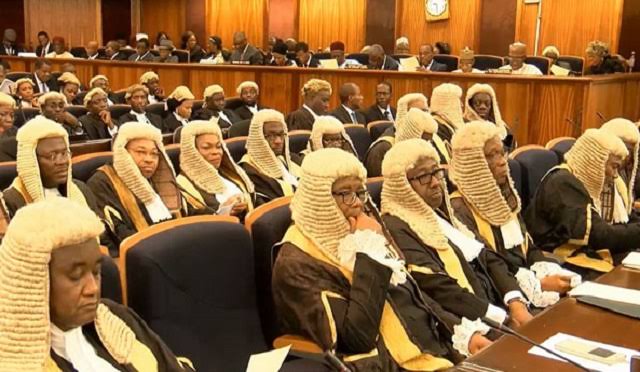
The Nigerian Judiciary is increasingly being perceived as corrupt. The frequent headlines in the media including evidence as regards both proved and unproved cases of judicial corruption are to say the least, disturbing, and strikes at the very root of our democracy since the judicial arm of government is saddled with the responsibility of preserving the rule of law.This unfortunate development not only poses a threat to the independence of the judiciary but engenders loss of confidence in the justice delivery system. It also taints the decisions of courts in the country with suspicion. This has resulted in majority of the populace questioning the common notion, that the court is the last hope of the common man, and also resulted to frequent use of self-help (commonly known as jungle justice).
According to a publication by the United States Agency for International Development (USAID):
The judiciary that is supposed to provide timely access to fair and impartial judicial services and uphold the rule of law, consistently display qualities of independence and impartiality, integrity, accountability and transparency against prevalent corruption in Nigeria, has also been found wanting due to the perceived corruption that has infiltrated its ranks.
Professor Sagay SAN, seems to concur with this position and opines that, ‘The perception now is that judgments are purchasable and judges have no integrity. They all have their prices in cash and lawyers acting as middlemen’.
It is against this backdrop that the writer examines the causes of judicial corruption, and offers a unique synthesis of ideas that will help to obliterate corruption in our judiciary.
Causes of Corruption within the Nigerian Judiciary
Several reasons have been responsible for promoting judicial corruption. one of the factors is lack of an independence of the judiciary. In a 2006 study conducted by the Global Programme against Corruption in collaboration with the Nigerian Institute of Advanced Legal Studies, in Delta, Borno, and Lagos state, lack of an independent judiciary was strongly found to be linked to corruption. Under the Constitution of the Federal Republic of Nigeria 1999, as amended (hereinafter referred to as CFRN 1999), the appointment of the Chief Justice of the federation, President of the Court of Appeal, Chief Judge of the Federal High Court, and judges of the Federal High Courts, is done by the President, it commonsensically follows that since the executive appoints the members of the judiciary, there is indirect influence by the former in cases decided by the later, especially in matters the executive has special interest in. Succinctly, the problem of corruption in the Nigerian judiciary is mostly as a result of the mode of appointment of judicial officers, which today is more often than not guided by nepotism, who-you-know and not essentially on merit.
Furthermore, lack of welfare packages from the government, and delays in payment of judicial officers are compelling incentives for judges to demand bribe in other to make ends meet.
Additionally, the inherent weakness in the National Judicial Council increases the tendency for corruption in the judiciary. For instance, the discretionary powers vested in the Chief Justice of Nigeria to appoint other members of the National Judicial Council (NJC) aside the members whose position has been constitutionally provided for, may culminate to the common notion that he who pays the piper dictates the tune.
Other factors that are responsible for promoting judicial corruption is the corrupt tendencies of some legal practitioners, personal interest of judges in matters which come before them for determination, frequent, unregulated and personal communication between counsel and the presiding judge(s), an act which breaches the provisions of The Rules of Professional Conduct for Legal Practitioners 2007(hereinafter referred to as RPC 2007). A ready example is that in 2015, a Senior Advocate of Nigeria (SAN), Kunle Kalejaiye, was stripped of his rank and equally disbarred by the Legal Practitioners Disciplinary Committee (LPDC) having been found guilty of professional misconduct. It was found that the SAN while representing the Peoples Democratic Party (PDP) and the Osun state Governor at the election tribunal, engaged in private and confidential telephone conversations with the Chairman of the tribunal, Justice Thomas Naron. It is germane to note that under Rule 31 subsection 4 and 5 of RPC 2007, except where the opposing counsel fails or refuses to attend court proceedings and the judge is informed of the circumstances, a lawyer should not discuss a pending case with the judge trying the case, unless the opposing lawyer is present. Also, except as provided by a rule or order of court, a lawyer shall not deliver to the judge any letter, memorandum, brief or other written communication without concurrently delivering a copy to the opposing lawyer, for candid and fair dealing.
RECOMMENDATIONS
It is unfortunate corruption still subsist in our judiciary in spite of measures taken so far by various concerned bodies. The following are therefore practical steps to eliminate this scourge:
First, judges should be posted outside their states of origin to reduce excess influence and pressures from family and friends.
Secondly, the Nigerian Judicial commission (NJC) should be strict in disciplining erring members of the bench, and closely monitor the property these judges and justices acquire. The NJC should work with financial institutions like banks, state secret security agencies, to achieve the former. Also, appointment of members of the bench should strictly be based on merit.
Furthermore, the discretionary powers of the Chief Justice of Nigeria in the appointment of other members of the NJC should be abolished, such that membership of the NJC is as of constitutional right, not necessarily by appointment. Progressively, there should also be constant seminars and generally, sensitization programmes, workshops, etc., to cement into the minds of judges the need for justice to be done at all cost and at all time.
Interestingly, research has shown that lawyers encourage corruption in the judiciary by agreeing to buy judgments. It is pertinent to note that Rule 1 of the RPC 2007, states that a lawyer shall uphold and observe the rule of law, promote and foster the course of justice, maintain a high standard of professional conduct, and shall not engage in any conduct which is unbecoming of a legal practitioner. Rule 34 of RPC 2007 aptly specifies that a lawyer shall not do anything or conduct himself in such a way as to give the impression, or allow the impression to be created, that his act or conduct is calculated to gain, or has the appearance of gaining special personal consideration of favour from a judge. To this end, the Legal Practitioners Disciplinary Committee should not be hesitant to investigate cases of misconduct by legal practitioners and ensure strict adherence to these rules.
Also, there should be an independent and fearless judiciary. In the celebrated case of Military Governor Lagos state v Chief Emeka Odumegwu, the Supreme Court, per Kayode Eso JSC stated the full operation of the rule of law requires an independent judiciary free from the shackles of executive acts. It is at present unsatisfactory that judicial officers are appointed by the executive. Such appointments should be made by the NJC, so the judiciary will be free from excessive influences by the executive arm of government.
There is need to have a transparent and publicly known procedure for the assignment of court cases to specific judges. Caution should be taken in assigning cases of politics, issues between a rich and poor person, large business enterprises and small scale based firms, or matters the judge may likely have personal interest in.
Finally, the judiciary should be granted financial autonomy, increased salaries and welfare packages.
CONCLUSION
The worst kind of corruption is judicial corruption. It is an anomaly that signals final decay of societal morals and capable of jeopardizing the pillars of democracy in the country and the rule of law. therefore, all hands must be on deck for this war against judicial corruption to be won. the media and private individuals should not hesitate to report corrupt judges. Lawyers are encouraged to play their roles in ridding the judiciary of corruption, bearing in mind that their sacred duty to the courts as honest ministers in the hallowed temple of justice is not to win cases at all cost but to ensure that justice is not only done but manifestly and undoubtedly seen to be done. Most definitely, there is need for a whistle-blower legislation in Nigeria, to encourage the reportage of the corrupt activities of judges and other judicial officers.


The Kampala Declaration: How African Youth Can Lead Food System Transformation to Accelerate the Achievement of Zero Hunger by 2030 -By Emeka Christian Umunnakwe
If Africa is serious about achieving Zero Hunger by 2030, these perceptions must be confronted with deliberate action. Young people...


China Finances New ECOWAS Headquarters -By Kestér Kenn Klomegâh
In accordance with the agreement concluded between the ECOWAS and the Government of China, the building by the Shanghai Construction...


The Arrest Of Nicholas Maduro By The US And Other Matters -By Hajia Hadiza Mohammed
Since the advent of the current administration, the country has been weaken internally with self-serving leaders insensitive to the yearnings...


When Nations Break Their Reformers: Why EFCC Cannot Carry Nigeria’s Burden Alone — And Why Power Must Fear God -By Prof. John Egbeazien Oshodi
Public frustration with the EFCC over perceived selective enforcement is understandable. Nigerians see some arrests carried out suddenly and forcefully,...


Poor, Poor, Maduro -By IfeanyiChukwu Afuba
Little wonder his ouster elicited celebrations. The ease of his capture is telling. There is only one explanation for the...