
Global Issues
COVID-19 Pandemic: Nigerian Muslim Scholars Should Tread Softly -By Ibrahim M. Attahir
Can we say that the Governors are against Mosques? I think it will be difficult and unfair to make such allegation even against Christian Governors in the North. We had Governors that are Reverend Fathers in some states. I am not aware that they destroyed any Mosque or prevented Muslims from observing prayers. Most of the Muslim Governors have Mosques they built in their residences or near them. Some of them even have Friday Mosques they built near their residences or elsewhere. It is not fair to liken them to those who are against Mosques or prevent prayers.

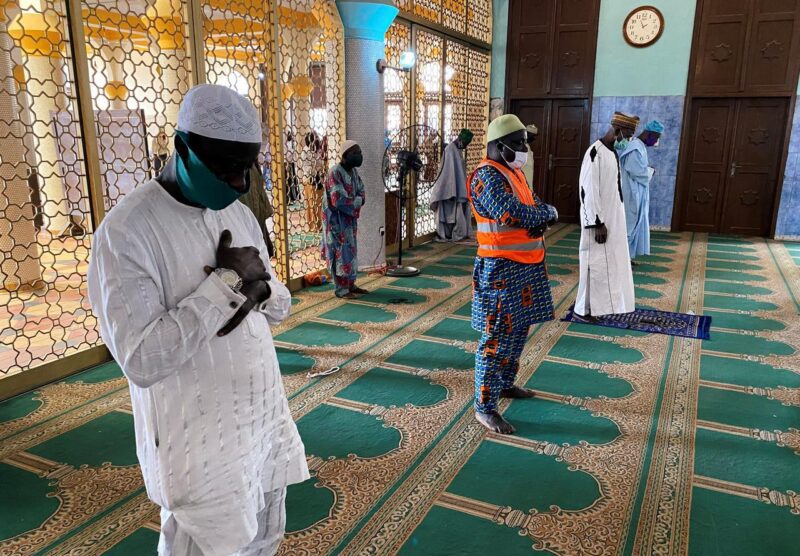
Since the breakout of the COVID-19 pandemic, Muslim scholars (‘Ulama) in Nigeria continue to give contradictory rulings which can confuse and mislead the Muslim population. It is for this reason that I find it compelling to advise the ‘Ulama to tread softly in their rulings and statements on the pandemic.
Our people are committed to Islamic religious practices especially the rituals such as prayers, fasting, pilgrimage, etc. A Muslim here can afford to indulge in breach of trust, misappropriate the wealth of an orphan, disrespect his parents, severe the bond of kinship, treat his family unjustly, but cannot afford to play with his prayers.
The last time a global pandemic of this magnitude was witnessed was in 1918. Therefore, our generation does not know of anything for which Mosques will be closed except when authorities imposed curfew for a day or two due to communal or civil disturbances. Even then, Muslims still pray within their hamlets avoiding the major roads and such curfews hardly affect Friday Prayers.
Therefore, Muslims in Nigeria find it difficult to imagine a declaration that they should not observe Friday and daily prayers. The resistance by the ‘Ulama on closure of places of worship and calls for their reopening is due to their regards for religious practice. They are, of course, the custodians of the religion. I do not think that they have any ill-motive. However, they do not seem to take cognizance of some basic principles of Islam in their zeal to protect the religion. They should not be allowed to continue in that error. May Allah forgive us.
WHICH SCHOLAR SHOULD GIVE WHAT RULING?
Giving religious/jurisprudential ruling on religious rites of an individual such as ablution or sand ablution is different from giving ruling on issues that affect the entire society such as politics, security, public health, economy, diplomacy, etc. If a scholar is asked about ablution, his error or deliberate distortion does not affect the government directly.
The scholar gives the ruling based on his understanding. Even if he errs or deliberately distorts the Islamic teaching, the damage will not affect the whole society. In case of a genuine error, he may still earn a reward because of the juristic exercise.
However, any ruling on politics, security, economy, public health, etc affects the government and the whole society. Therefore, even great Islamic scholars of global standing are careful in giving ruling on such issues. The trend now is that such religious/jurisprudential rulings are given under the auspices of Assemblies/Councils of Jurists with representatives drawn from all parts of the Muslim world and experts in various fields of Islamic teachings. Experts on various field of human endeavor are also invited for their advice on their fields. Such issues are beyond the capacity of any scholar adopting a one-man-squad approach to sit in the comfort of his room and dish out rulings.
The issue of COVID-19 relates to many sectors of the government such as public health, economy, foreign relations, etc. It also affects religion. The government has to engage health and other experts as well as religious scholars. Muslims must listen to various experts (Ahlul Dhikr/Ahlul Ma’arifah) and those in authority (Ulul Amr). Islam attaches much importance to obedience to leaders/constituted authorities. However, this issue of COVID-19 has exposed an apparent lack of understanding of the concept among our people. We seem to forget that when Ulul Amr take a decision on the basis of jurisprudential exercise, we are not to engage in confrontation with them even if we are not satisfied with the decision. Those in authority know why they took the decision and they are the ones responsible before the Almighty Allah. If their decision is in good faith, Allah may not punish them for that; He may even reward them.
WHY OPEN MARKETS NOT MOSQUES
In our situation, those in authority are the political leaders. Apart from them we do not have others except the Sultan and the Nigerian Supreme Council for Islamic Affairs (NSCIA). As far as I know, the NSCIA under His Eminence, the Sultan of Sokoto issued a statement on suspension daily prayers, Friday Prayers, Tarawih Prayer, Tahajjud Prayer, Tafsir, etc based on advice of Islamic scholars and health experts. I am not aware of any change of position by the NSCIA because if there is any, they will not hesitate to announce it.
There were several calls by the Muslim ‘Ulama for mosques to be reopened since markets and business premises had been opened. Some of them went to the extent of saying that markets were placed above mosques. I don’t know whether the ‘Ulama consulted medical/health experts and the NSCIA before making their statements. We know that Qur’an, 16:43 makes it mandatory for us to consult experts. Some of the ‘Ulama even stated that the governors of the states will be answerable before Allah for the closure of mosques. The ‘Ulama may, in the same vein, be answerable if their counter-rulings lead to loss of lives.
Medical and public health professionals are the experts on this issue. There are those that are trustworthy among them whom we know to be committed Muslims since their school and university days. If they do not claim to be better than us, we cannot claim to be better than them and we do not have anybody that is better than them. Unfortunately, the ‘Ulama did not consult the experts who are of the view that the risk of infection in the Mosque is higher than that of the market. Many people use the same kettle, the same tap and the same toilet in the Mosque. During prostration the forehead, the eyes, the nose, the mouth and the palms either touch the carpet or floor or get very close to it. The medical and health experts can see what we cannot see. If it were snakes that invaded our Mosques, nobody will wait for the government to advise him to stay at home. It is unwise for one to claim that whatever one does not know does not exist.Not everybody goes to market. There are those that may take a whole year without going to market. In this digital age, you can call a shop owner with your handset and order for the goods that you need. All you need is to transfer the money and the goods will be delivered at your doorsteps. I sometimes drive and stop in front of a shop and wave for the shopkeepers. One of them comes to the car and I tell him my needs and give him the money. They bring the goods and I move away.
However, in case of Mosque, almost all Muslims attend five times daily prayers depending on the practice in the community. The analogy of Mosque/Market is faulty. The ‘Ulama opine that people go to markets without observing the preventive measures. It is not government or doctors that allow those in the market to disobey the protocols. It is out of indiscipline and lawlessness. If everybody breaks the law, those in the Mosque should not join the bandwagon. The law breakers are not and should not be our teachers. We are aware of what the Prophet (SAW) said on markets.
One reason that is repeated to support reopening of Mosques is that it will be an opportunity for prayers against the COVID-19 pandemic. Islam is simple. It is not a pre-condition that prayers or supplications will not be answered unless done in a Mosque. The major conditions for one’s supplication to be answered are the purity of one’s mind and means of livelihood. There are times, places and circumstances in which supplications are more likely to be answered. They include time of braking the fast, afternoon time on Friday, during prostration in prayers, immediately before concluding prayers, last part of the night, after concluding prayers (according to some jurists), between the call to prayer and starting the prayer, etc.
MOSQUES CAN BE CLOSED FOR GOOD REASONS
Some of the ‘Ulama unfairly cite the conduct of the Governors that suspended congregation prayers to the Quran, Sura 2: Verse 114 which deals with those who hinder people from Mosques and try to destroy them. The verse deals with those waging war against Islam for which they destroy Mosques and prevent observance of prayers therein. Can we say that the Governors are against Mosques? I think it will be difficult and unfair to make such allegation even against Christian Governors in the North. We had Governors that are Reverend Fathers in some states. I am not aware that they destroyed any Mosque or prevented Muslims from observing prayers. Most of the Muslim Governors have Mosques they built in their residences or near them. Some of them even have Friday Mosques they built near their residences or elsewhere. It is not fair to liken them to those who are against Mosques or prevent prayers. The suspension of congregation is a juristic exercise based on advice of medical/health experts and Islamic scholars. That is the ruling of majority of Islamic scholars in Hijaz, Syria, Yemen, Egypt, Asia, Africa, Europe and America. Their Fiqh Assemblies/Councils support such preventive measures. Many years ago international scholars such as Ibn Uthaimin ruled that closing of Mosque because of sheer wrongdoing, anti-religious stand and oppression is what can be attributed to verse 114 of Suratul Baqarah. However, where there is public interest and necessity, even the Grand Mosque in Makkah may be closed, and it cannot come within the contemplation of the above verse. During this Ramadan access to both Haramain Mosques in Makkah and Madinah were severely restricted due to the pandemic.
In the West African region, the Maliki School of jurisprudence is predominant. Every student of Islamic studies has the famous book, Mukhtasar Khalil. The author and all commentators of the book all opined that where the leader stops observing Friday Prayer, if they go ahead to observe it, it will be invalid. They must repeat it as Zuhr prayer. It is surprising that even before some state governments allow reopening of Mosques, some individuals used to hide in some remote location and observe Friday congregation.
Some Nigerian ‘Ulama also claim that COVID-19 is not a plague. It is a trial/tribulation from Allah. It still has the same effect. One is a general name while the other is specific. Anything good or bad can be used by Allah to try His servants. The teaching of Islam is that when there is plague or tribulation or disturbances, a Muslim should stay in his house/town except on necessity so as to stay safe. Allah will reward him for following the tradition of the Prophet (SAW) and the reward for the good deeds he used to do but which the plague/disturbances now prevent him will be recorded for him.
According to a narration by Bukari and Ahmad, staying at home/town and avoiding crowds during plague is meritorious. The Prophet (SAW) told A’ishah (RA) that:“None (among the believers) remains patient seeking for reward in a land (in his house) in which plague has broken out and considers that nothing will befall him except what Allah has ordained for him, but that Allah will grant him reward similar to that of a martyr”. A stitch in time…..May Allah guide us, have mercy on us and deliver us from this pandemic.
ALHAMDU LILLAH WAS SALAATU WAS SALAAMU ALAA RASULILLAH.
Gombe


Why African Leaders Must Fix Governance Before Crying Sovereignty -By Isaac Asabor
One of the great contradictions of African leadership today is selective morality. Leaders speak passionately about international law while violating...

Baba Has Entered The Classroom -By Isaac Asabor
If what Trump is doing is walking into a noisy global classroom and insisting on discipline, then let us be...


As Trump Exposes Why Tinubu Must Go Sooner -By SKC Ogbonnia
The Nigerian president is not only culpable of heinous crimes, but he is also weakened beyond redemption. His continued stay...


How Lavrov’s Philosophy of “Ubuntu” Reflects on the Level of Africa’s Media Presence in Russia -By Kestér Kenn Klomegâh
The December 19–20 Ministerial Conference reaffirmed commitments to fully implement the Russia–Africa Partnership Forum Action Plan (2023–2026), adopted at the...
Why Trump’s Move Against Maduro Makes Sense -By Isaac Asabor
Trump’s decision also invites other nations to step up, to reconsider their passive complicity in the face of egregious abuse....