
Democracy & Governance
Credible elections: Whose responsibility? -By Jide Ojo
As for the international development partners such as the European Union, United States Agency for International Development, United Kingdom Agency for International Development, United Nations Development Programmes and embassies that support Nigeria’s democratic project, their funding support to INEC as acknowledged by the Commission’s chairman in this article’s opening statement, as well as the support to civil society organisations goes a long way to deepening democracy in Nigeria.

seen in what the National Assembly (Senate and House of Representatives) did with the passage of Electoral Act 2022, which many other stakeholders have lauded as being a step in the right direction in the attainment of credible election. NASS approved all INEC’s requests to have a technology driven and inclusive elections. With the strengthening of the legal framework, INEC and other stakeholders like the judiciary, media, security agencies and CSOs now understood their roles and responsibilities better. Not only that, it was the National Assembly that approved the N305 billion INEC’s election fund for the forthcoming polls for the commission via the national budget for 2022. Lest we forget, NASS also have committees that oversights the activities of INEC.
As for the executive, when the NASS passed the Electoral Bill, it has to send it to the president for assent. This assent was given on Friday, February 25, 2022. Had it been the president vetoed the bill as he did on five previous occasions between 2018 and 2021, the planning for 2023 general election, the seventh in this Fourth Republic which began in 1999, would have been on the basis of the sub-optimal 2010 Electoral Act, as amended. It is also noteworthy that it is the president that proposed the 2023 election budget for INEC as part of the 2022 Appropriation Act. Had it been that resource was not made available to INEC as provided for in S.3(3) of the Electoral Act 2022 which says funding for the next elections should be made available to INEC one year before the polls, this would have impacted negatively on INEC’s plan for the forthcoming general election. Aside these two responsibilities, non-interference of the president in the activities of the EMB inspires confidence and boost trust in the election project. Not a few believed that undue meddlesomeness of President Olusegun Obasanjo in the 2007 general election marred the polls. His unguarded statement that the election was a “do or die” for him and his political party was very unpresidential.
Nigeria’s twin electoral challenges are violence and vote-trading. The legal framework put the responsibilities of tackling these malaises at the doorstep of the security agencies and INEC. However, while INEC has the power of prosecution, it has no power of arrest and investigation. These powers lie with the Nigerian Police and other security agencies. Without their support, these twin minuses will continue to rub off negatively on the credibility of our elections. Pre and post-election dispute resolutions lie primarily with the judiciary. Aspirants and candidates who are aggrieved about actions and decisions of INEC or their political parties are enjoined to seek redress at the courts. The way the judges handle election dispute resolution impacts on the credibility of the polls.
Political parties are in change of candidate nomination process. They conduct primaries and sponsor candidates for elections. Their actions and decisions in playing their assigned responsibilities impact on the credibility of the elections. Likewise, the contestants. If the candidates decided to flout the electoral laws and guidelines there is no way peaceful, inclusive and credible election will be attained. Similarly, if the electorate indulge in violence and other forms of electoral malpractices, there is no way credible polls will be achieved. The media too owe it a duty to shun fake news, hate speeches, disinformation and misinformation of the public. Should the accredited journalists decided to publish fake election results and engage in non-conflict sensitive reportage, there is no way such inciting and indecorous reports will not precipitate electoral violence and mar the polls.
As for the international development partners such as the European Union, United States Agency for International Development, United Kingdom Agency for International Development, United Nations Development Programmes and embassies that support Nigeria’s democratic project, their funding support to INEC as acknowledged by the Commission’s chairman in this article’s opening statement, as well as the support to civil society organisations goes a long way to deepening democracy in Nigeria. The laudable performances of CSOs such as YIAGA Africa, Nigeria Civil Society Situation Room, Centre for Democracy and Development, Inclusive Friends Association and The Albino Foundation to mention a few would have been impossible without funding support from the aforementioned international development partners. Without these CSOs holding the feet of the National Assembly, INEC, Judiciary, Security Agencies and the presidency to fire through effective oversight, voter education and election observation, perhaps, the modest success already recorded in ensuring that Nigeria has credible, inclusive and peaceful elections would have been a mirage.
Twitter: @jideojong


Abebe Selassie to Retire as Director of African Department at IMF -By Kestér Kenn Klomegâh
Concessional financing to counter rising borrowing costs, with Africa paying up to 5 times more in interest than advanced economies...

Singapore’s Leaders Built An Economy; Nigeria’s Keep Building Excuses -By Isaac Asabor
Singapore paired economic growth with social stability. Through the Housing Development Board, the government built large-scale public housing, providing affordable...

Tax Considerations for CFD Traders in South Africa: What Experienced Traders Should Know
What looks like a sweet profit on your platform screen can shrink fast once the tax bill hits. When you're...
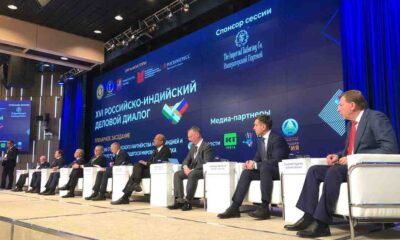

Russia–India Dialogue Provides Platform for Strengthening Bilateral Entrepreneurship -By Kestér Kenn Klomegâh
The Dialogue was organized by the Indian Business Alliance, the Business Council for Cooperation with India, the Government of Moscow,...


The Kampala Declaration: How African Youth Can Lead Food System Transformation to Accelerate the Achievement of Zero Hunger by 2030 -By Emeka Christian Umunnakwe
If Africa is serious about achieving Zero Hunger by 2030, these perceptions must be confronted with deliberate action. Young people...