
Forgotten Dairies
Does Tinubu Need Trump To Help Him With Wike? -By Dr. John Egbeazien Oshodi
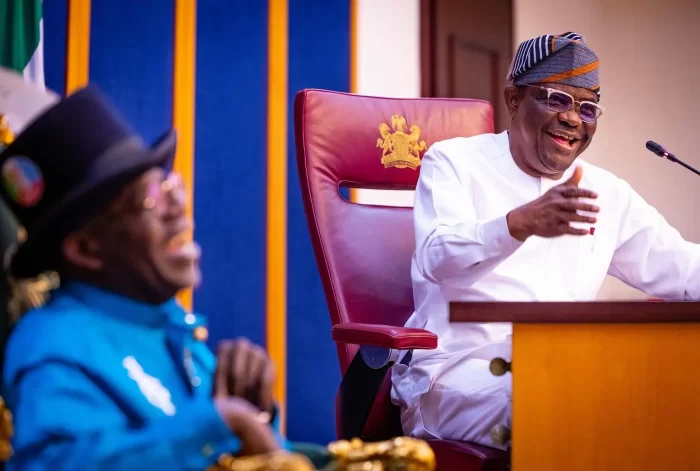
In Oyigbo, Wike did not sound grateful. He sounded directive. He warned national leaders. He told them to leave Rivers politics alone. He suggested that those benefiting from national support should remember who made it possible.

1. A Question That Sounds Humorous, But Points To Something Serious
The question almost sounds humorous. Does President Bola Tinubu need Donald Trump to help him manage Nyesom Wike?
The answer is obviously no. Nigeria is not dependent on foreign leaders or foreign styles of authority. Nigeria has its own constitution, institutions, and democratic structures. But the question exposes something uncomfortable.
It exposes the perception that a serving minister appears beyond correction. It exposes the feeling that Wike exercises a level of boldness that has gone unanswered. It exposes a growing concern that silence may now be governing where clarity is needed.
These are questions of psychology, not gossip.
2. When a Minister Speaks Like a Territorial Owner
Wike no longer sounds like a minister committed to collective service. He sounds like a territorial custodian speaking about land that belongs to him personally. He declares Rivers State as a place where others must not interfere. He warns, cautions, and delivers pronouncements that sound final.
That is not the tone of republican leadership. It is the tone of possession. And when citizens hear possession language instead of service language, they grow uneasy.
They sense that institutions are shrinking beneath personalities.
3. The Psychology of Political Debt
Across Nigeria, many believe that Wike played a major role during the 2023 elections in ways that benefited President Tinubu. Whether fully accurate or somewhat stretched matters less than what it produced emotionally.
Wike speaks like someone who feels he is permanently owed. The appointment as Minister of the Federal Capital Territory seemed not to humble him, but to fortify his sense of untouchable authority.
In human relationships, when loyalty turns into emotional debt, balance disappears. One person becomes dominant. The other becomes hesitant.
That dynamic is now public.
4. The 2023 Shadow: Praise Followed By Subtle Diminishing
Something happened in 2023 that changed Wike’s posture. Since then, he has mastered a psychological dance.
He praises Tinubu publicly.
He reminds Nigerians that he stood with Tinubu when others did not.
Then immediately after praising him, he delivers subtle humiliation. He challenges federal decisions. He warns party figures. He speaks as if discipline exists for others but not for him.
This is not accidental. It is method.
He sends the message without saying it directly:
I stood for you, therefore nothing can be done to me.
Whether that belief is grounded in truth or only perception no longer matters. He behaves as though 2023 granted him permanent leverage, and the public senses that something from that year emboldened him in unusual ways.
In politics, perception is often as powerful as any fact.
5. Challenging Power Indirectly While Targeting Those Around It
Wike rarely confronts Tinubu personally. Instead, he confronts those around him. He scolds party secretaries, mocks officials, and challenges institutional leaders while allowing the message to travel upward.
This is boundary testing. Psychology teaches that when authority remains quiet, the challenger interprets silence as permission.
And silence has become frequent.
6. The Fubara Moment and the Pain of Lost Control
Governor Siminalayi Fubara receiving warm recognition at Aso Rock symbolized independence. For someone whose leadership style relied on control, that image may have felt like loss.
Following that, statements became more heated. The emotional tone shifted from political calculation to ego protection. And when ego enters the driver’s seat, systems begin to shake.
7. Renewed Hope Turned Into Protective Clothing
Wike speaks repeatedly through the language of Renewed Hope. He encourages citizens to support development before party identity. It sounds admirable.
Yet it also functions as protection.
By wrapping himself inside the message, criticism of his conduct begins to feel like criticism of the presidential agenda itself. That is how a national slogan becomes personal armor.
Hope should lift the nation. It should not be used to secure individual immunity.
8. The Oyigbo Moment That Clarified Everything
In Oyigbo, Wike did not sound grateful. He sounded directive. He warned national leaders. He told them to leave Rivers politics alone. He suggested that those benefiting from national support should remember who made it possible.
These were not casual statements.
They sounded like warnings.
And federal silence made them echo louder.
9. Where Are The Protectors Of The Presidency’s Message?
In mature democracies, presidential advisers step forward to reset tone when tension rises. They help restore emotional calm.
Yet in this instance, silence has settled in. Silence is becoming interpretation. And when silence becomes interpretation, uncertainty grows. Nigerians begin to believe Wike holds a level of influence that even senior communicators prefer not to confront.
Even if that belief is unfair, perception reproduces itself.
And perception weakens institutions.
10. When Courageous Voices Become Careful Voices
Daniel Bwala has spoken forcefully on international matters in the past. His voice has been strong, clear, and articulate.
Yet when matters involve Wike, his approach becomes cautious. His tone becomes measured. This is not criticism of Bwala, who remains highly capable. It is acknowledgment that some subjects now appear more sensitive than others.
When leaders speak loudly abroad and carefully at home, citizens interpret the difference.
11. The Unanswered Question: What Does He Have On You?
Wike is not shouting from outside the government. He is sitting inside the Federal Executive Council.
Yet he behaves as if no reprimand is possible.
Which brings Nigerians to a quiet and painful question:
Tinubu, what does he have on you?
This is not accusation. It is psychological observation. When authority repeatedly hesitates to address internal disorder, the human mind assumes there are invisible constraints.
And whether those constraints exist or not, the public belief now exists.
12. Humor As A Shield Against Fear
Nigeria jokes about serious things not because they are amusing, but because humor protects the heart from stress.
People laugh when they feel powerless. They laugh when authority looks uncertain. The laughter covers worry.
Behind the humor is concern about whether institutional authority is still fully alive.
13. The Words That Should Have Been Spoken
A single declaration would have reset balance:
Ministers cannot issue threats. No citizen owns a state. Political offices serve the Republic.
That sentence was never offered.
14. Why The Trump Question Appears In Conversation
Donald Trump represents a leadership style defined by strong public boundaries and unapologetic authority. When Nigerians jokingly ask whether Tinubu needs Trump, they are not attacking either man.
They are expressing something else:
They are asking why firmness appears delayed when internal discipline is required.
Nigeria does not need imported leadership styles. What Nigeria needs is confidence grounded in constitutional authority.
15. Power Changes. Accountability Remains.
Political seasons move. Records endure. Legal questions return. Ethical memory survives.
No one is permanently beyond accountability.
16. A Call To Reflect Before Things Break
Wike should slow down. Reflect. Measure his words. Reconsider the emotional impact of intimidation. He can choose correction instead of escalation.
And if he does not, the Presidency must reset boundaries with calm firmness. Not anger. Not humiliation. Just disciplined leadership.
Public office requires humility.
17. A Darkly Humorous Reality Check, Without Insult
Nigeria does not need imported strong personalities. Nigeria does not need theatrical interventions. The Republic should never look like it needs outside assistance to handle one cabinet minister.
And so a final thought remains, wrapped in uncomfortable humor and serious truth:
It may be wiser for Wike to step back and resign on his own terms, before Nigerians start joking, in frustration, that perhaps someone like Donald Trump should be invited simply to remind one minister that institutions still matter.
The humor is dark, but the meaning is simple. No individual should ever appear larger than the Presidency. Restraint is strength. Discipline is stability. And sometimes stepping aside can become the most emotionally mature act of leadership.
If resignation restores national balance, history will remember it not as defeat, but as growth.
— Dr. John Egbeazien Oshodi


Why African Leaders Must Fix Governance Before Crying Sovereignty -By Isaac Asabor
One of the great contradictions of African leadership today is selective morality. Leaders speak passionately about international law while violating...

Baba Has Entered The Classroom -By Isaac Asabor
If what Trump is doing is walking into a noisy global classroom and insisting on discipline, then let us be...

As Trump Exposes Why Tinubu Must Go Sooner -By SKC Ogbonnia
The Nigerian president is not only culpable of heinous crimes, but he is also weakened beyond redemption. His continued stay...


How Lavrov’s Philosophy of “Ubuntu” Reflects on the Level of Africa’s Media Presence in Russia -By Kestér Kenn Klomegâh
The December 19–20 Ministerial Conference reaffirmed commitments to fully implement the Russia–Africa Partnership Forum Action Plan (2023–2026), adopted at the...
Why Trump’s Move Against Maduro Makes Sense -By Isaac Asabor
Trump’s decision also invites other nations to step up, to reconsider their passive complicity in the face of egregious abuse....