
Economic Issues
Dr. Ngozi Okonjo-Iweala’s Social Contract Homily -By Rotimi Fasan
Where leaders promise to uphold past policies, it shouldn’t be as a means not to offend their predecessors as new governments tend to do in our parts. The Tinubu administration promised to continue where Buhari stopped and has not been able to live down the accusation it is out to complete the demolition job Buhari started. Security of lives and national assets and the independence of the Central Bank and the judiciary should be legalised, Iweala said. Thank you, Madam Okonjo-Iweala, for these reminders of basic facts we’ve refused to learn or implement.

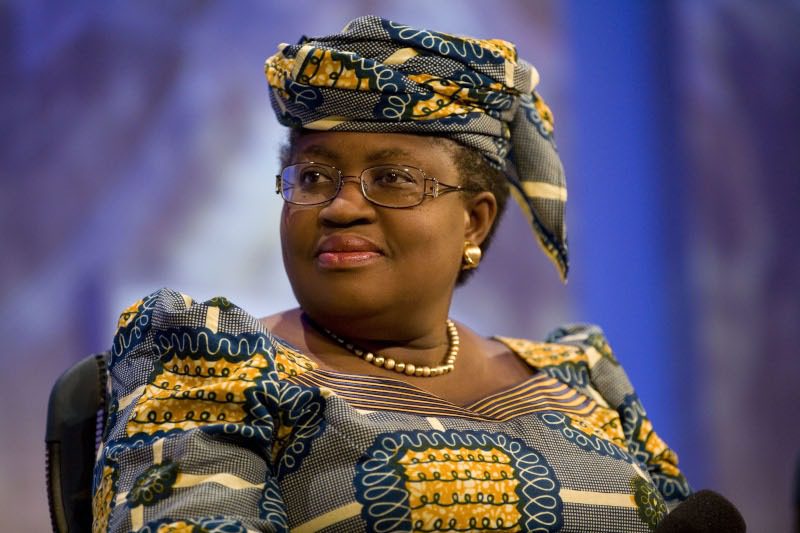
The reception given Ngozi Okonjo-Iweala, the Nigerian-born Director-General of the World Trade Organisation, at the conference of the Nigerian Bar Association, must be one of the warmest she has received in her career in the public space. She had headlined the conference as a keynote speaker with a lecture titled: “A Social Contract for Nigeria’s Future”.
Aside leading members of the Nigerian bar and bench and Nigerians from other sectors of the polity that attended the annual event, President Bola Tinubu was represented by the Vice President, Kashim Shettima. There is no better evidence of how long absence makes the heart fonder than at the moment when Okonjo-Iweala, a former Minister of Finance and Coordinating Minister of the Economy, one of the most celebrated, stood before her attentive audience to speak about a subject, the economy, she’s best suited for, both as a Nigerian and a development economist.
The Nigerian economy is one area of responsibility for which Okonjo-Iweala has often been praised and, make no mistake about it, excoriated for policies that her critics claimed have allegedly served her foreign promoters, as a so-called lackey of the Bretton Woods Institutions, than her Nigerian compatriots. Between the time she served as minister under the Olusegun Obasanjo and Goodluck Jonathan administrations, she was neither the favourite of labour unions and their human rights activists allies nor of the majority of Nigerians. Nor was her relationship with the Central Bank under Sanusi Lamido Sanusi or especially Sanusi’s predecessor, Chukwuma Charles Soludo, any better than that between a cat and a mouse.
While Obasanjo would later rate his appointment of both Okonjo-Iweala and Soludo as among the best he made as president both individuals concerned thought the other complicit in the major economic failings of the government they served in. The parting of ways between Okonjo-Iweala and Sanusi probably happened after each produced different figures for the revenue deficit from the Nigerian National Petroleum Corporation in 2014.
While Sanusi said the remittance from the NNPC fell short by a whopping $20 bn, Okonjo-Iweala said she could only confirm half of that amount, precisely, a shortfall of $10.8bn. Either way, a huge sum of Nigeria’s revenue could not be accounted for. Ultimately, Sanusi would get the boot for his earnestness, while Okonjo-Iweala would leave government a year later with a part of her white garment soiled, not by personal infraction but the perception of overwhelming corruption under the administration she served.
Before the 2014 debacle of a missing $20bn, the perception of Ngozi Okonjo-Iweala by the Nigerian public had dropped to its lowest in 2012 when, together with Sanusi, she championed the campaign for the removal of oil subsidy. Then Bola Tinubu and his co-travellers were in the camp of the opposition that saw oil subsidy as the right of Nigerians or a scam that existed only in the cooked books of government treasury. Today, he is the Implementer-in-Chief of the removal of oil subsidy and is suffering a fate worse than that of the people he laboured to demonise more than a decade ago.
Yet, Dr. Okonjo-Iweala was not without her own cross. She was accused of corruption and plied with death threats for daring to confront the ogres of corruption. Her aged mother was kidnapped to the bargain and but for God’s mercy the old woman would have been killed. The trauma of that episode is something the WTO DG would not forget in a hurry and her view of public service and Nigerians as a people after that is, perhaps, best imagined. It was that Okonjo-Iweala that stood before the august gathering of Nigerian best legal minds at the Convention Centre of the Eko Hotels and Suites in Victoria Island last Sunday to lecture Nigerians about how to ingest the same bitter pill of economic liberalism that Bola Tinubu has been administering with devastating results on us all.
Let’s be clear about it and for the sake of those who may have heard the glowing words showered on her for her economic wizardry (or is it witching?) in the wake of her speech, Ngozi Okonjo-Iweala neither called for the retention of oil subsidy nor the regulation of the naira or the foreign exchange market. If anything, she called for bold reforms of the economy which may be another way, the Bretton Wood’s way, of demanding those same things Abuja is presently peppering us with and for which some Nigerians are all but asking for regime change.
Rather than a radical change from what the Tinubu administration is presently doing, what she demands is the provision of an environment conducive for the realisation of the benefits accruable from the economic reforms of past administrations and those of the present government in order to achieve the desired effect of a developing, not simply, a growing economy that is measured in percentages of GDP growth while in reality people continue to suffer.
I say this because Nigerians have to be clear about what they want and the kind of prescriptions they are willing to take without regard for who is administering it. That way we can make leaders accountable without appearing to be motivated by politics. For if what Ngozi Okonjo-Iweala is recommending is basically the same thing as what the Tinubu administration is implementing and Tinubu’s opponents in the last election had promised, what then are we complaining about? Is it the bitter pill that we are unhappy about or the administering agent? Are we accepting the message of Iweala’s prescription which is basically the same as Tinubu’s but are determined to attack the messenger in Tinubu? Let’s think this through before we go too far chorusing the songs of Ngozi Okonjo-Iweala’s Bretton Wood hymns that come with their own requirements.
Yes, there are a few desiderata to make the prescriptions of Okonjo-Iweala feasible and these she explained under the broad rubric of what she called a “social contract”. Drawing examples from the South Korean and, especially, Peruvian economies with similar trajectories like Nigeria’s, she called for stability in policy implementation. Each new government doesn’t have to jettison the policies of their predecessors irrespective of their salutary outcome for the overall health of the economy.
Where leaders promise to uphold past policies, it shouldn’t be as a means not to offend their predecessors as new governments tend to do in our parts. The Tinubu administration promised to continue where Buhari stopped and has not been able to live down the accusation it is out to complete the demolition job Buhari started. Security of lives and national assets and the independence of the Central Bank and the judiciary should be legalised, Iweala said. Thank you, Madam Okonjo-Iweala, for these reminders of basic facts we’ve refused to learn or implement.


Poor, Poor, Maduro -By IfeanyiChukwu Afuba
Little wonder his ouster elicited celebrations. The ease of his capture is telling. There is only one explanation for the...


Why African Leaders Must Fix Governance Before Crying Sovereignty -By Isaac Asabor
One of the great contradictions of African leadership today is selective morality. Leaders speak passionately about international law while violating...

Baba Has Entered The Classroom -By Isaac Asabor
If what Trump is doing is walking into a noisy global classroom and insisting on discipline, then let us be...

As Trump Exposes Why Tinubu Must Go Sooner -By SKC Ogbonnia
The Nigerian president is not only culpable of heinous crimes, but he is also weakened beyond redemption. His continued stay...


How Lavrov’s Philosophy of “Ubuntu” Reflects on the Level of Africa’s Media Presence in Russia -By Kestér Kenn Klomegâh
The December 19–20 Ministerial Conference reaffirmed commitments to fully implement the Russia–Africa Partnership Forum Action Plan (2023–2026), adopted at the...