
Life And People
Dr. Pantami: A New Promising Nigerian Leader At NITDA -By Muhammad Auwal
Dr. Pantami is passionate about IT. I am not surprised with the way he runs NITDA. He has vast knowledge in both Islamic religion and in IT (He holds Ph.D in computer information system). This enabled him to know what is apt and right. This can be attested in his short stay at NITDA.

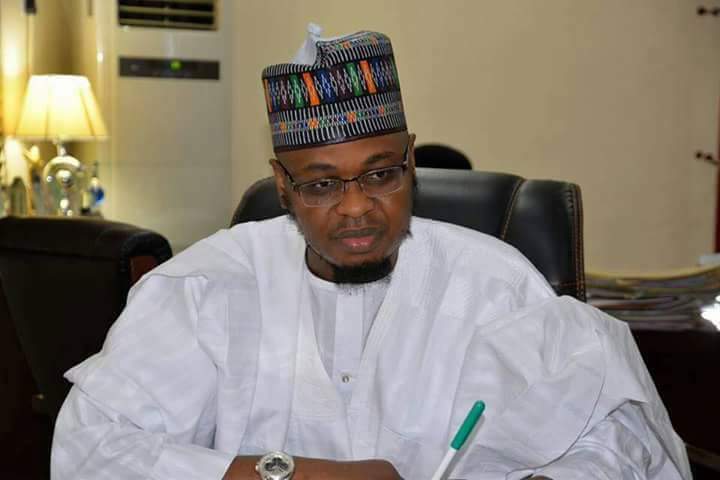
It is about celebrating a success, a new beginning that’s why I decided to share this essay. I wrote it since January, about 6 months ago. I am sharing this from my archive to show the aptness of Dr. Pantami as a ministerial nominee. Recently, I wrote an essay “Ministerial Nomination: Dr. Pantami’s Nomination, Not A Surprise” first published by (Opinion Nigeria, 24th July, 2019).
Dr. Pantami heads National Information Technology Development Agency since from 2016, when it was a mere 15-year-old agency to date, following his appointment by President Muhammadu Buhari GCFR. NITDA was founded in 2001, vested with the statutory mandate to regulate and develop the ICT sector of Nigeria. It was established by a legislative act (NITDA ACT, 2007). There is no doubt that today, the 18-year-old agency has recorded tremendous achievements under the stewardship of its incumbent DG/CEO Dr. Isa Ali Ibrahim Pantami FBCS, FIIM and the Chief Information Technology Officer of Nigeria. There is no doubt about his readiness, competence, versatility, expertise, traits, and experience. Also, not forgetting his good demonstrations of justice and fairness. He is keen about developing the Nigerian ICT sector.
If one could recall, sometime in October 2016, Dr. Pantami assumed office as the new Director-General/Chief Executive Officer of National Information Technology Development Agency (NITDA). On his first step, during his inaugural speech he stated that no one should approach him with gossip but all his doors are opened to all staffs, even cleaners for suggestions, ideas and observations on how to develop the Nigerian ICT sector. He stated clearly that his aim of being there (NITDA) is to develop the Nigerian ICT sector. Nigeria is a country with great potentials in IT. He also calls on his staffs to demonstrate integrity, professionalism, and commitment. This clearly portrays his enthusiasm and readiness.
It is apparent that Isa Ali Ibrahim Pantami Ph.D, FBCS, FIIM since his assumption of office, in 2016, has sought to develop 7 roadmap (key areas) on which he and his team would focus during his tenure in office: IT regulation, capacity building, digital job creation, promotion of government digital services, local content development, e-government, cybersecurity, and digital inclusion. Even though I am not a widely travelled person, I came to know that digital capacity building centres (DCBCs) could now be found in so many places. Several places including Gombe have benefitted from the agency’s intervention projects. However, not only limited to Abuja and other big cities. Many students have undergone training in each geo-political zone. NITDA’s roadmap is on the right way for national development.
The restructuring of NITDA under the stewardship of Dr. Pantami led to the creation of new departments in the agency: one is cybersecurity department, tasked with the responsibility to coordinate and implement the NITDA’s role under the cybercrime act and national cyber security strategy and the other one is E-government development and regulations department. Dr. Pantami in his speech “Accelerating Government Transformation With Technology: NITDA’s Vision and Strategy” said: Our dream for creating this department is to ensure NITDA plays a critical role in building a digitally transformed government. This can serve as a portrayal of his support to the federal government fight against corruption by facilitating E-government.
About 307 scholarships were given to post-graduate students. The methods followed in giving the scholarship was not new but it’s rarely followed. There was no favouritism given to a region or tribe. Only those who merit, were given as asserted by (Tilde, 2018) This is a clear demonstration of equity in his field of primary assignment, which is rare these days, in Nigeria.
Dr. Pantami has partnered and liaises with several ICT organizations both in national and international levels inorder to boost the nation’s ICT sector. His partnership with Korea International Cooperation Agency (KOICA) to implement master plan for e-government is a typical example for one. Likewise that of Federal ministry of agriculture and rural development. This collaboration leads to coming up of national e-agriculture project and strategic initiative aimed at making the various datasets of the Nigerian agricultural sector readily available. I purposely stated these to make it more clearer to my reader.
In each occasion he was abled to grace, he made use of the medium to share his vision with other IT professionals and advise the participants to be self-reliant. He emphasised that ICT is viewed as an important enabler of economic growth and sustainable job creation. This is true because we are no more in a stone age, we are in a digital age. He said: “The 50% of the world’s 10 richest people acquired their wealth through ICT while others relied on ICTs to run their business and increase their revenue, they constituted the remaining 50%”. Therefore, Dr. Pantami’s concern is how to diversify the Nigeria’s economy through IT by empowering the half of 70 million youth unemployed and underemployed (According to National Bureau of Statistics) with IT skills since many countries have been developed with IT advancement. For example, the Asian Tigers are now the world leaders in IT. This came at a point that the present administration of President Muhammadu Buhari GCFR wants to diversify the country’s economy.
Oil has been for long holding the country, should we continue to rely on it when the world is changing to an information era? It needs will soon fade, if not loses its value at international market. All Nigerians are aware that whenever the price of crude oil fluctuates, salaries could hardly be paid on time. This happens as a result of over relying on our dwindling oil revenue and neglecting of other sectors. But if the economy is diversified, by the Grace of Almighty Allah we would be free from economic hardship.
Dr. Pantami decries how Nigeria always imports brands from abroad. He emphasises on the need for Nigerians to develop their own brands and even export if possible. He sees the youth as the backbone of Nigeria, so he wants to invest in them. A good demonstration of this is the sponsorship of 16 Nigerian start-ups (through a subsidiary office of NITDA, Office for ICT Innovation and Entrepreneurship (OIIE)) to participate in GITEX, an annual conference and exhibition held in Dubai, of whom one reached the finals. This shows that it is not the talents that we don’t have, it is the adequate platforms and forums to showcase our talents that we are lacking. It is noteworthy to state that, one of them currently employs about 100 Nigerians under him. He is fond of saying “there are no jobs, and there are plenty of jobs”.
Mentorship and encouragement were totally not found. That’s why startUp friday and startUp clinic were introduced by Dr. Pantami to support young innovators. Innovators are very happy now when Dr. Pantami is in office. Don’t be surprised if I say, I didn’t know or hear about NITDA before his coming.
Similarly, according to the DG’s speech on “The Digital Economy: Strategies For Growth in a Connected World”: the agency has provided over eighty (80) Digital Capacity Building Centres (DCBCs) in secondary schools and other tertiary institutions in various locations of the country in the last quarter of 2016 alone. The DCBCs are solar powered centres equipped with computers, e-learning facilities, and connected to internet”. The purpose of this was to bridge the literacy gap between the unconnected- mostly the poor and the connected with their peers and contemporaries in the world.
Stories have been told about high computer illiteracy in Nigeria. I was surprised when one student told me that in their secondary school, it’s not compulsory to offer computer as a subject. I came to confirm all the stories that I was told, the year I sat for my JAMB UTME CBT examination. Some of the candidates could not operate a computer system. It is rhetoric to ask, why? we suppose to compare ourselves with our peers in terms of computer literacy. It pains me when I look at how our mates in abroad, not even in Europe but in our black continent-Africa, handle with computer. Even if we can’t invent, let’s be able to operate it to the best of our ability. But Glory be to Almighty, with the coming of Dr. Pantami to NITDA we are beginning to witness change since both public and private schools are supported with digital capacity building centres (DCBCs).
Dr. Pantami’s skills and leadership traits are indeed worthy of emulation, applauding and commendation both at local and national levels. He is indeed a role model of leadership in Nigeria as described by Dr. MD Aminu in his essay “Dr. Isa Pantami: A Role Model of Leadership in Nigeria” which was paraphrased by (Tilde, 2018). If we all have heads of governmental agencies like him in Nigeria, we would have passed the present level we are today. Dr. Pantami’s opportunity to serve NITDA, a strategic and knowledge-based agency, is a great blessing for Nigeria. Dr. Pantami is a man of the people and for the people. He has become the subject of discussion these days. He is indeed, a visionary leader.
Dr. Pantami is passionate about IT. I am not surprised with the way he runs NITDA. He has vast knowledge in both Islamic religion and in IT (He holds Ph.D in computer information system). This enabled him to know what is apt and right. This can be attested in his short stay at NITDA.
At the end, I pray may he continue to maintain his good leadership traits, may he continue to lead the country’s ICT sector justly. Amin.
Muhammad Auwal Ibrahim wrote in from Gombe state.



When Nations Break Their Reformers: Why EFCC Cannot Carry Nigeria’s Burden Alone — And Why Power Must Fear God -By Prof. John Egbeazien Oshodi
Public frustration with the EFCC over perceived selective enforcement is understandable. Nigerians see some arrests carried out suddenly and forcefully,...


Poor, Poor, Maduro -By IfeanyiChukwu Afuba
Little wonder his ouster elicited celebrations. The ease of his capture is telling. There is only one explanation for the...


Why African Leaders Must Fix Governance Before Crying Sovereignty -By Isaac Asabor
One of the great contradictions of African leadership today is selective morality. Leaders speak passionately about international law while violating...


Baba Has Entered The Classroom -By Isaac Asabor
If what Trump is doing is walking into a noisy global classroom and insisting on discipline, then let us be...


As Trump Exposes Why Tinubu Must Go Sooner -By SKC Ogbonnia
The Nigerian president is not only culpable of heinous crimes, but he is also weakened beyond redemption. His continued stay...