
Breaking News
Ecclesia 2021: NSCEA Mourns Archbishop Desmond Tutu As The South Africa’s Moral Conscience Translates -By Mercy Adesanya-Davies
Archbishop Tutu, you were an exuberant apostle of racial justice in South Africa and the entire world, who helped to lead the movement that remarkably helped to end white minority rule in South Africa. South Africa, the Christian world and the world at large will really miss you, sleep on our beloved father!”

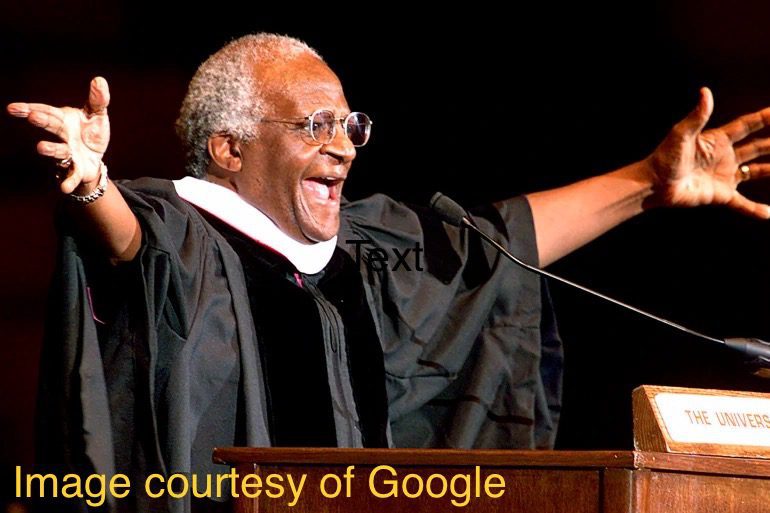
Nigerian Supreme Council for Ecclesiastical Affairs (NSCEA) mourns Archbishop Desmond Tutu, as the South Africa’s Moral Conscience translates into glory on Sunday, December 26, 2021. He lived between 1931-2021.
The Anglican Archbishop Emeritus Desmond Tutu, and South Africa’s Nobel Peace Prize-winning activist for racial justice and LGBT rights and retired Anglican Archbishop of Cape Town, has died at the age of 90, South African President Cyril Ramaphosa has announced.
“Tutu’s death on Sunday “is another chapter of bereavement in our nation’s farewell to a generation of outstanding South Africans who have bequeathed us a liberated South Africa,” South African President Cyril Ramaphosa added.
Remarkably, “From the pavements of resistance in South Africa to the pulpits of the world’s great cathedrals and places of worship, and the prestigious setting of the Nobel Peace Prize ceremony, the Arch distinguished himself as a non-sectarian, inclusive champion of universal human rights,” he said.
Archbishop Tutu died peacefully at the Oasis Frail Care Centre in Cape Town, the Archbishop Desmond Tutu Trust said. He had been hospitalized several times since 2015 after being diagnosed with prostate cancer in 1997.
As the Archbishop Desmond Tutu, South Africa’s Nobel Peace Prize-winning icon, an uncompromising foe of apartheid and a modern-day activist for racial justice and LGBT rights, joins the hosts of witness in heaven on Sunday, NSCEA joins the South Africans, world leaders and people around the globe to mourn the death of the Arch viewed as the country’s moral conscience.
Historically, Arch Tutu worked passionately, tirelessly and non-violently to tear down apartheid — South Africa’s brutal, decades-long regime of oppression against its Black majority that only ended in 1994.
The buoyant, blunt-spoken clergyman used his pulpit as the first Black bishop of Johannesburg and later as the Anglican Archbishop of Cape Town, as well as frequent public demonstrations, to galvanize public opinion against racial inequity, both at home and globally.
Nicknamed “The Arch,” the diminutive Tutu became a towering figure in his nation’s history, comparable to fellow Nobel laureate Nelson Mandela, a prisoner during white rule who became South Africa’s first Black president.
Archbishop Tutu and Mandela shared a commitment to building a better, more equal South Africa. Thus, upon becoming president in 1994, Mandela appointed him to be chairman of the country’s Truth and Reconciliation Commission, which uncovered the abuses of apartheid.
As a leader, “He turned his own misfortune into a teaching opportunity to raise awareness and reduce the suffering of others,” said the Tutu Trust. “He wanted the world to know that he had prostate cancer, and that the sooner it is detected, the better the chance of managing it.”
In Nigeria, the leadership of the Christian Association of Nigeria (CAN) has commiserated with the government and the people of South Africa on the Home Call of a great Oracle of God, Archbishop Desmond Mpilo Tutu.
“Rev. Dr. Samson Ayokunle, the President of CAN in a statement said “We thank God for a life well spent by His great Servant who used every given opportunity to speak a potent voice against the defunct apartheid system of racial segregation and white minority rule in South Africa”.
He noted that the revered Archbishop was a South African Anglican bishop and theologian, known for his work as an anti-apartheid and human rights activist. He was also the first African Bishop of Johannesburg from 1985 to 1986 and then Archbishop of Cape Town from 1986 to 1996. He was also known as a theologian who sought to fuse the Black Theology with African Theology.”
“We recalled with nostalgia when from 1978 to 1985, Arch Tutu was the General -Secretary of the South African Council of Churches. That was when he emerged as one of the most prominent opponents of South Africa’s apartheid system of racial segregation and white minority rule.”
“Although an activist yet he was an advocate of non-violent protest and foreign economic pressure to bring about universal suffrage. In 1985, he became Bishop of Johannesburg and in 1986 the Archbishop of Cape Town, the most senior position in southern Africa’s Anglican hierarchy. In this position, he emphasised a consensus-building model of leadership and oversaw the introduction of female priests.”
The CAN President reiterated that the late Archbishop Tutu played prominent roles that led to the release of the foremost anti-apartheid activist Nelson Mandela from prison in 1990 and they both led the negotiations that ended apartheid and introduce multi-racial democracy.
“After the 1994 general election resulted in a coalition government headed by Mandela, Tutu was appointed the chairman of the historic Truth and Reconciliation Commission to investigate past human rights abuses committed by both pro and anti-apartheid groups. This Commission was used to heal all the wounds of apartheid inflicted on both the Whites and the Blacks.”
He stressed that Archbishop Tutu will always be remembered for his strong support of Palestinians in the Israeli–Palestinian conflict especially his strong belief in Israel’s right to exist. His strong criticism against the perceived anti-people policies under the South African Presidents of Thabo Mbeki and Jacob Zuma further made him a respected voice of the voiceless,” Rev. Dr. Ayokunle said.
Our hearts go to his immediate family, the South African Churches and the common man of that country who saw him as their advocate and protector. May God console and comfort them all in Jesus’ Name, Rev. Dr. Ayokunle prayed.
Bishop Prof. Funmilayo Adesanya-Davies, the Secretary General of the Elders Council, NSCEA on behalf of the Nigerian Supreme Council for Ecclesiastical Affairs (NSCEA) prays for the family and says, “Live on in eternity our beloved Archbishop Desmond Tutu, an African Archbishop of great might, virtues and repute.
Archbishop Tutu, you were an exuberant apostle of racial justice in South Africa and the entire world, who helped to lead the movement that remarkably helped to end white minority rule in South Africa. South Africa, the Christian world and the world at large will really miss you, sleep on our beloved father!”
Bishop Prof. Funmilayo Adesanya-Davies
Secretary, Elders Council, NSCEA
Nigerian Supreme Council for Ecclesiastical Affairs (NSCEA)


Africa’s Crisis of Military Coups and Insecurity -By Safiya Zakari Muhammad
The erosion of democracy has also weakened regional and international security cooperation. In some cases, juntas have expelled traditional partners...

Governor Uba Sani’s Resolute Commitment On Rural Development -By Abdulrashid Sani Gimi
In the long run, the 2026 fiscal strategy transcends conventional budgetary practice. With a total outlay of ₦985.9 billion, a...

Lack of Financial Support Holding Back Russia’s Economic Influence in Africa: A Case Study of Missed Opportunities in Nigeria -By Kestér Kenn Klomegâh
As Africa's largest economy, Nigeria cannot afford another decade of promises without projects. The future of its development lies with...


The Impact Of Social Media On Youth Mental Health -By Jemimah Hezekiah
Governments and tech companies also have a role to play. Enforcing anti-cyberbullying policies, offering digital literacy programs, and providing mental...

Every Night We Pray to Survive: Voices from Insecure Communities -By Rinret istifanus
As the nation debates policies and strategies, these voices remind us that insecurity is not just a headline it is...