
National Issues
El Rufai and the Challenge of Building Kaduna In a Day With One Kobo (2) -By Pius Adesanmi

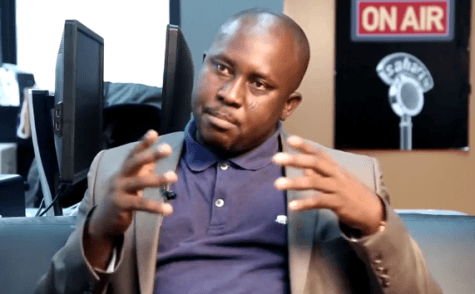
Pius Adesanmi
In essence, Nasir El Rufai will be held to different and much higher standards by the people of this state and by the rest of us who are not citizens of Kaduna but who are determined to work assiduously for his success in the next four years. Here is the reason why he will be judged differently. One significant feature of the Nigerian tragedy is that the citizen knows, sees, and feels the Nigerian condition spelt out in terms of poverty, hopelessness, destitution, comatose infrastructure, and corrupt leadership but, as far as I know, very few Nigerians have ever demonstrated any understanding of the organic origins and sources of our problems. Few Nigerians understand that our chaos, our urban rot and rural decay, our decrepit roads, hospitals, and Universities, our power failures and water shortages, and our fuel scarcity are collective consequences of our wanton embrace of the unthought and unreflected society. Since we inherited this dilapidated contraption from the British, we have made not a single attempt to philosophise the Nigerian project through sustained critical thought.
The price is always very heavy when a people develop a collective hostility to philosophy. Dubai, London, Paris, and all the other destinations that Nigerians adore and desire are all outward manifestations of something called modernity. Democracy, law and order, urban planning and regulation are all features of modernity. Innovation and science and technology are equally features of modernity. Nigerians see the end product but they have absolute contempt for the road which led the advanced world to the glittering modernity that they desire. They do not know that more than two hundred years of philosophy, writing, and critical thought went into the conceptualisation of what they see and admire in the advanced world today. They do not know that modernity and its gloss exist today because a long line of thinkers in Renaissance and Enlightenment Europe produced philosophies which became the bedrock of what we see and call modernity today. Google the period covered by the Renaissance and the Enlightenment for an idea of how many centuries of philosophy produced the cities you admire in Europe and America today.
Nigerians do not know that all the material things they acquire in order to be able to form aje butter and boast that “I better pass my neighbour” are products of philosophy and critical thought. They do not know that the cars they drive are products of philosophy before being products of science and technology. They do not know that the houses they acquire in Dubai, London, Paris, and Washington, DC, are products of philosophy before being products of architecture, science, and technology. Because Nigerians are ignorant of these things, they frown on philosophy, intellectual labour, and critical thought. The slightest encounter with philosophy and critical thought in our lives is quickly dismissed as “dogon turenchi”. Even supposedly educated Nigerians are quick to dismiss philosophy and critical thinking and writing. You hear them say impatiently that what we need now is action and not big grammar. I am sure that when this lecture goes public, there will not be a shortage of Nigerians who to grumble that it is too long, too big on grammar. They will then beat their chests and proclaim loudly in readers’ comments area that they did not bother to read beyond the first paragraph. Those who are kind will advise the author that what we need now is action, not big grammar.
That is the predictable Nigerian attitude to philosophy and critical intellection. Our contempt for philosophy and critical intellection is why we build our houses everywhere and anyhow; why we drive our cars anywhere and anyhow; why we still invest billions in the open drainages we call gutters in the 21st century and call them ultramodern; why we invest in refurbished World War II locomotives in the 21st century and boast about transformation. Everywhere you look, our national life is a sordid and tragic display of the absence of philosophy in our conceptualisation of Nigerian society. When you declare war on philosophy, knowledge, and critical intellection, the consequence, simply put, is Nigeria as you and I know her today. Nigeria can therefore be defined as the absence of and hostility to philosophy in the life of a nation.
This pathological contempt for philosophy, for critical thought, for the reflected society, is shared by leaders and followers alike in Nigeria. This explains why no contemporary Nigerian leader has ever really arrived in office with evidence of philosophical preparation for the task of societal envisioning. We do not have evidence of that leader who, before offering himself for public office, had invested time to philosophically study the problems and challenges of our society with a view to bringing critical and organic thought to bear on his vision and actions in office. Nasir El Rufai is of a different breed and that is why he will bear the burden of being judged and evaluated differently. What I will accept as success from many state governors in the coming dispensation will be treated as mediocrity if it comes from Nasir El Rufai.
I am not saying that he is different just to please him and butter his ego. At any rate, Nasir El Rufai has known me long enough and will be the first to tell you that I have never buttered his ego in all our years of association. I am not saying that he is different because we can always point to the Abuja that he built – before it was destroyed by his successors – as evidence of the application of philosophy and critical thought to the conceptualisation and ordering of society. Abuja is, in fact, only a fragment of what I am trying to describe. As far as I am concerned, the most important thing that Nasir El Rufai did after leaving office as Minister of the Federal Capital Territory was to systematically and painstakingly invest time in philosophical and intellectual exertion. He became a syndicated columnist for ThisDay and a number of internet outlets. That was long before he ventured into the roforofo world of Facebook and Twitter.
It took a while for Nasir El Rufai’s public writing to retain my attention. In fact, I initially viewed the project with some suspicion. When a politician quits office and becomes a columnist, maybe he will produce only political jeremiads aimed at his enemies? Gradually, I began to notice that a body of intellectual envisioning of society was growing in his columns. El Rufai was applying himself rigorously and scrupulously to a philosophical study of our society in order to deepen his own understanding of our problems. By the time El Rufai’s writing and thinking evolved into a state by state analysis of budgets – by the way, many unhappy state governors advised him angrily to mind his business! – I was hooked. This student of Nigerian society was now adding empirical evidence – I hope Ms. Oby Ezekwesili cannot hear me – to philosophical substance.
The budget analysis phase of his career as a columnist made me send him an email. I wrote and told him that with the body of work he had produced in his columns, if he ever ran for office and won, we would for the first time in the chequered life of this country have a leader who had prepared for office through a methodical and scrupulous application of philosophy to the examination of our societal problems and issues. Even if there were times when I disagreed with his reasoning and submissions, with his methodology and conclusions – disagreement comes with the territory of intellection – what I could not take away from him was the fact of scrupulous application of critical thought to the analysis of our problems. Nasir El Rufai thoroughly and empirically studied our society in his columns. I had the persistent feeling he was doing such painstaking studies because he knew he would one day run for office and was preparing.
In essence, the technocrat who was an accidental public servant does not have the luxury of claiming to be an accidental state governor after he is sworn in tomorrow, for in his career as a columnist lies evidence of his painstaking cerebral preparation for the 21st century demands of this office. What will start to happen tomorrow, what must start to happen tomorrow, what the people voted for in that huge mandate, is the kick-starting of a decisive and irrevocable march towards a philosophised and reflected Kaduna state, led by a man with proven evidence of philosophical and intellectual application to societal problems and issues. From tomorrow onwards, and at least, in the next four years, what attracts a pass mark in Ekiti and other states governed by non-intellectual and unphilosophical featherweights, will not attract a pass mark in Kaduna for obvious reasons. Kaduna will and must become the national barometer by which the methodical application of critical rigour and intellectual depth to solving the problems of Rome will be measured.
Considering the tragedy that Kaduna State and General Buhari at the centre will inherit tomorrow, how will Mallam Nasir El Rufai build Rome in a day? Why have I claimed that despite the financial calamity they will inherit, they must build Rome in a day, spending one kobo? For answers to these questions, we must examine the life and times of a man named Lee Kuan Yew. Until very recently, Ghana’s Jerry Rawlings used to be the open desire of the Nigerian masses. It was common for frustrated Nigerians to openly pray for our own version of Jerry Rawlings who, to put it bluntly, would march off every member of the ruling class to the stakes and do the needful (apologies to Stella Oduah). What happened with electricity and fuel in the last two weeks would have led to cries for a Jerry Rawlings to rise up and rid the land of a certain cabal and her Federal political enablers. Yet, I have not heard anybody talk about Jerry Rawlings.
The reason for this is easy. We are a nation fascinated with heroes. We cannot linger too long with one hero. We have moved on to Lee Kuan Yew. In fact, I understand that the petrol cabalocrat who turned Lee Kuan Yew into a hero has only just become a hero himself. This petrol cabalocrat was the wallet behind an organisation whose members are now known as TANmites. One day, TANmites woke up from the wrong side of the bed and declared that this Nigeria suffering from economic kwashiorkor and developmental Ebola is paradise because somebody is running her affairs the way Nelson Mandela did it in South Africa; the way Martin Luther King did it in America; the way Obama is doing it in America; the way Lee Kuan Yew did it in Singapore. Because Nigerians are more familiar with Nelson Mandela, Martin Luther King, and Obama, the advertorial effrontery of the TANmites led to a national fascination with Lee Kuan Yew, arguably one of the 20th century’s greatest nation builders. Lee Kuan Yew is the man who transformed a country that was in the ranks of some of Africa’s most underdeveloped basket cases into an epitome of 21st-century First World modernity in just one generation. The replacement of Jerry Rawlings with Lee Kuan Yew in our national imagination and wish list of leaders is therefore absolutely justified. What is not justifiable is the sickening ignorance of those who introduced Lee Kuan Yew into our national conversation through the TAN advertisement.
Lee Kuan Yew’s book, From Third World to First: The Singapore Story, is the story of how one man achieved the miracle of Singapore. However, the book is seven hundred pages long! Does anybody believe that the TANmites who are appropriating the Singapore story within the narrative of transformation have read a seven hundred-page book? Many Nigerians who are retailing the Lee Kuan Yew narrative do not understand what the book is really about. Because I have read the book, I can tell you authoritatively that the underlying theme of that powerful story is how Lee Kuan Yew built the 21st-century modernity of Singapore without spending a single kobo. Lee Kuan Yew built Rome in day and free of charge and that is precisely what Nasir El Rufai is going to have to replicate here in Kaduna.
Nigeria today confronts all the challenges which faced Lee Kuan Yew in the 20th century. Being a microcosm of Nigeria, Kaduna State pretty much presents the same picture that was Singapore at the time. Singapore was rickety, backward, underdeveloped, broke, and hopelessly divided along the familiar lines of ethnicity and faith. Yet, today, Singapore’s Wikipedia entry describes her as “one of the world’s major commercial hubs, the fourth-largest financial centre and one of the five busiest ports. Its globalised and diversified economy depends heavily on trade, especially manufacturing, which accounted for around 30 percent of Singapore’s GDP in 2013. Singapore places highly in international rankings with regard to standard of living, education, healthcare, and economic competitiveness. Singapore has one of the highest per capita income and one of the longest overall life expectancy in the world. The country is one of nine countries in the world with top AAA rating from all credit rating agencies.”
Lee Kuan Yew informs us that he achieved this miracle, despite the debilitating odds against him and his country, because the only natural resource he recognised and worked with are his people and their work ethic. It takes a leader with a philosophical approach to the ordering of human affairs to understand that all great nations in history have been built by only one resource: human capital! Not oil. Not gold. Not diamonds. And certainly not goats and yams. Human capital is really all it takes. And money cannot buy human capital as a resource because it is about the emotional, psychological, affective relation between man and his environment, between man and project nationhood. All the money in this world cannot create human capital. The presence of humans does not automatically translate to human capital. The presence of human beings within a geographical nation-space is just human potential and remains so until visionary leadership transforms human potential to human capital. That is why Nigeria has 180 million humans without a single drop of human capital anywhere in the country. Human capital is a love affair between the biological human and his nation. Human capital is a regenerative potential that can build Rome in one day provided one other condition is satisfied. Lee Kuan Yew satisfied that other condition.
The condition in question is the personal capital of a leader. Like human capital, a leader’s personal capital is not about money. Yet it is the singular element that can transform human beings into human capital and unlock it for rapid national development. Personal capital covers everything from a leader’s core values to his integrity, probity, moral and ethical soundness, record of accomplishment in service and leadership, personal discipline, cultivation, vision, intellect and the degree of his investment in philosophy for the purpose of envisioning society. Chief Obafemi Awolowo, one of the very few leaders ever to have successfully mobilised the human capital in his charge to produce one of Nigeria’s most enduring success stories, has a Spartan definition of personal capital which I am sure would scare everybody in this room.
Here is what Chief Awolowo has to say in his book, Thoughts on the Nigerian Constitution: “Good leadership involves self-conquest; and self-conquest is attainable only by cultivating, as a first major step, what some applied psychologists have termed ‘the regime of mental magnitude’. In plain language, the regime of mental magnitude is cultivated when we are sexually continent, abstemious in food, abstain totally from alcoholic beverage and tobacco, and completely vanquish the emotions of greed and fear. There are those who would regard these prescriptions for leadership to be too stringent. They are welcome to their view; but for the good of the fatherland, such people should steer clear of the affairs of State, and confine their activities to those spheres where their excessive self-indulgence cannot incommode the entire nation, to the point of threatening its very life”.
A leader’s personal capital and self-conquest transforms him into the Chief Lover of his people and his nation. He becomes their Inspirer-in-Chief. Because he had human capital and self-conquest, Lee Kuan Yew taught and inspired Singaporeans to wake up every morning loving Singapore with passion and with every breath of their lives. He taught them to develop a love for Singapore that was stronger than their dangerous differences of race, ethnicity, and religion. As a follower, you cannot inspire me to love Nigeria if I look at you and all I see is example after example of hatred for Nigeria. If a country goes into coma on your watch; if a country becomes the global butt of jokes on your watch; if people describe her as a fool who is thirsty in the abundance of water because she has so much oil and has no oil, could such realities have resulted from a leader’s unalloyed love for his country? From what moral or ethical standpoint can you inspire me to love Nigeria if this is your report card? You cannot inspire me to love Nigeria when your philosophy does not go deeper than seeing Nigeria as a barn of yams that you are keeping in trust for the goats closest to you or for stray goats who have found favour with you. Once there is no inspirational leadership, borne of personal capital and self-conquest, nobody will love the polity. That is why I keep insisting that although we are broke, our problem is not really about money. No amount of money in this world can fix Nigeria if the current psychology of the Nigerian, which is to practically unlove Nigeria, is not fixed by inspiring and transformational leadership. In fact, give Nigeria all the money in the US Federal Reserve and the Bank of China today and she will still remain a broken, tattered, underdeveloped, Third World basket case. If anything, more money will produce more goats hankering after new yams.
The sort of leadership we have had thus far in this country is the reason why 180 million of us wake up every day thinking of what to steal from Nigeria and how to steal for the benefit of ourselves, our home town, our ethnic group, our faith. We steal money from Nigeria. We steal time from her. If it was possible to steal oxygen from Nigeria, we’d do it. Nobody loves this country because we are waiting to be inspired to do so. As it goes for Nigeria, so it goes for Kaduna State. The voice of the people, which is the voice of God, has handed a mandate to Nasir El Rufai and told him that money is not the most urgent problem of this state. Give Kaduna State an allocation of 100 billion dollars a week and nothing will change until the psychology of the people of this state is retrained to love Kaduna more than it embraces the traditional divisions between her Moslem and Christian populations. The people of Kaduna must be inspired to love their state more than they embrace their differences. Money cannot do this. Only the personal capital of their new Governor can inspire them to embrace a new psychology of transcendental and unalloyed love for their state.
The voice of the people, which is the voice of God, has handed a mandate to Nasir El Rufai and told him that money cannot transform the human citizens of this state into human capital. Only Nasir El Rufai’s personal capital and self-conquest can unlock the human capital of this state and deploy it for the urgent purpose of building Rome in a day. The challenge of 21st century Kaduna is not different from the challenge of the rest of the postmodern world: all the indicators of development in terms of infrastructure, healthcare, education, urban renewal, conquest of poverty, economic rejuvenation must all somehow come together to produce smart, greener, efficient, and sustainable cities and rural areas.
You may say that all of these things cost money. I agree. But the two things on which they depend – the personal capital of the leader and the human potential of the led – are mutually reinforcing and free. There is enough money in the system. It is just that lack of love for this land by the leadership and the led has not made us come to terms with how much money we steal and how much money we waste. Once Nasir El Rufai leads the love revolution for Kaduna State, your attitude and relationship to her will change. Whether you are teacher, a nurse, a doctor, a mechanic, a trader, a banker, a farmer, a fisherman, a civil servant, you will no longer wake up looking for ways to shine your eyes and arrange at the expense of Kaduna State. This psychology will be replaced by an ethos of preservation and conservation of the resources of Kaduna State. The critical energies of the people will be liberated.
I am pleased to observe that Nasir El Rufai will not be alone in this love revolution. There are encouraging signals from his leader at the centre. I understand that somebody was in London recently and declined a Rolls Royce rented for his London commute by the Nigerian High Commission. I understand that this same somebody has made it clear that his movement around Abuja must not be a source of inconvenience for the residents of Abuja and his sparse convoy must obey traffic regulations. These actions would be routine, insignificant, and unworthy of mention if we weren’t dealing with Nigeria. In the case of Nigeria, these are powerful symbolic moves towards the demystification of power. Those who have been running their mouths on social media criticising these things are ignorant of the power of symbolic gestures in a land where power has always alienated herself from the people and brutalised them. They ignore the heavy financial price we pay for the arrogance of power. When an airspace is shut down due to VIP movement, who can quantify the loss to the nation in terms of man hours lost by citizens immobilised by power?
But if, like the austere man taking over in Abuja, Nasir El Rufai says I want to be simple, I want to be humble, I want to demystify power and take it closer to the people, then who are you, Mr. Commissioner or Mr. Special Adviser to insist on the old ways of doing things by going about Kaduna disturbing the people with your big manism? Between the incipient simplicity at the centre and the simplicity we shall witness here in Kaduna, just try to imagine how much will be saved within the system! Nasir El Rufai will and must lead the people to love Kaduna State above and across their differences and divisions. Nasir El Rufai will and must mobilise his personal capital to unlock and unleash the only genuine resource he has: human capital. That journey starts tomorrow. And for coming here to show you how to build your Kaduna Rome with two resources that are absolutely free, you owe me one kobo!
I thank you for your time.
Pius Adesanmi is a Professor of English & African Studies at Carleton University, Ottawa, Canada.
This is the second and concluding part of a lecture, originally titled “Building Rome in a Day with One Kobo: El Rufai & the Challenge of 21st Century Kaduna” at the Inauguration of Mallam Nasir El Rufai as Governor of Kaduna State on May 28, 2015. The first part was published on Premium Times‘ edition of June 5, 2015.

Cease The Unchecked Looting -By Abba Dukawa
To address this, the Independent Corrupt Practices and Other Related Offences Commission (ICPC) and the Economic and Financial Crimes Commission...

Moscow University Museum Presents Insights into African Artistic Culture -By Kestér Kenn Klomegâh
In his contribution, Louis Gouend, Chairman of the Commission for Work with African Diasporas at Moscow State University's Russian-African Club,...


Justice, Peace And Integrity Of Creation Prerequisite To Good Living -By Melissa Thomas
There are many ways to promote peace in our world of today but perhaps the best way is to promote...

Africa Squeezed Between Import Substitution and Dependency Syndrome -By Kestér Kenn Klomegâh
The key buyers of Russian grain on the continent are Egypt, Algeria, Kenya, Libya, Tunisia, Nigeria, Morocco, South Africa, Tanzania...

Accelerating Intra-Africa Trade and Sustainable Development -By Kestér Kenn Klomegâh
The AU Private Sector Forum has held several forums, with key recommendations. These recommendations provide valuable insights into the challenges...