
Political Issues
Electoral Offences Commission Bill: What You Need To Know -By Oyetola Muyiwa Atoyebi & Ibrahim Wali
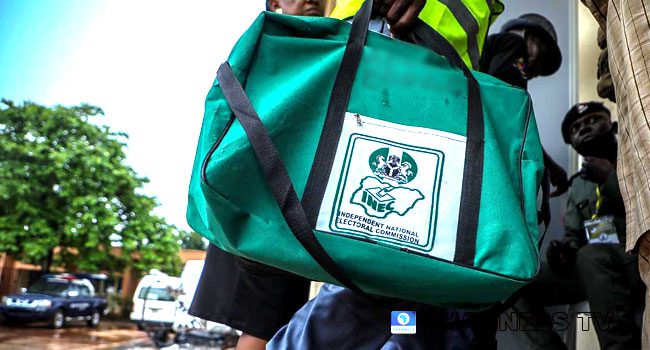
The National Electoral Offences Commission Bill was established with a view to ensuring free, fair and credible elections in Nigeria, by the creation of a Commission primarily charged with the prevention and detection of electoral offences, the arrest and apprehension of electoral offenders, and the prosecution of same.

INTRODUCTION
On the 30th of June 2022, a bill to establish the National Electoral Offences Commission passed the second reading in the House of Representatives.[1] This Bill did not come as a novel development, as there had been several attempts by the Federal Legislature to enact such a bill as early as 2019.[2] A similar bill was passed by the legislature and sent to the President for assent but was sent back to the House for further deliberations.[3] The current bill that has just passed the second reading at the House of Representatives is a consolidation of 5 legislative bills on the establishment of an Electoral Offences Commission.[4] The Bill is currently being pushed to be immediately passed into law by relevant stakeholders, including the Independent National Electoral Commission (INEC) before the upcoming 2023 general elections.[5]
REASONS FOR THE ESTABLISHMENT OF THE BILL
The National Electoral Offences Commission Bill was established with a view to ensuring free, fair and credible elections in Nigeria, by the creation of a Commission primarily charged with the prevention and detection of electoral offences, the arrest and apprehension of electoral offenders, and the prosecution of same.
WHAT THE BILL SEEKS TO ACHIEVE
The Bill seeks to relieve the Independent National Electoral Commission (INEC) of its additional burden of prosecuting electoral offenders, so as to enable it to focus on its primary function of conducting free, fair and credible elections in Nigeria. It also seeks to grant the necessary powers to the commission in order to properly carry out its function. In addition, the Bill seeks to prescribe electoral offences and their punishments.
RELEVANT PROVISIONS OF THE BILL
That National Electoral Offences Commission Bill is currently projected to have 46 clauses divided into 7 parts.[6] Outlined below are some of the relevant provisions of the Bill.
- Establishment of the National Electoral Offences Commission: The Bill provides for the establishment of the National Electoral Offences Commissionas a corporate body capable of suing and being sued, and its headquarters shall be located in the Federal Capital Territory (F.C.T).[7]
- Functions/Powers of the Commission: The Bill provides for the functions of the commission to include the investigation of all electoral offences created in any law relating to elections in Nigeria, and the prosecution of offenders of these offences in addition to other functions[8]. The Bill also empowered the commission to seize any property, moveable or immovable that is used or suspected to be used in the commission of an electoral offence.[9]
- Establishment of Units: The Bill provides that the Commission shall have an Investigations, Legal and Prosecutions Unit, an Elections Monitoring and Operations Unit, an Administration Unit and a Research and Training Unit.[10]
- New Electoral Offences and Punishments: The Bill defined and prescribed punishments for new electoral offences such as;
- the offence of Disturbing Public Peace, which has to do with using loudspeakers and playing musical instruments in a polling unit or its environs on election day, and punishing it with a minimum of 6 months imprisonment or a fine of
N100,000 or both[11]; - the offence of defamation and damaging the character of an election candidate or his family member with a penalty of 10 years imprisonment or a
N10,000,000 fine[12]; - the offence of propagating information during a campaign that can undermine the independence, sovereignty and unity of Nigeria, and is capable of causing people to vote on the basis of any religion, tribe or language amongst others, with a punishment of 20years imprisonment without fine.[13]
The Bill also made it an electoral offence for employers to refuse their employees a reasonable time for voting, punish them or deduct from their remunerations for failure to show up to the office on election day, with the penalty for doing such being a fine of at least N6,000,000 or 3 years imprisonment.[14] Another interesting offence is that of hate speech during the course of an election where it is intended to stir up ethnic, religious or social hatred which is punishable with imprisonment of at least 10 years and a N40,000,000 fine or both.[15]
It is important to note here that other new electoral offences have been outlined by the Bill.
Furthermore, the Bill laid out more stringent punishment for existing offencessuch as the offence of Vote Buying and Bribery, imposing a punishment of 15 yearsimprisonment, whereas, under the Electoral Act, the offence carries a punishment of 12 monthsimprisonment, or a fine of N500,000 or both.[16] A lot of the existing electoral offences under the Electoral Act have been redefined in the Bill with more stringent punishment, in the form of a greater imprisonment term, fine or both.
- Jurisdiction: The Bill provides that the Courts which shall have jurisdiction to try offences under the Bill are the Federal High Court and the High Court of a State, or of the Federal Capital Territory.[17]
CONCLUSION
Generally, the importance of maintaining the integrity of the electoral process cannot be overstated. Thus, it is crucial that the elections in Nigeria be given the full and undivided attention it deserves. It is a laudable achievement that the Nigerian government fully recognises this need.
Key words:
ELECTORAL OFFENCES COMMISSION BILL
BILL
NIGERIAN ELECTIONS
AUTHOR: Oyetola Muyiwa Atoyebi, SAN, FCIArb. (UK).
Mr. Oyetola Muyiwa Atoyebi, SAN is the Managing Partner of O. M. Atoyebi, S.A.N & Partners (OMAPLEX Law Firm) where he also doubles as the Team Lead of the Firm’s Emerging Areas of Law Practice.
Mr. Atoyebi has expertise in and vast knowledge of Election Petition and this has seen him advise and represent his vast clientele in a myriad of high-level transactions. He holds the honour of being the youngest lawyer in Nigeria’s history to be conferred with the rank of Senior Advocate of Nigeria.
He can be reached at atoyebi@omaplex.com.ng
CONTRIBUTOR: Ibrahim Wali.
Ibrahim is a Team Lead in the Dispute Resolution Team at OMAPLEX Law Firm. He also holds commendable legal expertise in Election Petition.
He can be reached at ibrahim.wali@omaplex.com.ng.
[1] Agency Report ‘National Electoral Offences Commission Bill passes Second Reading House of Reps’ https://www.premiumtimesng.com/news/top-news/540020-national-electoral-offences-commission-bill-passes-second-reading-in-house-of-reps.html
[2] SB 220: Electoral Offences Commission (Est. etc ) Bill 2019 https://placbillstrack.org/view.php?getid=6867
[3]UdoraOrizu ‘House to Consider Bill seeking establishment of Electoral Offences Commission’ https://www.thisdaylive.com/index.php/2022/06/29/house-to-consider-bill-seeking-establishment-of-electoral-offences-commission/
[4] Kehinde Akintola ‘Reps move to consolidate Additional Bills on Electoral Offences Commission, Electoral Offences Tribunal’https://tribuneonlineng.com/reps-move-to-consolidate-additional-bills-on-electoral-offences-commission-electoral-offences-tribunal/
[5]OkechukwuObeta ‘2023: INEC Urges NASS to Pass Electoral Offences’ https://leadership.ng/2023-inec-urges-nass-to-pass-electoral-offences/
[6]PlacNg ‘National Electoral Offences Commission Bill Before the 9th House of Reps’ <https://placng.org/i/wp-content/uploads/2022/08/National_Electoral_Offences_Commission_Bill_Before_The_9th_House_Of_Reps.pdf>
[7] Clause 1 National Electoral Offences Commission Bill
[8] Clause 6 Ditto
[9] Clause 7 Ditto
[10] Clause 10 Ditto
[11] Clause 22 Ditto
[12] Clause 23 Ditto
[13] Clause 25
[14] Clause 28
[15] Clause 32
[16] , Clause 18 National Electoral Offence Bill, S121 Electoral Act 2022
[17] Clause 33 of the Bill



When Nations Break Their Reformers: Why EFCC Cannot Carry Nigeria’s Burden Alone — And Why Power Must Fear God -By Prof. John Egbeazien Oshodi
Public frustration with the EFCC over perceived selective enforcement is understandable. Nigerians see some arrests carried out suddenly and forcefully,...

Poor, Poor, Maduro -By IfeanyiChukwu Afuba
Little wonder his ouster elicited celebrations. The ease of his capture is telling. There is only one explanation for the...


Why African Leaders Must Fix Governance Before Crying Sovereignty -By Isaac Asabor
One of the great contradictions of African leadership today is selective morality. Leaders speak passionately about international law while violating...


Baba Has Entered The Classroom -By Isaac Asabor
If what Trump is doing is walking into a noisy global classroom and insisting on discipline, then let us be...

As Trump Exposes Why Tinubu Must Go Sooner -By SKC Ogbonnia
The Nigerian president is not only culpable of heinous crimes, but he is also weakened beyond redemption. His continued stay...