
Breaking News
EU Reaches Agreement to Halt Russian Gas Imports by Autumn 2027
The European Union has approved a landmark agreement to end all Russian gas imports by autumn 2027, phasing out long-term pipeline and LNG contracts as part of efforts to cut Moscow’s energy revenue and boost Europe’s energy independence.

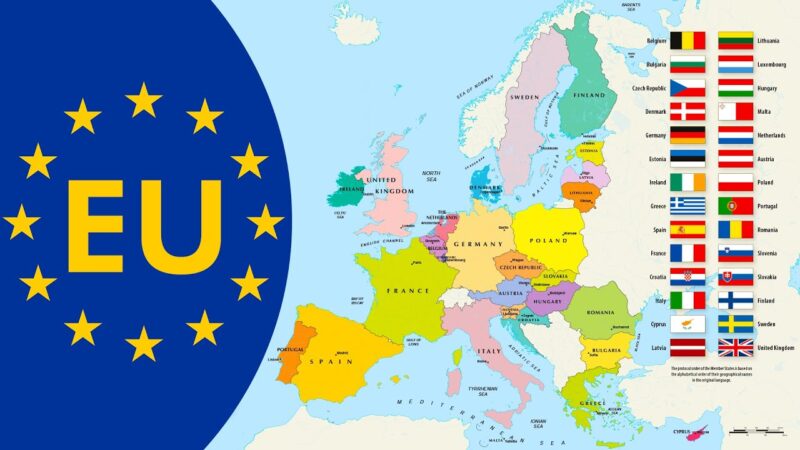
The European Union has reached a landmark agreement to phase out all Russian gas imports by autumn 2027, as part of efforts to cut off vital revenue supporting Moscow’s war efforts in Ukraine.
“This is the dawn of a new era, the era of Europe’s full energy independence from Russia,” European Commission President Ursula von der Leyen said on Wednesday after negotiators from EU institutions sealed the late-night deal.
The agreement represents a compromise between EU governments and the European Parliament, which had pushed for an even earlier ban. The plan aims to end a dependence the bloc has struggled to break since Russia’s invasion of Ukraine.
“We’ve made it: Europe is turning off the tap on Russian gas, forever,” EU Energy Commissioner Dan Jorgensen posted on X. “We’ve chosen energy security and independence for Europe. No more blackmail. No more market manipulation by Putin. We stand strong with Ukraine.”
The Kremlin criticised the move, warning it would “accelerate” the decline of the EU economy by forcing the bloc to seek costlier energy alternatives.
Under the agreement, long-term pipeline gas contracts—considered the most sensitive because they often span decades—will be banned from September 30, 2027, as long as storage levels are adequate, and no later than November 1, 2027.
For liquefied natural gas (LNG), long-term contracts will be prohibited starting January 1, 2027, aligning with von der Leyen’s call for tougher sanctions against Russia.
Short-term contracts will end sooner: April 25, 2026 for LNG and June 17, 2026 for pipeline gas.
According to a European Council statement, the measures are designed “to end dependency on Russian energy following Russia’s weaponisation of gas supplies with significant effects on the European energy market.”
The timeline still requires final approval from both the European Parliament and EU member states. Companies will be allowed to invoke “force majeure” to legally terminate existing contracts on the basis of the EU’s import ban.
Further moves to cut Russian oil
The agreement also instructs the European Commission to develop a plan to phase out Russian oil imports to Hungary and Slovakia by the end of 2027. Despite EU efforts to reduce reliance on Russian energy, Hungarian Prime Minister Viktor Orban signaled last month during talks with President Vladimir Putin that his country would continue buying Russian hydrocarbons.
While the EU restricted Russian oil in 2022, exemptions were granted to the two landlocked member states.
Energy dependence continues to shrink
Nearly four years after Russia’s invasion, the EU is working to eliminate one of Moscow’s most profitable revenue streams. Russian gas accounted for 45% of EU imports in 2021 but dropped to 19% in 2024. Although pipeline imports have fallen sharply, Europe has increased its reliance on Russian LNG, which is shipped by sea and regasified at ports.
Russia remains the EU’s second-largest LNG supplier after the United States, providing 20% of the bloc’s LNG imports in 2024—roughly 20 billion cubic metres out of 100 billion. Russian LNG imports to the EU are still expected to reach €15 billion this year.
Opinion Nigeria News



The Pragmatism of Principle: Redefining Loyalty in an Age of Change -By Florence Ozor
While I do not endorse political nomadism, one must acknowledge that strategic realignment can be expedient. Take Peter Obi: after...


Lessons for Today: MLK for Continental African Leadership – A Psychoafricalytic Mirror for Power, Dignity, and Continental Renewal -By Psychologist John Egbeazien Oshodi
When African leaders abandon indigenous wisdom, they often adopt the colonial logic of control. Citizens become subjects. Protest becomes treason....


The Poverty Crisis: A Global Challenge to Human Dignity and Development -By Jennifer Joab
The poverty crisis is not just an economic problem but a profound human tragedy that affects the social, political, and...

Good Governance as a Tool for National Development -By Blessing Matthew
Good governance prioritizes the interests and welfare of the people above personal or sectional interests. It encourages transparency, accountability, rule...


Role of Youths in Nation Building -By Kusompwa Lazarus Motiyedi
It is true that today’s youth did not experience the horrors of the Nigerian Civil War or the severe economic...