
Sports
Exploration Of Sports Law In Nigeria: Introduction To Sports Arbitration -By Oyetola Muyiwa Atoyebi & Jedidiah Akpata
It must be stated, and expressly so, that arbitration is so far the best option in combating the disputes that arise in the sports industry. This Article has been able to discuss in brevity, the concept of arbitration and its uniqueness when compared to other forms of arbitration known to law. The procedure and mechanism used to implement arbitration in sports will be examined in subsequent series.

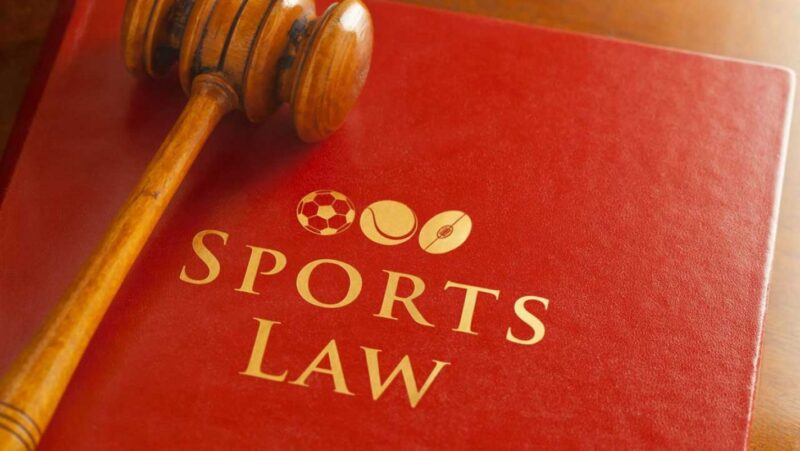
In light of the complexities involved in the administration and execution of Sport related legal services, a new approach is needed to enable stakeholders resolve issues of conflict whenever they arise. This is more so because Sports law cuts across many areas of law, and the administration of justice in that regard requires a new approach which will be a summation of all these areas of the law. It is in this regard that the arbitration process is so far the best approach for resolving disputes in the sports industry.
INTRODUCTION:
It is given that the sports industry is estimated to account for between 3-6 per cent of the total world trade. It is therefore not a surprise that over the years, it has been a major source of legal disputes. Like every other walk of life with legal issues, the sports industry has its peculiar legal issues and has adopted methods of combating its rising legal drama.
Sports law became established recently as an area of law consisting of an amalgamation of a wide variety of classical and other aspects of law which include contract law, employment law, antitrust law, criminal law, tax law, case law, and intellectual property law. From these diverse substantive areas that sports law encompasses, it has been recognized as a broad area of law consisting of a variety of legal aspects, probably encompassing more areas of the law than any other legal discipline. Due to its broad nature, the adjudication of legal disputes arising from the industry had to take a new twist.
In order to combat the rising legal issues emanating from the increasing growth in the world of Sports, there has been a shift in the approach to solving these problems. This shift has birthed the usage and adherence to arbitration in resolving sport-related legal problems.
ARBITRATION IN SPORT
Arbitration is an effective alternative to dispute resolution. It is the forum in which parties by an agreement between them, choose a forum other than the Court of law to resolve their disputes. The reason behind the evolution of arbitration is to minimize the burden on the shoulders of the Court of law and provide speedy remedy to the parties. Arbitration is a means of settling disputes by referring them to a neutral person, an arbitrator, selected by the parties for a decision based on the evidence and arguments presented to the arbitration tribunal. The parties agree in advance that the decision will be accepted as final and binding.
Arbitration in Sport adopts a slightly different model from conventional commercial arbitration. In sports arbitration, an independent arbitrator or panel of arbitrators is appointed with the consent of the parties. The parties present written arguments and evidence in accordance with a timetable agreed with the arbitrator(s) and in accordance with Sports Arbitration Rules. A hearing is held in which evidence is presented and witnesses are cross-examined. At the end of the hearing, the arbitrator(s) retire and within a few days produce a detailed written award that is final and binding on the parties. Any dispute directly or indirectly linked to sport may be a subject of arbitration in sport. These may be disputes of a commercial nature (e.g. a sponsorship contract), or of a disciplinary nature following a decision by a sports organization (e.g. a doping case).
Sports arbitration has quite some features which distinguish it substantially from standard commercial arbitration. Sports arbitration is a different model in comparison to commercial arbitration. This is largely due to the overriding objective to facilitate consistency of decisions and public sanctioning, so as to uphold the integrity of sport in the eyes of fellow athletes and the general public.
Some unique features of Sports Arbitration as against a more holistic and general commercial standard of arbitration.
- Public Judgments – Many sports disciplinary cases result in a public judgment and sanction. Indeed, the CAS and many other national and international arbitral bodies often publish judgments on their websites, to demonstrate to both the public and fellow athletes that justice is being done. This is in contrast to the strict confidentiality that ordinarily applies to commercial arbitration proceedings.
- Public Hearings – Recent cases in the sports disciplinary context have emphasized the right to a fair hearing including, where desired by the athlete, the right to a public hearing. Part of the rationale for this is that public hearings reassure the public and fellow athletes as to the integrity of the proceedings, and mitigate the potential for real or perceived bias, negligence, or corruption in private proceedings. This is in contrast to commercial arbitration where it is usual for hearings to be held in private.
- Standardized Penalties – Many sports governing bodies operate a tariff system for decision-makers to refer to when sanctioning athletes for disciplinary offenses, for example in the context of anti-doping. The rationale for this is that sports disciplinary panels should not apply wholly inconsistent sanctions to similar offenses. As a result, the outcome of certain sports arbitrations can be less discretionary than the outcome of commercial arbitrations.
- Stare Decisis– A body of sports law jurisprudence has developed over the years, that inter alia, ensures the fundamental principles of fairness and proportionality are borne in mind by decision-makers. Since sports arbitral awards are often public, sports arbitrators routinely refer to and rely uponthe decisions of other arbitrators and governing bodies in analogous disciplinary cases which, whilst not binding in nature, are highly persuasive. This promotes consistency of decisions and reassures sporting stakeholders that analogous cases will be treated similarly. This contrasts with commercial arbitration where arbitral decisions are often confidential and not routinely available to guide subsequent arbitrators.
- Expedited Proceedings – Sports governing bodies and Ad hoc CAS tribunals routinely hand down decisions within 24 hours, when required by the demands of sporting competition timetables e.g. when a footballer receives a red card and seeks to challenge his/her suspension for the next match which is only 48 hours hence. Although it is open to the parties to commercial arbitrations to agree on the procedures that will apply to their dispute, including expedited proceedings, and albeit the rules of many commercial arbitration institutions provide for the same, it is rare for commercial arbitrations to be conducted with the level of expedition as many sports arbitrations.
- Interim Measures and Enforcement – Generally, interim measures are often more effective in the sporting context than general commercial arbitration, as sports governing bodies invariably comply with such orders (and arbitral awards), and have very effective and direct means of ensuring that their members do likewise (e.g. preventing them from taking part in a tournament). As a consequence, they are routinely sought to address issues discrete to sporting competition, such as provisional suspensions and transfer bans pending the conclusion of proceedings. The system of enforcement of interim measures (and arbitral awards) in standard commercial arbitrations, is less predictable and may necessitate the additional time and expense of going to local Courts.
- Closed List of Arbitrators – It is often the case in the sporting context (e.g. CAS arbitrations) that the parties may only nominate an arbitrator from a closed list of potential candidates. This restrictive system is justified on the basis that it ensures that sports law specialists determine such disputes. This is in contrast to standard commercial arbitration, where parties often have the freedom to nominate an arbitrator of their choosing.
- Consistent Venue – The legal seat of all CAS arbitral proceedings, regardless of the venue of the hearing, is Lausanne in Switzerland. Hence, all CAS arbitrations are subject to Swiss arbitration law and decisions are only challengeable (in very limited circumstances)before the Swiss Federal Tribunal. This is also the case with other key Swiss-headquartered sporting institutions, such as FIFA and the International Olympic Committee. This consistency of seat and therefore the applicable procedural law, is not replicated in standard commercial arbitration, where parties generally have the freedom to choose the seat of their arbitration.
CONCLUSION
It must be stated, and expressly so, that arbitration is so far the best option in combating the disputes that arise in the sports industry. This Article has been able to discuss in brevity, the concept of arbitration and its uniqueness when compared to other forms of arbitration known to law. The procedure and mechanism used to implement arbitration in sports will be examined in subsequent series.
AUTHOR: Oyetola Muyiwa Atoyebi, SAN, FCIArb. (UK).
Mr. Oyetola Muyiwa Atoyebi, SAN is the Managing Partner of O. M. Atoyebi, S.A.N & Partners (OMAPLEX Law Firm) where he also doubles as the Team Lead of the Firm’s Emerging Areas of Law Practice.
Mr. Atoyebi has expertise in and a vast knowledge of Alternative Dispute Resolution (ADR) and this has seen him advise and represent his vast clientele in a myriad of high level transactions. He holds the honour of being the youngest lawyer in Nigeria’s history to be conferred with the rank of a Senior Advocate of Nigeria.
He can be reached at atoyebi@omaplex.com.ng
CONTRIBUTOR: Jedidiah Akpata.
Jedidiah is a member of the Dispute Resolution Team at OMAPLEX Law Firm. He also holds commendable legal expertise in Alternative Dispute Resolution and Sports Law.
He can be reached at jedidiah.akpata@omaplex.com.ng.



China Finances New ECOWAS Headquarters -By Kestér Kenn Klomegâh
In accordance with the agreement concluded between the ECOWAS and the Government of China, the building by the Shanghai Construction...


The Arrest Of Nicholas Maduro By The US And Other Matters -By Hajia Hadiza Mohammed
Since the advent of the current administration, the country has been weaken internally with self-serving leaders insensitive to the yearnings...


When Nations Break Their Reformers: Why EFCC Cannot Carry Nigeria’s Burden Alone — And Why Power Must Fear God -By Prof. John Egbeazien Oshodi
Public frustration with the EFCC over perceived selective enforcement is understandable. Nigerians see some arrests carried out suddenly and forcefully,...


Poor, Poor, Maduro -By IfeanyiChukwu Afuba
Little wonder his ouster elicited celebrations. The ease of his capture is telling. There is only one explanation for the...


Why African Leaders Must Fix Governance Before Crying Sovereignty -By Isaac Asabor
One of the great contradictions of African leadership today is selective morality. Leaders speak passionately about international law while violating...