
Breaking News
FG Debt to Power Producers May Rise to ₦6.4trn by End of 2025
Nigeria’s Federal Government debt to power generation companies is projected to reach ₦6.4 trillion by 2025, raising concerns over liquidity, power supply sustainability and stalled sector reforms.

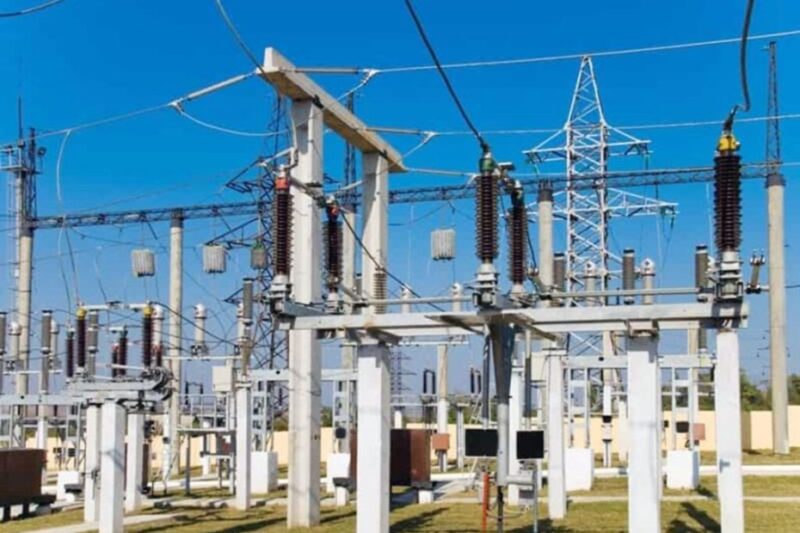
Indications have emerged that the Federal Government’s debt to power generation companies (GENCOs) could climb to ₦6.4 trillion by the end of 2025, up from about ₦6 trillion reported in October, representing an increase of roughly 6.25 per cent.
Investigations show that the liabilities, including legacy debts, accumulated between 2015 and 2025.
Chairman of the Association of Power Generation Companies (APGC), Col. Sani Bello (retd.), has repeatedly warned that the growing debt burden is severely limiting GENCOs’ ability to operate effectively. He noted that despite these challenges, power producers have continued to make sacrifices to keep the national grid functional.
However, checks by Vanguard revealed that GENCOs now fear the debt could hit ₦6.4 trillion by year-end, driven by a monthly revenue shortfall of about ₦200 billion. A breakdown indicates that while outstanding obligations stood at about ₦4 trillion at the end of 2024, an additional ₦2.4 trillion may accrue in 2025 if the monthly deficit persists.
An operator in the power sector described the Federal Government’s assurances to clear the debts as unrealistic, saying: “It remains audio money. A political promise yet to materialise. We are running at ‘I better pass my neighbour’ level as we cannot operate fully.”
Experts react
Reacting to the prolonged debt crisis, Dr. Muda Yusuf, Chief Executive Officer of the Centre for the Promotion of Private Enterprise (CPPE), said government intervention had become unavoidable in the short term.
“As a result, government intervention has become unavoidable in the short term to prevent system collapse and sustain electricity supply. However, the current trajectory, characterised by rising sector debt currently at about ₦4 trillion, is fiscally unsustainable without deeper structural corrections, improved transparency, and gradual but credible reform implementation,” Yusuf said.
He explained that the sector’s challenges are interconnected, noting that financial distress in one segment quickly affects others. “Currently, the GENCOs struggle to pay gas suppliers and DISCOs are unable to generate sufficient revenues to meet obligations to GENCOs. Transmission infrastructure suffers from underinvestment and governance challenges. These conditions have entrenched a systemic liquidity crisis, undermining sector confidence and sustainability,” he added.
Yusuf said recent government measures, including bond issuances to settle outstanding obligations to gas suppliers and GENCOs, were aimed at preventing a collapse of the electricity supply system. “Such interventions are necessary to maintain power availability for households and businesses while longer-term reforms are gradually implemented,” he said.
One promise too many
Earlier this year, the Federal Government pledged to settle 50 per cent of a ₦4 trillion debt owed to GENCOs to boost their operations. Minister of Power, Adebayo Adelabu, said at the time that while the government could not pay the full amount, it planned to clear ₦2 trillion before the end of the year.
Opinion Nigeria News


Second Ministerial Conference: Shaping Russian-African Strategic Partnerships -By Kestér Kenn Klomegâh
As indicated from above, the most important issues of multifaceted development are included on the Russian-African agenda, with a focus...


When Matrimony Is Dead On Arrival, The Wedding Was Only A Ceremony -By Isaac Asabor
Marriage is not for everyone, and that truth needs to be said plainly. It requires emotional intelligence, self-control, humility, and...


Awards Without Impact: Rethinking ‘Good Governance’ In Bauchi State -By Yasir Shehu Adam
True good governance is not proven in Abuja halls or award plaques. It is proven in functional classrooms, well-equipped hospitals,...


When “Happily Ever After” Starts Expiring: A Deep Dive into the Alarming Rise of Failed Marriages -By Peace Adams Bitrus
Weddings have become theatrical performances. Months of planning, millions spent, lights, cameras, choreographed dances… but very little attention is given...
Cease The Unchecked Looting -By Abba Dukawa
To address this, the Independent Corrupt Practices and Other Related Offences Commission (ICPC) and the Economic and Financial Crimes Commission...