
Breaking News
FG to Issue ₦4trn Bond to Clear Power Sector Debts, Restore Confidence
Nigeria launches ₦4trn bond plan to settle GenCos’ arrears, boost investor confidence, and reset the power sector for long-term financial stability.

Abuja — The Federal Government has approved the issuance of ₦4 trillion in government-backed bonds to settle verified debts owed to power Generation Companies (GenCos) and gas suppliers, in what is described as the largest intervention in Nigeria’s power sector in over a decade.
The Special Adviser to the President on Energy, Mrs. Olu Verheijen, announced the move in a statement issued in Abuja on Tuesday and signed by Senan Murray, Head of Media and Communications in her office.
According to the statement, the framework for the bond issuance was finalised following a high-level meeting between federal government officials and senior executives of the GenCos to agree on settlement modalities for the arrears.
Present at the meeting were the Minister of Finance and Coordinating Minister of the Economy, Mr. Wale Edun; the Minister of Power, Chief Bayo Adelabu; and Mrs. Verheijen.
Largest Power Sector Intervention in a Decade
Murray said the meeting ended with a consensus on a way forward that includes bilateral negotiations to finalise full and final settlement agreements that balance the federal government’s fiscal realities with the GenCos’ financial constraints.
“This intervention — the largest in over a decade — addresses a legacy debt overhang that has constrained investment, weakened utility balance sheets, and hindered reliable power delivery across the country,” he said.
He added that the move marks a major step by the Tinubu administration toward restoring financial stability and investor confidence in Nigeria’s electricity market.
Murray noted that the decision followed a landmark initiative approved by President Bola Tinubu and the Federal Executive Council (FEC) to tackle long-standing structural challenges and pave the way for private sector-led investment and sustained economic growth.
Government Targets Power Sector Reform and Investment
During the meeting, Verheijen emphasised that the government’s focus was on creating an enabling environment for investment by modernising the national grid, improving distribution networks, and expanding embedded generation.
“This step will help close metering gaps, align tariffs with efficient costs, improve subsidy targeting to support the poor and vulnerable, and restore regulatory trust,” she said.
“The sector is shifting from crisis response to sustained delivery and building the confidence needed to attract large-scale private capital.”
Also speaking, Finance Minister Wale Edun explained that the ongoing reforms go beyond liquidity management, focusing instead on rebuilding the fundamentals of Nigeria’s power sector.
“This is how we create the enabling conditions for sustained private investment and transform reliable power into a catalyst for economic growth,” Edun said.
He added that complementary measures — including scaling up renewable energy, using domestic gas as a transition fuel, and strengthening local technical capacity — would position Nigeria for energy security and sovereignty.
“These efforts will create one of Africa’s most attractive power markets,” he said.
Industry Leaders Commend Government’s Move
Leading industry players welcomed the initiative, describing it as a bold and credible step toward resolving the power sector’s liquidity crisis.
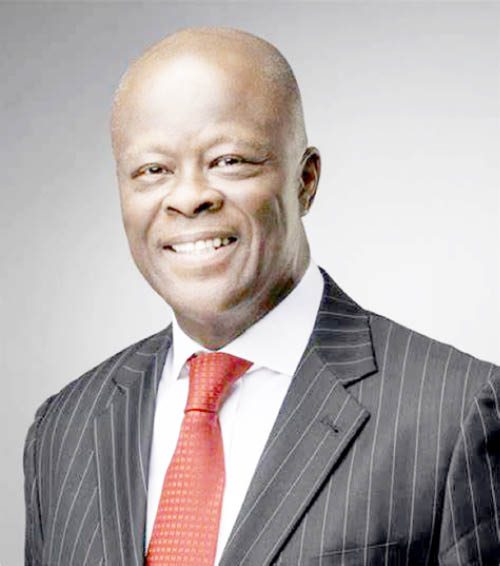
Mr. Tony Elumelu, Chairman of Heirs Holdings and Transcorp Power, said the move marks the first credible attempt in years to address the sector’s root financial challenges.
“For the first time in years, we are seeing a systematic effort by government to tackle the root liquidity challenges in the power sector,” Elumelu said, commending President Tinubu and his economic team for what he called a “bold and transformative step.”
Mr. Kola Adesina, Group Managing Director of Sahara Power Group, also lauded the initiative, describing it as “significant in every respect.”
“It renews confidence in the reform process and sends a clear signal that the government is serious about building a sustainable power sector,” Adesina said.
“Beyond clearing arrears, this debt reduction plan signals a strategic reset of Nigeria’s electricity market,” he added.
Implementation and Oversight
According to the News Agency of Nigeria (NAN), the Presidential Power Sector Debt Reduction Plan is being jointly implemented by the Federal Ministry of Finance, the Federal Ministry of Power, and the Office of the Special Adviser to the President on Energy, in collaboration with the Nigerian Bulk Electricity Trading (NBET) Plc and other key stakeholders.
President Bola Tinubu had earlier assured GenCos of the government’s commitment to settling outstanding debts, pending a thorough audit.
During a recent meeting with the Association of Power Generation Companies (APGC) at the State House, Abuja, Tinubu reiterated his administration’s resolve to resolve the liquidity challenges undermining Nigeria’s electricity sector.
Opinion Nigeria News


Good Governance as a Tool for National Development -By Blessing Matthew
Good governance prioritizes the interests and welfare of the people above personal or sectional interests. It encourages transparency, accountability, rule...


Role of Youths in Nation Building -By Kusompwa Lazarus Motiyedi
It is true that today’s youth did not experience the horrors of the Nigerian Civil War or the severe economic...


Putin Receives Newly Appointed Foreign Ambassadors in Bolshoi Kremlin Palace -By Kestér Kenn Klomegâh
According to him, the foundations of these relationships were laid back during the struggle of African peoples for freedom and...


Why Obi Cubana Shouldn’t Have Given His Life to Jesus (Part 1) -By Ugochukwu Ugwuanyi
But then, why the fuss about Obi Cubana's repentance, what with the American Rap King, Snoop Dog, repenting from gangsterism...


Invincible Defence Technology: Consciousness-Based Solutions to Interstate and Intrastate Violence -By Dr. David Leffler
Technology refers to the systematic application of knowledge and tools. In the case of IDT, this brain-based “technology” is the...