
Breaking News
Flood Alert: NiHSA Warns Bayelsa, Kogi, Anambra, Delta of Rising Water Levels
NiHSA warns Bayelsa, Kogi, Anambra, and Delta over rising water levels, urging vigilance as satellite data shows flood risks along the Niger and Benue Rivers.

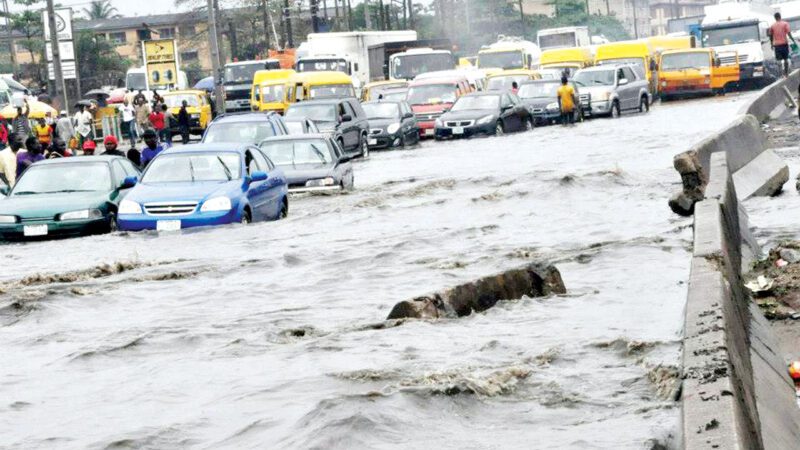
The Nigerian Hydrological Services Agency (NiHSA) has placed Bayelsa, Kogi, Anambra, Delta, and several other states on high alert following rising water levels and the risk of flooding along major rivers across the country.
The warning was issued by NiHSA Director-General, Arc. Umar Mohammed, during a media briefing in Abuja, where he explained that the agency’s flood alerts are backed by satellite imagery, digital modelling, and real-time field data.
“Since assuming office, my goal has been clear — to make NiHSA more proactive, data-driven, and responsive to the challenges of our time,” Mohammed said.
“We have expanded real-time data collection and upgraded our early warning systems. Our forecasts are now supported by satellite imagery, digital modelling, and on-ground measurements that allow us to predict and communicate flood risks more effectively.”
According to him, hydrological monitoring has detected high water levels along parts of the Niger and Benue Rivers, increasing the likelihood of localized flooding in Kogi, Anambra, and Delta States.
“We advise residents in flood-prone areas to remain vigilant and to follow official advisories,” he cautioned.
Mohammed also disclosed that floodwaters have contaminated some drinking water sources, based on the agency’s recent assessments.
“Our recent water quality assessment during flood evaluation exercises revealed contamination in some shallow wells caused by floodwater intrusion,” he said.
“We call for stronger collaboration among relevant ministries, humanitarian partners, and local authorities to ensure the provision of safe drinking water to affected communities.”
While noting that the 2025 flooding has not been as severe as that of 2024, Mohammed emphasized that the situation is still being closely monitored, especially in southern regions where rains continue.
He highlighted that NiHSA’s predictions have received international recognition for accuracy, adding that other African nations, including Ghana and Liberia, have sought training from the agency to establish similar hydrological institutions.
“The Annual Flood Outlook remains one of our flagship products,” he said. “Every year, we forecast the likely flood scenarios across all states and carry out sensitization campaigns nationwide to help governments and communities prepare.”
The NiHSA boss further revealed that the agency is investing in advanced technology, including AI-powered data systems, cloud-based storage, and real-time monitoring tools to improve flood prediction and emergency response.
“Collaboration is at the heart of what we do. We work closely with NiMET, NEMA, and the National Water Resources Institute, as well as international partners such as the World Meteorological Organization, UNESCO, and ECOWAS,” he stated.
Mohammed added that NiHSA is finalizing a Five-Year Strategic Action Plan focused on innovation, regional empowerment, and stakeholder engagement, aligning with President Bola Tinubu’s Renewed Hope Agenda.
“Through data, technology, and collaboration, NiHSA is contributing meaningfully to the Renewed Hope Agenda,” he said. “As floods, droughts, and other climate-related challenges increase, our role becomes even more critical. Together, we can prevent avoidable disasters and ensure that no Nigerian suffers loss due to lack of information or early warning.”
Opinion Nigeria News


Africa’s Crisis of Military Coups and Insecurity -By Safiya Zakari Muhammad
The erosion of democracy has also weakened regional and international security cooperation. In some cases, juntas have expelled traditional partners...


Governor Uba Sani’s Resolute Commitment On Rural Development -By Abdulrashid Sani Gimi
In the long run, the 2026 fiscal strategy transcends conventional budgetary practice. With a total outlay of ₦985.9 billion, a...


Lack of Financial Support Holding Back Russia’s Economic Influence in Africa: A Case Study of Missed Opportunities in Nigeria -By Kestér Kenn Klomegâh
As Africa's largest economy, Nigeria cannot afford another decade of promises without projects. The future of its development lies with...


The Impact Of Social Media On Youth Mental Health -By Jemimah Hezekiah
Governments and tech companies also have a role to play. Enforcing anti-cyberbullying policies, offering digital literacy programs, and providing mental...

Every Night We Pray to Survive: Voices from Insecure Communities -By Rinret istifanus
As the nation debates policies and strategies, these voices remind us that insecurity is not just a headline it is...