
Political Issues
From Pulpits To Parliaments: The High Price Of Entitlement Excuses -By Isaac Asabor
Legal and institutional reforms are equally essential. Immunity clauses should protect officeholders from frivolous litigation, not provide a permanent escape from justice. Religious protections should prevent exploitation, not justify moral lapses. Sovereignty should safeguard nations, not rationalize oppression or corruption. When entitlements are misused, the very purpose of protection is perverted.


Across Nigeria and beyond, a disturbing pattern persists: people hiding behind privileges, protections, or entitlements to commit acts they would never dare do if fully accountable. Whether in religious institutions, government offices, or international diplomacy, the logic is the same, “I am protected, and therefore I am untouchable”. The consequences, however, are always the same: corruption, moral decay, and the erosion of public trust.
Take the church, for instance. A religious leader caught in wrongdoing may invoke scripture, saying, “Touch not my anointing”. In doing so, they attempt to place themselves above reproach, as though spiritual selection automatically cancels personal responsibility. Yet anointing, like privilege in any form, is not a shield for misconduct. When leaders treat their positions as personal armor against accountability, they not only harm individuals but also degrade the institutions they represent.
The same problem is evident in politics. In Nigeria, many politicians wield constitutional immunity as a safeguard against prosecution. While intended to prevent politically motivated harassment, immunity has been twisted into a tool for corruption and self-enrichment. Leaders hide behind legal protections to enrich themselves while the public suffers the consequences of neglect, mismanagement, and abuse of power. Accountability, supposed to be the cornerstone of democracy, becomes meaningless when privilege shields wrongdoing.
Even on the international stage, entitlement excuses abound. Leaders accused of mismanaging their nations or committing human rights abuses often respond with the claim of sovereignty: “This is our country; you have no right to interfere.” While sovereignty is an essential principle of international law, it becomes a convenient excuse when used to cover misrule. Citizens pay the price when leaders treat global norms as obstacles rather than responsibilities, creating crises that extend far beyond their borders.
The danger of entitlement is psychological as much as it is structural. When privilege is equated with immunity, a mindset develops where wrongdoing feels acceptable and moral or legal scrutiny is dismissed as irrelevant. This creates two major problems. First, it establishes a culture of double standards: some are held accountable while others operate with impunity. Citizens lose faith in the system, leading to cynicism, disillusionment, and disengagement.
Second, entitlement fosters stagnation. Leaders insulated from criticism rarely embark on self-reflection or strive to improve. Institutions and governments that tolerate this mindset become breeding grounds for inefficiency, corruption, and decay. When protection replaces accountability, mediocrity and misconduct flourish.
Breaking this cycle requires a shift in mindset and action. Entitlements, whether spiritual, legal, or political, must always be balanced with responsibility. Being anointed, immune, or sovereign does not erase the duty to act ethically. Leadership, in any form, is a mandate to serve, not a license to harm.
Society also needs moral courage. Silence in the face of entitlement abuse only strengthens the shields that protect the guilty. Congregations, citizens, civil society organizations, journalists, and international bodies must all be willing to call out misconduct, even when it is cloaked in privilege. True accountability requires pressure, transparency, and an unwavering insistence that no person is above scrutiny.
Legal and institutional reforms are equally essential. Immunity clauses should protect officeholders from frivolous litigation, not provide a permanent escape from justice. Religious protections should prevent exploitation, not justify moral lapses. Sovereignty should safeguard nations, not rationalize oppression or corruption. When entitlements are misused, the very purpose of protection is perverted.
History offers stern warnings. Leaders, who confuse privilege with impunity, whether in kingdoms, religious hierarchies, or modern governments, rarely leave positive legacies. The longer entitlement shields wrongdoing, the more trust erodes, and the heavier the cost for society.
On a personal level, the lesson is simple: no entitlement can substitute for responsibility. Privilege should never become a justification for selfishness, deceit, or corruption. True leadership, whether on a pulpit, in a parliament, or on the world stage, is measured by integrity, accountability, and service. Those who hide behind entitlements betray not just others, but themselves.
Nigeria stands at a crossroads. Citizens, empowered by social media, investigative journalism, and civil society activism, are increasingly unwilling to accept excuses that shield misconduct. The era of entitlement-based impunity is waning. What remains is a choice: continue hiding behind privileges or embrace accountability and ethical action.
From religious halls to political offices, the lesson is universal: privilege is not a free pass. Immunity, anointing, and sovereignty are responsibilities, not shields. Hiding behind entitlements may protect the guilty for a time, but the long-term costs, to institutions, to society, and to history, are far too high.
It is time for Nigerians, and indeed all societies, to insist that accountability is non-negotiable. From pulpit to parliament, entitlement excuses must end. Privilege carries responsibility. Misuse it, and the price is steep, not just for the individual, but for the nation and generations to come.



As Trump Exposes Why Tinubu Must Go Sooner -By SKC Ogbonnia
The Nigerian president is not only culpable of heinous crimes, but he is also weakened beyond redemption. His continued stay...


How Lavrov’s Philosophy of “Ubuntu” Reflects on the Level of Africa’s Media Presence in Russia -By Kestér Kenn Klomegâh
The December 19–20 Ministerial Conference reaffirmed commitments to fully implement the Russia–Africa Partnership Forum Action Plan (2023–2026), adopted at the...

Why Trump’s Move Against Maduro Makes Sense -By Isaac Asabor
Trump’s decision also invites other nations to step up, to reconsider their passive complicity in the face of egregious abuse....
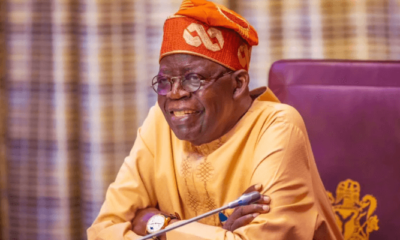

From Aso Rock To The People: Governance Is Alive -By Danjuma Lamido
Nigerian politics is not for jesters or perpetual protesters; it is for serious-minded people with depth, experience, and a clear...


Bauchi Needs Governance, Not Distractions, as EFCC Does Its Job -By Yasir Shehu Adam
Bauchi State deserves progress, not distraction. Governance must take precedence over allegations, and service must outweigh self-defence. History will judge...