
Democracy & Governance
Fuel Subsidy: Tinubu’s Suspended Cash Palliative Is A Bootless Enterprise In The Face Of Structureless Policies -By Abiodun Salako

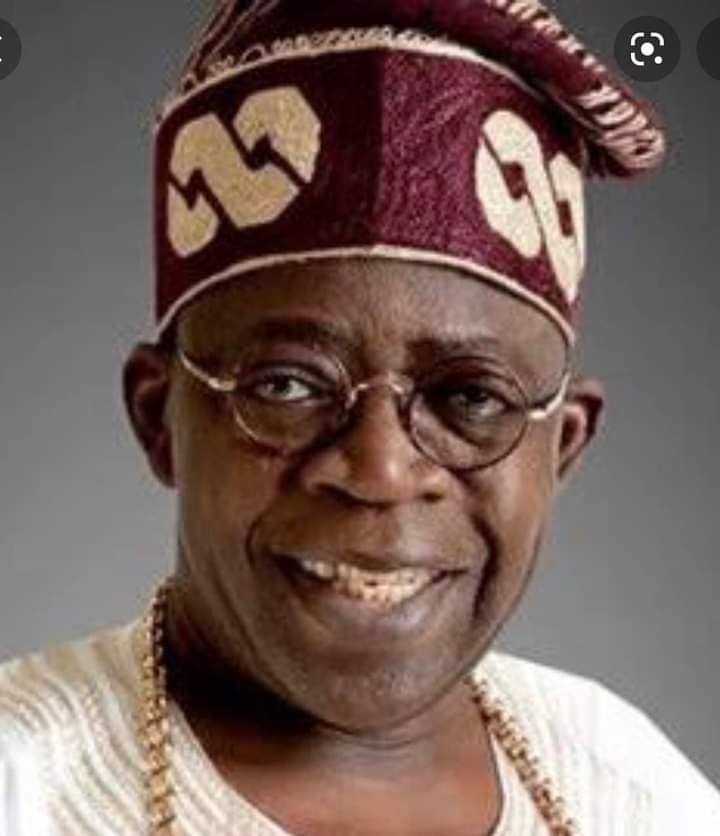
On July 13, the House of Representatives granted approval to President Bola Tinubu’s request for N500 billion for fuel subsidy palliative. This act alone was met with staunch criticism from social and policy commentators, politicians and other actors in Nigeria’s stakeholder community. The outcry led to the President calling for a review of the palliative, with the organised labour saying it falls short of the level of intervention required to ease the pains of vulnerable Nigerians since the removal of fuel subsidy.
It is general knowledge that the N8,000 palliative was a spillover from former President Buhari’s conditional cash transfer. The then Government under the conditional cash transfer window of the programme proposed a transfer of N5,000 per month to 10.2 million poor and low-income households for a period of six months, with a multiplier effect on about 60 million individuals. Tinubu, in his “magnanimity”, added N3,000 to the amount and increased the number of recipients to 12 million.
One need not be a soothsayer to see this administration doesn’t seem adequately prepared for work because the use of the infamous “trial by error policy” will not help the economy stagger off where it is now anytime soon. We saw the same lack of preparedness when Tinubu happily removed fuel subsidy without any concrete plan as we gnashed our teeth in more suffering. Perhaps what is more unsurprising is how little thought a supposedly responsible government has concerning the welfare of its people. It has been calculated that N8000 for a family of five in a month would amount to about N54 per person per day, an amount that cannot feed a dog much less humans.
The farcical policy is not an element we ought to see in Jagaban’s regime. The president is largely touted as a great strategist. The Lagos State governor, Babajide Sanwo-Olu, former Kano State Governor, Abdullahi Ganduje, among others have praised him as a master strategist of a sort; possessing a reservoir of pragmatic and illuminating ideas. But now we must ask, is Tinubu’s supposed unmatched intelligence hogwash or a shadow of his past? You could say it is too early to say, but time is beginning to unveil the brains behind his administration and the incompetence of the House of Representatives, a constitutional chamber that is empowered to represent the interest, yearnings, aspirations, and well-being of the citizenry.
The House of Representatives is made up of 360 members and none of them saw it fit to question the policy before approving N8,000 monthly palliative to 12 million low-income households for the period of six months. That particular palliative ought to have been debated on the floor and a review called for it before Tinubu suspended it. I haven’t the foggiest idea what goes on in the minds of our elected representatives, what matters to them, and how exactly they advocate for the well-being of Nigerians.
At this juncture, I take no joy in over-flogging bleak statistics, but the Multidimensional Poverty Index survey in 2022 revealed that 63% of Nigerians, approximately 133 million people, are multidimensionally poor. The survey was carried out by National Social Safety-Nets Coordinating Office (NASSCO), the United Nations Development Programme (UNDP), the United Nations Children’s Fund (UNICEF), and the Oxford Poverty and Human Development Initiative (OPHI). The report showed that half of Nigerians are below the poverty line and in abject poverty.
Evidently, we are languishing in poverty and severe suffering. This has been the trail for over two decades in a nation that possesses the potential to be bountiful, rivaling even western countries. If 133 million people are multidimensionally poor, pray tell how N8,000 would help 12 million of them? There’s no angle at which you look at this that seems potentially fruitful. Moreover, Nigeria takes so much pride in being data poor. Who and how did they come up with that figure? How would they have chosen the 12 million families? What methodology was employed? The answer leads to a system of corruption. It could even happen that less of the stipulated 12 million would get the cash palliative. This is the same corruption we witnessed during Buhari’s administration with schemes such as the National Home-Grown School Feeding Program (NHGSFP), Trader Moni, and Conditional Cash Transfer (CCT).
This sum itself is a joke when compared to the N70 billion earmarked for the National Assembly members to support their working condition. What a comedy! The difference becomes more prominent in light of a Senator earning N1.5 million monthly and a house member N1.3 million as salary, according to Ahmad Lawan, former Senate president, during a public lecture in 2021. In fact, the National Assembly has awarded N228.7m to each of the newly elected legislators and members of the National Assembly have also earmarked N40bn to purchase 465 Sports Utility Vehicles (SUVs) and bulletproof cars for principal officials and members. If we had sensible leaders, shouldn’t the cost of governance be cut down?
Regardless, the president has addressed the nation, reeling out promises as they are wont to. Tinubu mentioned a couple of palliative measures which does seem quite workable if rightly executed and would even have more impact than the cash transfer. He said provision has been made to invest N100 billion between now and March 2024 to acquire 3000 units of 20-seater CNG-fuelled buses. These buses, he revealed, would be shared to major transportation companies in the states, using what he referred to as the intensity of travel per capita.
I read a piece on a well-known news platform that called it a “groundbreaking plan”, a description I find laughable. There’s nothing innovative about providing transportation alleviation for the masses using CNG fuelled buses. In 2015, Johannesburg launched its first batch of approximately 30 dual-fuel CNG buses followed by another 150 buses in 2016. According to the 2017 Natural Gas Vehicles (NGV) Global Report, there are over 24-million vehicles running on natural gas worldwide. So clearly, we are lagging behind. It should be noted that Nigeria has the 9th largest gas reserves globally with about 209.5 trillion cubic feet(tcf) of proven gas reserves. According to a PWC report in 2020 on “Evaluating Nigeria’s Gas Value Chain”, Nigeria’s gas reserves is the biggest in Africa.
My grouse with Tinubu’s CNG plan is how swiftly the 3,000 units will be acquired and how inadequate those buses will be in a country that has millions of people plying the roads daily. Moreover, how realistic is it to get the 3,000 buses ready. Nigerians are, unfortunately, used to the government dangling words as gold whereas they are valueless. The best approach is for each state to develop its own CNG vehicles plan with partial or full funding from the FG and Public-Private Partnerships (PPPs). For instance, Lagos State has a deal with Oando Clean Energy Ltd. (OCEL) that would see it convert some of its diesel combustion engine Bus Rapid Transit buses into CNG engines.
Now, before Tinubu’s 3,000 buses arrive, how exactly will Nigerians cope with the high cost of transportation? The working class are feeling the sting of this problem. Lagos has already announced a 50% reduction in the fares charged by all state-owned transport services. Other states must come with transport reduction fares to aid movement and help workers go about their normal duties as required.
Tinubu made no mention of the high cost of energy in his address. With the fuel price as high as N700, small businesses and households now hugely depend on power supply. Unfortunately, that’s another sordid affair. The power inadequacy has even sent some businesses out of operation. We don’t even generate up to 6,000 megawatts of electricity. In March, The President of Nigeria Consumer Protection Network, Kunle Olubiyo, said the national power grid will collapse if electricity generation hits 6,000 megawatts. Egypt has the best electricity access in Africa, having achieved 100% distribution and generation. The North African country has continuously improved on its power and energy, adding over 28,000 megawatts of electricity. Meanwhile, In South Africa, the installed electricity generation capacity was approximately 58,000 MW, with 84.4% access for a population of about 60 million people as of 2021.
If the president can provide Nigerians with more than 14 hours of power each day, the economic effect will be significant. Revenue will increase and more businesses will come into each and every sector. This should be one of Tinubu’s important pillars at this point alongside the N125 billion he plans to pump into the SMEs and informal sector. In his address, the president noted that out of the N125 billion, his government will spend N50 billion on Conditional Grant to 1 million nano businesses between now and March 2024, with a target is to give N50,000 each to 1,300 nano business owners in each of the 774 local governments across the country.
The president must know that no amount of money pumped into the SMEs and informal sector can make them grow as desired without constant power supply. Although the investment seems doable, it has its own gaps that might not make it difficult to achieve. For example, there is no national business database. A nation business database twould provide insights into the business population, demographics, age distributions and help with infrastructure gaps. But that’s a problem that won’t be properly addressed here.
Food insecurity is one bitter issue plaguing the country today. Prices of food have skyrocketed and many farmers have lost their crops to flood, insecurity and displacements.
No hungry person can function optimally. Moreover, millions of Nigerians: both adults and children are malnourished. In his address, Tinubu said he has ordered the release of 200,000 Metric Tonnes of grains from strategic reserves to households across the 36 states and FCT to moderate prices. Whether these grains will be enough or get to the households is yet to be seen. And by households, what did the president exactly mean? How many households? Can those grains be properly distributed from household to household? Could this be the same 50 million households stated in his directives on July 18? If that’s the case, I’m afraid this might not be quite feasible.
At present, there is a large deficit of trust for governments at all levels because of a lack of transparency and accountability in the conduct of public affairs. Nigerians won’t expect those grains to get to them. They know how erstwhile governments have operated. Recall in 2022, the then Buhari administration distributed 40,000 metric tons of grains to Nigerians to cushion the effect of high commodities price during the festive period. Well, there’s no data on that. Will the government deploy the same process as used during the Buhari administration? I don’t know how they intend to make this as impactful as intended.
Tinubu also made no reference to insecurity in many rural areas where farmers predominantly reside. Farmers in crises-prone areas such as Katsina, Yobe, Niger, Borno, Zamfara and Kebbi find it difficult to access their farms, according to news reports. It is reported that 90% of Nigeria’s produce is done by small farmers. So, while this administration is releasing 225,000 metric tonnes of fertilizer, seedlings and other inputs to farmers, it is even more important to provide adequate security for farmers to work. Let’s not forget that nearly 25 million Nigerians are at risk of facing hunger between June and August 2023, if urgent action is not taken, according to the October 2022 Cadre Harmonisé, a government led and UN-supported food and nutrition analysis carried out twice a year.
In the end, promises are promises and policies are useless without structure and intensity of enforcement. For Tinubu to alleviate the suffering of Nigerians, it is not some cash palliative for households that would do so. Thus, the N8,000 palliative should not be revised or anything of a sort. It should be permanently scrapped. What is more impactful is understanding and studying the nation’s root problems and executing the right strategies, policies and measures. These strategies must be detailed, tracked and reinforced. Tinubu must ensure that policies are properly structured, data driven and transparent. Every step of implementation needs to be documented and the public carried along.
Abiodun Salako is a Journalist and Editorial Assistant at UK–based Divinations Magazine. Say cheerio to him on Twitter @i_amseawater.


Why African Leaders Must Fix Governance Before Crying Sovereignty -By Isaac Asabor
One of the great contradictions of African leadership today is selective morality. Leaders speak passionately about international law while violating...


Baba Has Entered The Classroom -By Isaac Asabor
If what Trump is doing is walking into a noisy global classroom and insisting on discipline, then let us be...

As Trump Exposes Why Tinubu Must Go Sooner -By SKC Ogbonnia
The Nigerian president is not only culpable of heinous crimes, but he is also weakened beyond redemption. His continued stay...


How Lavrov’s Philosophy of “Ubuntu” Reflects on the Level of Africa’s Media Presence in Russia -By Kestér Kenn Klomegâh
The December 19–20 Ministerial Conference reaffirmed commitments to fully implement the Russia–Africa Partnership Forum Action Plan (2023–2026), adopted at the...
Why Trump’s Move Against Maduro Makes Sense -By Isaac Asabor
Trump’s decision also invites other nations to step up, to reconsider their passive complicity in the face of egregious abuse....