
Breaking News
Full List: 12 European Countries That Restrict or Do Not Permit Dual Citizenship
Dual citizenship rules vary across Europe. Here is a full list of 12 European countries that restrict or do not allow dual citizenship, with policy details.

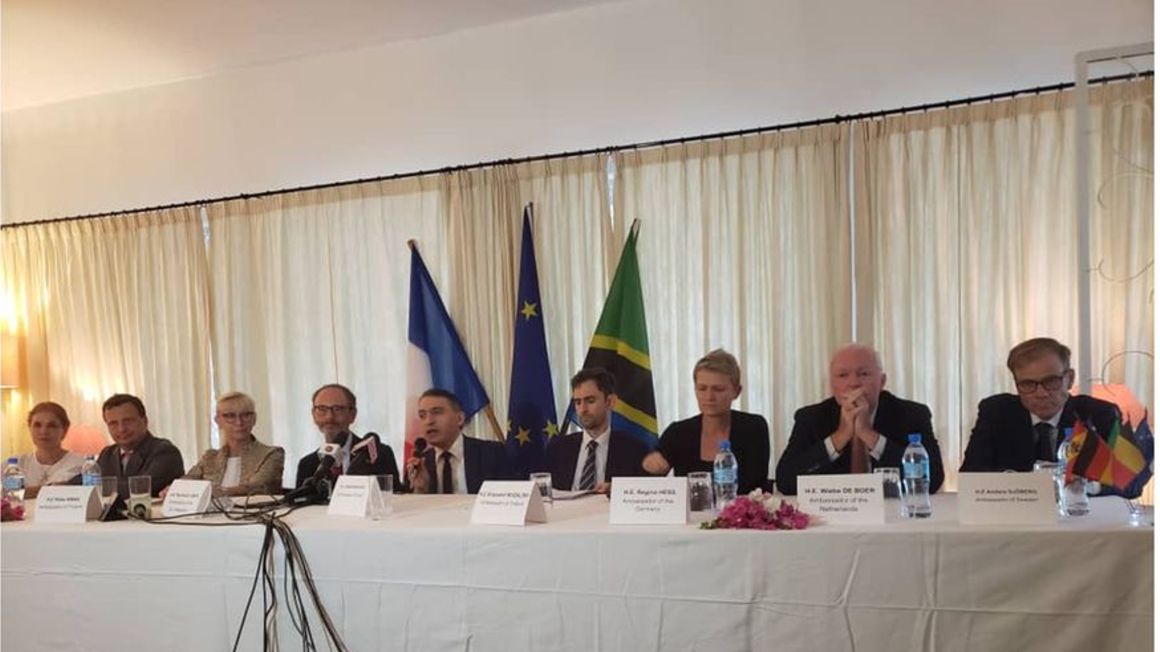
Policies on dual citizenship vary widely across Europe, with some countries easing restrictions in recent years while others continue to enforce strict limits on holding multiple nationalities.
Although nations such as Germany, Norway and Poland have adopted more flexible approaches, several European states still restrict or tightly regulate dual citizenship, allowing it only under specific or exceptional circumstances.
For migrants, investors and internationally mobile individuals, understanding these rules is essential, given the residency, mobility and legal rights associated with European citizenship.
Below is a list of 12 European countries where dual citizenship is restricted or generally not allowed, along with summaries of their policies.
Andorra
Andorra does not recognise dual citizenship. Individuals who acquire Andorran nationality must renounce any previous citizenship, while Andorran citizens who voluntarily take another nationality risk losing their status.
Estonia
Estonia does not permit dual citizenship for naturalised citizens. Children may hold multiple citizenships at birth but must choose one nationality upon reaching adulthood.
Monaco
Dual citizenship is not allowed in Monaco. Applicants for Monegasque citizenship must give up their existing nationality, and citizens who acquire another nationality may forfeit their Monegasque status.
San Marino
San Marino generally prohibits dual citizenship. Applicants are expected to renounce their former nationality, with limited exceptions such as citizenship acquired by birth.
Austria
Austria typically does not allow dual citizenship, except for individuals who acquire multiple nationalities at birth or in rare cases where dual citizenship is granted in the national interest.
Bosnia and Herzegovina
Dual citizenship is permitted only with countries that have bilateral agreements with Bosnia and Herzegovina. Such agreements currently exist with countries including Croatia, Serbia and Sweden.
Croatia
Croatia allows dual citizenship in certain situations, such as citizenship by descent or where it serves the national interest. Restrictions may still apply to some naturalised citizens.
Lithuania
Lithuania generally restricts dual citizenship. Exceptions apply to individuals who acquired multiple citizenships at birth, those exiled before 1990 and their descendants, and other limited cases defined by law.
Netherlands
The Netherlands allows dual citizenship only under specific conditions, such as when renouncing the original citizenship is impossible, when the individual is married to a Dutch citizen, or when giving up the original nationality would cause serious hardship.
Slovakia
Slovakia permits dual citizenship in cases of birth, descent or marriage. However, citizens who voluntarily acquire another nationality without long-term residence abroad may lose their Slovak citizenship.
Slovenia
Dual citizenship is allowed under certain conditions. Individuals who acquire Slovenian citizenship by birth or descent may retain multiple nationalities, while naturalised citizens are generally required to renounce their previous citizenship unless an exception applies.
Spain
Spain usually requires naturalised citizens to renounce their former nationality. Exceptions exist for individuals from countries with strong historical or cultural ties to Spain, including most Latin American countries, Andorra, Equatorial Guinea, the Philippines and Portugal.
Despite a gradual trend toward greater flexibility across Europe, these countries continue to maintain restrictions, reflecting concerns related to national identity, legal responsibilities and immigration control.
Opinion Nigeria News

Cease The Unchecked Looting -By Abba Dukawa
To address this, the Independent Corrupt Practices and Other Related Offences Commission (ICPC) and the Economic and Financial Crimes Commission...


Moscow University Museum Presents Insights into African Artistic Culture -By Kestér Kenn Klomegâh
In his contribution, Louis Gouend, Chairman of the Commission for Work with African Diasporas at Moscow State University's Russian-African Club,...


Justice, Peace And Integrity Of Creation Prerequisite To Good Living -By Melissa Thomas
There are many ways to promote peace in our world of today but perhaps the best way is to promote...


Africa Squeezed Between Import Substitution and Dependency Syndrome -By Kestér Kenn Klomegâh
The key buyers of Russian grain on the continent are Egypt, Algeria, Kenya, Libya, Tunisia, Nigeria, Morocco, South Africa, Tanzania...

Accelerating Intra-Africa Trade and Sustainable Development -By Kestér Kenn Klomegâh
The AU Private Sector Forum has held several forums, with key recommendations. These recommendations provide valuable insights into the challenges...