
Breaking News
Governance Failures, Not Guns, Fueling West Africa’s Worsening Instability – Experts
Experts at the 2025 West Africa Peace and Security Dialogue in Abuja warn that poor governance, weak institutions, and exclusionary politics—not armed violence—are driving instability across the region.

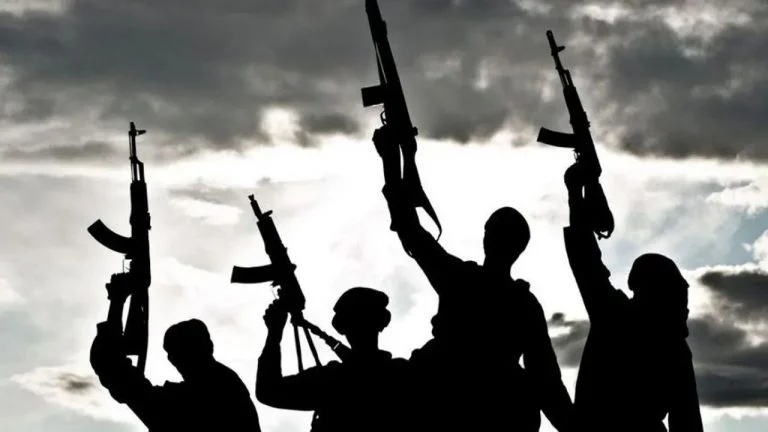
Experts and peacebuilding stakeholders have warned that the deepening crises across West Africa are being driven more by governance failures, weak institutions, and exclusionary politics than by armed violence alone.
They emphasised that restoring peace and stability in the region depends on inclusive governance, regional collaboration, and community-led peacebuilding efforts.
The warning emerged at the West Africa Peace and Security Dialogue (WaPSED 2025) held in Abuja, jointly organised by the Building Blocks for Peace (BBFORPEACE) Foundation, the Institute for Peace and Conflict Resolution (IPCR), the LAC-LAC Network of Niger Republic, the Global Partnership for the Prevention of Armed Conflicts (GPPAC) West Africa, and the Society for Peace and Practice.
Dr. Joseph Ochogwu, Director-General of the IPCR, said the region’s crises — from terrorism and political upheavals to climate-induced conflicts — highlight the urgency of homegrown, inclusive solutions.
“Sustainable peace in West Africa requires strong regional cooperation and locally driven strategies. We must strengthen our institutions, empower communities, and integrate peace education into national development frameworks,” Ochogwu stated.
He urged participants to move beyond dialogue toward actionable strategies that can reshape governance and security outcomes in the region.
Mr. Rafiu Adeniran Lawal, Executive Director of the Building Blocks for Peace Foundation and Regional Coordinator of GPPAC West Africa, said the dialogue aimed to address the wide range of threats undermining stability — including banditry, insurgency, and democratic decline.
“Across West Africa, we face persistent herder-farmer clashes, banditry, and insurgency that have devastated livelihoods. Beyond Nigeria, the resurgence of coups in Niger, Mali, Burkina Faso, and Guinea shows growing frustration with governance,” he said.
He explained that the 2025 Dialogue, themed “Reimagining Peace and Security in West Africa: Local Solutions, Regional Solidarity, and Global Partnerships,” seeks to promote community ownership of peace processes and collective action.
“Our goal is to centre real actors and lived experiences. By harnessing local knowledge and regional solidarity, we can chart a new course that places people—not power—at the heart of peacebuilding,” Lawal added.
Delivering the keynote address, Prof. Isaac Olawale Albert of the University of Ibadan’s Institute for Peace and Strategic Studies said the region’s insecurity is rooted in governance decay rather than military weakness.
“The problem is not the absence of weapons but the weakness of our governance systems. Corruption, poor coordination, and elite competition over state resources have created governance vacuums that non-state actors now exploit,” he said.
He urged West African governments to rebuild institutions, promote accountability, and invest in local governance to address community grievances and rebuild public trust.
“Peace and security cannot be sustained by governments alone. They must be co-owned by citizens, institutions, and regional partners who share a vision for stability,” Prof. Albert warned.
Participants — including policymakers, ECOWAS officials, civil society leaders, and members of the diplomatic community — agreed that rebuilding citizen trust, strengthening democracy, and ensuring transparent governance are critical to achieving lasting peace in the region.
Opinion Nigeria News


Africa’s Crisis of Military Coups and Insecurity -By Safiya Zakari Muhammad
The erosion of democracy has also weakened regional and international security cooperation. In some cases, juntas have expelled traditional partners...


Governor Uba Sani’s Resolute Commitment On Rural Development -By Abdulrashid Sani Gimi
In the long run, the 2026 fiscal strategy transcends conventional budgetary practice. With a total outlay of ₦985.9 billion, a...


Lack of Financial Support Holding Back Russia’s Economic Influence in Africa: A Case Study of Missed Opportunities in Nigeria -By Kestér Kenn Klomegâh
As Africa's largest economy, Nigeria cannot afford another decade of promises without projects. The future of its development lies with...


The Impact Of Social Media On Youth Mental Health -By Jemimah Hezekiah
Governments and tech companies also have a role to play. Enforcing anti-cyberbullying policies, offering digital literacy programs, and providing mental...

Every Night We Pray to Survive: Voices from Insecure Communities -By Rinret istifanus
As the nation debates policies and strategies, these voices remind us that insecurity is not just a headline it is...