
Forgotten Dairies
Hiring More Security Forces: Nigeria’s Risky Gamble -By Adamu Ahmad Umar
Nigeria’s insecurity cannot be solved by just adding more officers while the system remains broken. Recruiting without addressing training, equipment, and morale is like pouring water into a basket—ineffective and wasteful. A force burdened by poor welfare and inadequate tools is a house built on sand ready to collapse. True security requires a well-equipped, disciplined, and motivated force guided by strategy. Until the foundation is fixed, the crisis will only deepen.

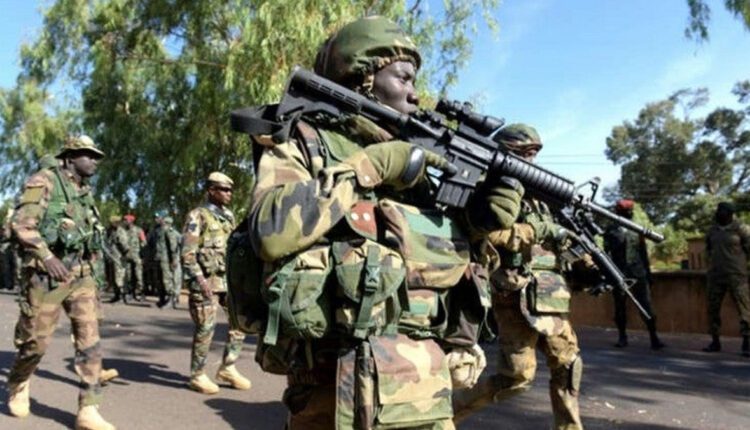
As Nigeria’s security challenges continue to deteriorate, the government’s most frequent response has been to mobilize more security personnel. However, despite following this approach for many years, the truth has shown that simply increasing the number of officers has not solved the country’s security threats. As a result, the government’s approach to security has always resembled bathing—out of one trouble, straight into the pit.
This same pattern is reflected in the recent plan by the Nigerian Police Force, under presidential order, to recruit 94,000 new officers, a move that overlooks the fact that existing personnel are often poorly deployed or sent overseas while insecurity worsens at home. President Tinubu justifies the plan by citing population growth, but without addressing corruption, training, and accountability, expanding the force risks stretching resources and deepening inefficiency rather than improving security. It is reminiscent of the old proverb, “Many hands make light work,” yet in this case, simply increasing numbers without a proper strategy may only multiply confusion rather than ease the burden.
The weakness of this approach becomes clearer when existing figures are examined, as Nigeria currently has around 500,000 security personnel, including about 370,000 police officers. Despite these numbers, terrorist attacks, kidnappings, communal conflicts, and urban insecurity across the country have continued to escalate rather than decline. If such a large security workforce has failed to reduce terrorism, kidnappings, and violence, adding more officers will not automatically change the situation. The real issue lies in how existing personnel are used, not how many are recruited. Announcing fresh recruitment therefore reflects a misunderstanding of the root cause of Nigeria’s insecurity.
More importantly, the emphasis on numbers ignores critical gaps in capacity, especially in confronting well-armed terrorist groups. Numerous serving police officers still lack basic equipment, protection, and modern tools needed to operate effectively. Instead of spending heavily on mass recruitment, the government should invest in surveillance technology, intelligence systems, modern weapons, and counter-terrorism equipment. Prioritising numbers over capability discourages effective security operations and exposes officers to unnecessary danger—for sending men to war without armour is to sacrifice lives, not secure peace.
Compounding these challenges is the government’s focus on recruitment while the pension crisis of retired officers remains unresolved amid worsening instability. Those Officers who once risked their lives are abandoned after service, damaging morale within the force and reinforcing the truth that a child who is ignored will one day burn the village. While billions of naira are allocated for recruitment, unpaid pensions continue to cause hardship and resentment. Such neglect demoralizes security agencies, and a demoralized force cannot adequately tackle crime. Addressing pension welfare and recruitment is therefore essential to genuinely confronting Nigeria’s insecurity threats.
In conclusion, Nigeria’s insecurity cannot be solved by just adding more officers while the system remains broken. Recruiting without addressing training, equipment, and morale is like pouring water into a basket—ineffective and wasteful. A force burdened by poor welfare and inadequate tools is a house built on sand ready to collapse. True security requires a well-equipped, disciplined, and motivated force guided by strategy. Until the foundation is fixed, the crisis will only deepen.


Cease The Unchecked Looting -By Abba Dukawa
To address this, the Independent Corrupt Practices and Other Related Offences Commission (ICPC) and the Economic and Financial Crimes Commission...


Moscow University Museum Presents Insights into African Artistic Culture -By Kestér Kenn Klomegâh
In his contribution, Louis Gouend, Chairman of the Commission for Work with African Diasporas at Moscow State University's Russian-African Club,...


Justice, Peace And Integrity Of Creation Prerequisite To Good Living -By Melissa Thomas
There are many ways to promote peace in our world of today but perhaps the best way is to promote...

Africa Squeezed Between Import Substitution and Dependency Syndrome -By Kestér Kenn Klomegâh
The key buyers of Russian grain on the continent are Egypt, Algeria, Kenya, Libya, Tunisia, Nigeria, Morocco, South Africa, Tanzania...

Accelerating Intra-Africa Trade and Sustainable Development -By Kestér Kenn Klomegâh
The AU Private Sector Forum has held several forums, with key recommendations. These recommendations provide valuable insights into the challenges...