
Breaking News
IMF: Naira Depreciation Could Be Positive for Nigeria’s Economy
The IMF says the Naira’s depreciation isn’t necessarily bad, noting it may help restore balance as Nigeria strengthens policy reforms and transparency.

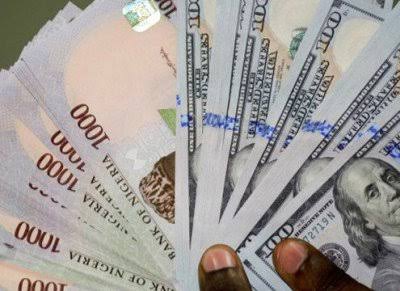
Washington D.C. — The International Monetary Fund (IMF) has said that the recent depreciation of the Naira is not necessarily a bad development for Nigeria’s economy, describing it as part of a natural adjustment process that could help restore balance.
The IMF’s Financial Counsellor and Director of Monetary and Capital Markets, Mr. Tobias Adrian, stated this on Tuesday during the Global Fiscal Sustainability Report press briefing at the ongoing IMF–World Bank Annual Meetings in Washington D.C., United States.
Responding to a question on the policy measures Nigeria could adopt to stabilise its currency, Adrian explained that exchange rate movements serve as important economic buffers, especially in times of external shocks.
“In terms of the Nigerian economy, exchange rates are important buffers to adjust the domestic economy relative to shocks,” Adrian said. “So, a depreciating exchange rate is not necessarily a bad thing. It may actually be a good thing to restore equilibrium.”
IMF Commends Nigeria’s Policy Reforms
The IMF official commended Nigeria for taking several steps to strengthen its monetary and fiscal frameworks, noting that the country has made progress in improving transparency and stabilising inflation.
“We have indeed seen in Nigeria many steps to strengthen policy frameworks, such as on the monetary policy side,” he said. “We generally recommend moving towards more flexible exchange rates.”
Adrian highlighted that revenue collection and foreign exchange reserve transparency have improved, contributing to better macroeconomic outcomes.
“Revenue collection has strengthened in Nigeria, and transparency in terms of FX reserve positions has improved,” he noted. “All of this has contributed to lower inflation — from more than 30 percent last year to 23 percent this year — as well as improved FX reserve positions. So the direction of travel appears to be positive.”
Sub-Saharan Africa Still Facing Headwinds
Adrian, however, cautioned that despite signs of progress, Sub-Saharan African economies continue to face significant challenges.
“While growth has been pretty strong during this period where financial conditions are easy and capital flows are resuming, it’s also possible that the capital flow surges and retracement cycles we’ve seen before could happen again,” he said.
He warned that a sudden reversal in foreign investments could expose vulnerabilities in some economies.
“It is important for countries to continue improving fundamentals on the fiscal and monetary sides, but also through structural policies such as revenue mobilisation, debt management, and support from the international community,” Adrian added.
IMF Welcomes Global Regulation of Stablecoins
The IMF also welcomed recent steps by several countries to regulate stablecoins, digital assets pegged to traditional currencies, noting that clear legal frameworks will strengthen global financial stability.
“When we look at the picture of stablecoins today, they are about $400 billion outstanding globally,” Adrian said. “The vast majority are denominated in U.S. dollars, though they are used worldwide. There are also stablecoins denominated in euros, yen, and pounds, but it’s largely a dollar phenomenon.”
He pointed out that the United States recently passed a law establishing a regulatory framework for stablecoins, while the European Union and Japan had already introduced similar regulations in 2023.
“We certainly welcome these steps toward regulation,” he said. “We actually published a policy framework for crypto assets in February 2023, outlining broad policy perspectives and regulatory recommendations for countries.”
Adrian noted that while countries differ in their implementation approaches, most regulatory pathways align with the IMF’s framework.
“Broadly, what we are seeing is that there are differences across countries in the specific implementation of regulatory approaches. But overall, the pathway is aligned with our framework,” he added.
Opinion Nigeria News


Good Governance as a Tool for National Development -By Blessing Matthew
Good governance prioritizes the interests and welfare of the people above personal or sectional interests. It encourages transparency, accountability, rule...


Role of Youths in Nation Building -By Kusompwa Lazarus Motiyedi
It is true that today’s youth did not experience the horrors of the Nigerian Civil War or the severe economic...

Putin Receives Newly Appointed Foreign Ambassadors in Bolshoi Kremlin Palace -By Kestér Kenn Klomegâh
According to him, the foundations of these relationships were laid back during the struggle of African peoples for freedom and...


Why Obi Cubana Shouldn’t Have Given His Life to Jesus (Part 1) -By Ugochukwu Ugwuanyi
But then, why the fuss about Obi Cubana's repentance, what with the American Rap King, Snoop Dog, repenting from gangsterism...


Invincible Defence Technology: Consciousness-Based Solutions to Interstate and Intrastate Violence -By Dr. David Leffler
Technology refers to the systematic application of knowledge and tools. In the case of IDT, this brain-based “technology” is the...