
Breaking News
Jonathan Shelved Fuel Subsidy Removal Over Boko Haram Threats, Not Public Protests — Sanusi
Emir of Kano, Muhammadu Sanusi II, reveals that ex-President Goodluck Jonathan suspended fuel subsidy removal in 2012 due to Boko Haram suicide bombing threats, not protests, while warning of the lasting economic cost of that decision.

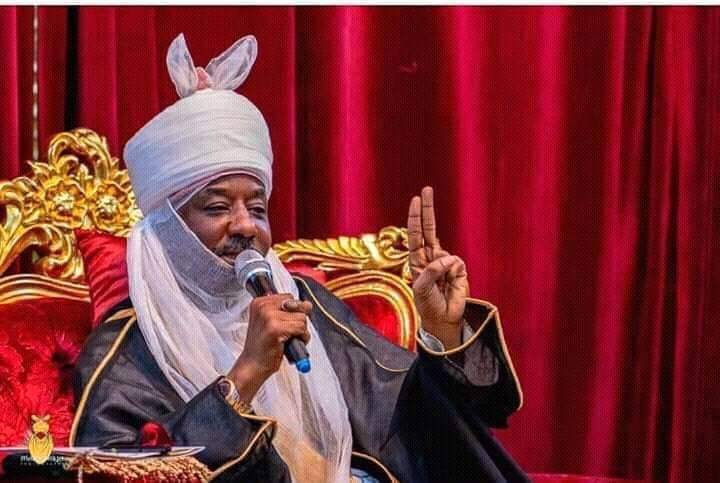
The Emir of Kano, Muhammadu Sanusi II, has revealed that former President Goodluck Jonathan halted the removal of fuel subsidy in 2012 due to fears of Boko Haram suicide bombings targeting protesters, rather than pressure from nationwide demonstrations.
Sanusi, who served as Governor of the Central Bank of Nigeria (CBN) at the time, said he was among those who strongly supported the removal of the subsidy, describing the policy as misunderstood and poorly executed.
Speaking on Tuesday at the Oxford Global Think Tank Leadership Conference themed “Better Leader for a Better Nigeria,” the Emir explained that what Nigeria called a fuel subsidy was essentially a “naked hedge” that left the nation financially exposed.
According to him, the arrangement forced the Federal Government to absorb all price fluctuations in global oil markets, exchange rates, and interest rates — a burden that eventually drove the country into debt.
He said,
“If you look at the template, all of those amounts were being absorbed. The Federal Government was saying I have an unlimited pocket.
So we moved from using revenues to pay subsidies, to borrowing money to pay subsidies, to borrowing money to pay interest on the borrowed money — we had become bankrupt.”
Sanusi warned that any country that maintains such an unsustainable model without controlling commodity prices risks bankruptcy.
He further noted that Nigeria’s current economic woes could have been mitigated if Jonathan’s government had fully implemented the subsidy removal in 2011.
“If Nigerians had allowed the Jonathan government to remove the subsidy in 2011, there would have been pain. But that pain would have been a very tiny fraction of what we are facing today. This is the cost of today,” he said.
Sanusi recalled that as CBN governor, he had projected that inflation would only rise modestly if the subsidy were removed at the time.
“We worked out the numbers in the Central Bank, and I said, ‘Remove the subsidy today; inflation moves up from 11 percent to 13 percent. I will bring it down a bit later.’ That was where we were.”
The Emir disclosed that Jonathan ultimately scaled down the subsidy removal by 50 percent due to credible intelligence about potential Boko Haram attacks on protesters.
“The only reason the government compromised and did 50 percent, not 100 percent, was Boko Haram,” Sanusi said.
“If one suicide bomber had attacked protesters in Lagos, Kano, or Kaduna and 200 people died, it would have gone beyond subsidy.”
Despite the setback, Sanusi praised Jonathan for his determination and courage to pursue difficult economic reforms amid serious security threats.
He also criticized the decline of integrity among Nigeria’s political elite, lamenting that many educated leaders prioritize personal gain over moral responsibility.
“By the time you become a governor, you should be beyond looking for money. But many live like illiterates despite their education,” he said.
Opinion Nigeria News

Cease The Unchecked Looting -By Abba Dukawa
To address this, the Independent Corrupt Practices and Other Related Offences Commission (ICPC) and the Economic and Financial Crimes Commission...


Moscow University Museum Presents Insights into African Artistic Culture -By Kestér Kenn Klomegâh
In his contribution, Louis Gouend, Chairman of the Commission for Work with African Diasporas at Moscow State University's Russian-African Club,...

Justice, Peace And Integrity Of Creation Prerequisite To Good Living -By Melissa Thomas
There are many ways to promote peace in our world of today but perhaps the best way is to promote...

Africa Squeezed Between Import Substitution and Dependency Syndrome -By Kestér Kenn Klomegâh
The key buyers of Russian grain on the continent are Egypt, Algeria, Kenya, Libya, Tunisia, Nigeria, Morocco, South Africa, Tanzania...

Accelerating Intra-Africa Trade and Sustainable Development -By Kestér Kenn Klomegâh
The AU Private Sector Forum has held several forums, with key recommendations. These recommendations provide valuable insights into the challenges...