
Breaking News
JUST IN: Executive can’t stand aloof on NASS leadership election – Stakeholders
Now the executive appoints all kinds of characters and even fraudsters on the basis of political patronage or pedestrian and mundane considerations. Same applies to the external inducements made by the executive in handpicking heads of legislative bodies at both the national and subnational levels.

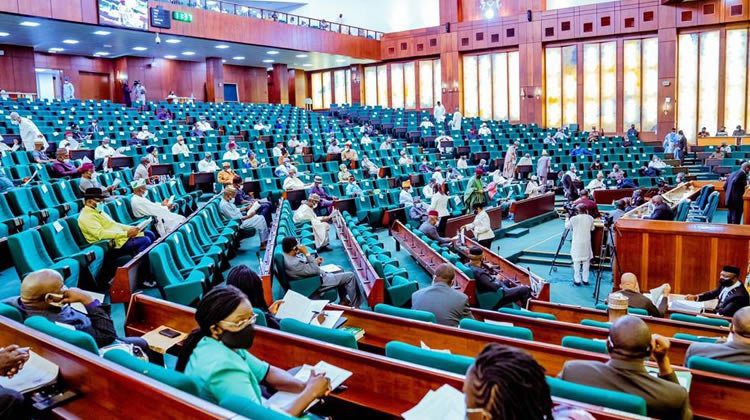
IN this report, Vanguard’s Law & Human Rights examines the constitutional provisions regarding the election of leaders of legislative houses in the country and the pattern of emergence of the past and current leadership of the national and state houses of assemblies, surveys stakeholders on the implication of the role played by the executive at both national and subnational levels in the election of legislative houses’ leaders.
The report also reflects the views of top lawyers on the rationality or and the desirability of sections 231(1), 238 (1), 250 (1), 256 (1) 261 (1),266 (1), 271 (1)276 (1), 281 (1) and 288 (1) of the 1999 Constitution which donate the powers of appointment of heads of courts at both Federal and state levels to the executive in a democracy.
On June 13, 2023, former Governor of Akwa-Ibom State, Senator Godswill Akpabio emerged the 10th President of the Senate after defeating Senator Abdulaziz Yari. Also, the senator representing Kano North, Barau Jibrin, emerged as the Deputy Senate President unopposed.
Akpabio and Jibrin were the anointed candidates of the All Progressive Congress, APC and President Bola Tinubu.
Similarly, the lawmaker representing Zaria constituency in Kaduna, Tajudeen Abbas, was elected Speaker of the House of Representatives, while Benjamin Kalu from Abia state, was elected deputy.
Less than 24 hours after the election into the leadership of the two chambers of the National Assembly held, the senator representing Borno South District, Ali Ndume, describedTinubu as an “experienced” politician, adding that he convinced many lawmakers to ensure the emergence of his preferred candidates.
Ndume who made the disclosure in an interview with Channels Television, said Tinubu deployed his “foot soldiers” to deliver his preferred candidates. He also revealed how President Tinubu allegedly “sneaked out” to persuade some lawmakers to support his preferred candidates for the 10th National Assembly leadership positions.
Although, section 50 (1) (a) (b) and section 92 of the 1999 Constitution of the Federal Republic of Nigeria provide that the leadership of legislative houses (Federal and state) shall be elected by its members, the executive which is not assigned any role in the exercise by the constitution as it did in the case of the judiciary however, influences, to a large extent, those that emerged as leaders of the legislative houses.
Stakeholders though appear united, to some extent, in condemning the trend by the executive to continually influence who emerges leaders of legislative houses at all levels of governance, they appear divided on the rationality or and desirability of the power of appointment donated by the 1999 Constitution to the executive undersections 231(1), 238 (1), 250 (1), 256 (1) 261 (1),266 (1), 271 (1)276 (1), 281 (1) and 288 (1) to appoint heads of courts and other judicial officers at both Federal and state levels.
Top lawyers and human rights activists including a one-time President of the Nigerian Bar Association, NBA, Mr OCJ Okocha, SAN and a former Attorney General of and Commissioner for Justice of Abia State, Prof Awa Kalu, SAN spoke with Vanguard on the various constitutional provisions which assign to the executive a critical role in the appointment of heads of courts and other judicial officers and the executive’s current practice of influencing election of leaders of legislative houses in Nigeria.
It is democratically wrong for the executive to influence election of leaders of legislative houses but…—OCJ Okocha, SAN
It is not right but you see, it is not done openly. Of course, every governor will be interested in who is heading the legislative arm of his government. The belief is that if you have your own man there, you can be sure that things will flow as you want them to flow. Look at America, for instance. Mitch McConnell, as the minority leader in the Senate is controlling a lot of things including some events that went in favour of Donald Trump as President while in the house recently, they had to easily go back into what they called negotiation to ensurethat the speaker who is now sitting there emerged as the Speaker of the House of Representatives. And you can see from what is going on, all of them are speaking in favour of the Republican Party to which they owe allegiance. All of them are speaking in favour of DonaldTrump whom they believe is their front runner even though elections are not yet on in America. Yes, it is in the interest of the executive to secure the candidates of his choice in those positions. But democratically, it is wrong. The house should be independent on who should be their heads. So should the senate which is the other chamber in a bicameral legislature. So, it is a human factor.
It is illogical for a President or Governor to stand aloof when N/A or state House of Assembly is being constituted—Prof Awa Kalu, SAN
“On what you have called the Executive “in its current practice of influencing who emerges leaders of the National Assembly, State Houses of Assembly, I need to point out that democracy in Africa and particularly in Nigeria does not tally or coincide with the practice in more established democracies. In addition, from available literature, African Presidents are not afraid of exercising authority that may be customarily or constitutionally donated to other persons. Particularly, the Nigerian Constitution, whether in its application to the State apparatus or with regards to the Federal apparatus, vests power in a State House of Assembly as well as in the Chief Judge to remove a State Governor in certain circumstances.
Similarly, the same scenario can play out with regard to the removal of a President.
“To that extent, it is illogical for either a Governor or a President to stand aloof when either the State House of Assembly or the National Assembly is being constituted. If you are a Governor or the President, you must take all reasonable steps, whether clandestinely or openly as the case may be, to ensure that no person who can deliberately oppose you emerges as either Speaker of a State House of Assembly or Speaker of the House of Representatives or President of the Senate, as the case may be. We are all too familiar with the justifications for that trend.”
Why president, governors dictate who heads legislative houses in Nigeria—Emmanuel Onwubiko
Coming to the choice of leaders at the National Assembly, the Constitution is very explicit in Section 50(a) and (b). But, I think what we should rather address at both ends (state and national) is the recruitment process or rather party primary elections that make way for candidates for elective positions into the state and national Assemblies to emerge. The Independent National Electoral Commission (INEC) and political parties are heavily compromised which is why all kinds of things happen during primary elections allowing governors and President to dictate who heads the Legislative Houses thereby violating the constitutional principles of checks and balances or separation of powers. INEC must never be made up of persons of shady characters or with political loyalties like that polluted and morally reprehensible INEC is at the moment. There’s also the need to allow an independent body of recruiters drawn from the best of the Nigerian society reflecting all shades and opinions such as youths, elders, students, CSOs, Religious organisations, public interest lawyers and other experts to handle appointment of INEC Commissioners and the head to reduce criminal compromise.
The 1999 Constitution should be amended to establish independent body of recruiters to appoint judges—HURIWA boss
On the powers of the executive to appoint heads of court and other judicial officers in the country, I am of the view that our constitution needs comprehensive amendments to enable the creation of a totally independent body of recruiters to be drawn from the best of the Nigerian society reflecting all shades and opinions as aforementioned. This body shouldn’t be controlled in terms of funding or operations by the executive arm or legislative arm but infractions committed by any of them can be investigated and prosecuted by the EFCC or ICPC. The current practice has allowed for the massive infiltration of persons who lack relevant temperament in terms of ethical behaviour.
Now the executive appoints all kinds of characters and even fraudsters on the basis of political patronage or pedestrian and mundane considerations. Same applies to the external inducements made by the executive in handpicking heads of legislative bodies at both the national and subnational levels.
The controlling nature of the executive has negative effects on the roles of the judiciary, legislature—Adesoji Peters
“The penchant in Nigeria for the executive to have a controlling and determinant say on who becomes the head of the judicial and legislative arms of government has been seen as an anathema to our political and democratic development as a nation. The theory of separation of powers presupposes that there are three arms of government and that the three arms are headed and manned by three different types of people.
“This is to allow for what is called checks and balances so that no one arm of government is so powerful as to circumscribe the other arms of government and more so the will of the people. The controlling nature of the executive on the other arms of government in Nigeria has impacted the roles of the judiciary and the legislature. In many cases, these two arms of government act as if they are appendages of the executive. The judiciary and legislature have, in many cases, behaved as rubber stamps of the executive. The judiciary and judicial officers are mostly subservient to the agents of the state. The root cause of this grave danger to our democracy comes from the executive posture to always influence the appointment to the leadership of the other arms of government. For the betterment of the nation and our democratic advancement, this practice should be discouraged. We can learn from more advanced democracies like the US. There, the executive and the other branches of government work together not by influencing the appointment of the leadership but by deepening the political culture, and party allegiance, and articulating the policies and positions of the executive. These make it easier for the arms of government to work together based on well-defined parameters and not according to the whims of who is the head of the executive


Why African Leaders Must Fix Governance Before Crying Sovereignty -By Isaac Asabor
One of the great contradictions of African leadership today is selective morality. Leaders speak passionately about international law while violating...

Baba Has Entered The Classroom -By Isaac Asabor
If what Trump is doing is walking into a noisy global classroom and insisting on discipline, then let us be...

As Trump Exposes Why Tinubu Must Go Sooner -By SKC Ogbonnia
The Nigerian president is not only culpable of heinous crimes, but he is also weakened beyond redemption. His continued stay...


How Lavrov’s Philosophy of “Ubuntu” Reflects on the Level of Africa’s Media Presence in Russia -By Kestér Kenn Klomegâh
The December 19–20 Ministerial Conference reaffirmed commitments to fully implement the Russia–Africa Partnership Forum Action Plan (2023–2026), adopted at the...
Why Trump’s Move Against Maduro Makes Sense -By Isaac Asabor
Trump’s decision also invites other nations to step up, to reconsider their passive complicity in the face of egregious abuse....