
Forgotten Dairies
Kano 2027: Beyond the Theatre of Political Conflict -By Turaki Abdulhamid Yahya
From a strategic calculation, Kwankwaso stands to gain the most. If NNPP retains dominance in Kano, he remains the unquestioned political godfather. If APC makes inroads, it is likely to be through Kwankwaso-aligned actors. Either way, influence is preserved. In effect, Kano risks becoming a state where one political tendency controls two major parties simultaneously, while the electorate is distracted by staged rivalries.

Politics is not always what is said loudly; it is often what is quietly arranged.
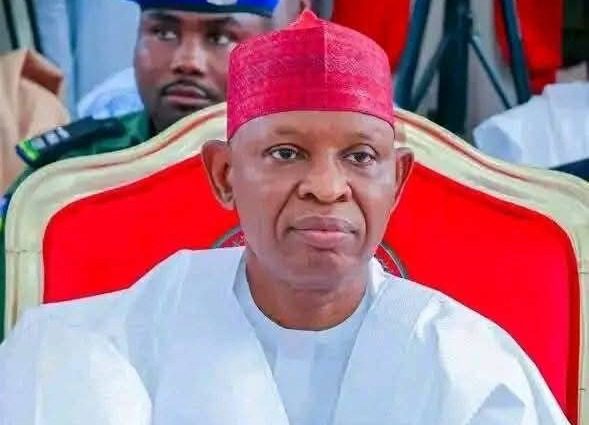
What is currently unfolding in Kano politics is less a crisis and more a carefully choreographed performance. To the casual observer, the apparent rift between Governor Abba Kabir Yusuf and Senator Rabiu Musa Kwankwaso, manifested through rumours of party fragmentation and shifting loyalties, may appear as a genuine political conflict. In reality, it is a strategic game designed to confuse, realign, and ultimately consolidate power ahead of 2027.
First, it is important to establish a fundamental truth: Abba is Kwankwaso, and Kwankwaso is Abba, politically speaking. Their relationship is not merely ideological; it is structural, historical, and deeply strategic. Abba’s political emergence, victory, and governance framework are inseparable from Kwankwaso’s political machinery. Any narrative suggesting a clean break between the two must therefore be treated with deep skepticism.
The so-called “splitting” of party membership within the NNPP is largely performative. It serves two purposes. On the surface, it projects internal disagreement, which helps absorb public frustration, reduce external pressure, and create the illusion of pluralism. Beneath the surface, it functions as a hedging strategy a political insurance policy. By allowing factions to appear as if they are drifting toward different political platforms, the Kwankwasiyya structure quietly positions itself across multiple power centres.
This is where Emi lo kan comes in, not as a slogan, but as a signal. The APC, fully aware of Kano’s electoral weight and Kwankwaso’s enduring grassroots influence, understands that defeating Kwankwasiyya outright is nearly impossible. The more sophisticated option is co-optation rather than confrontation. What we are witnessing, therefore, is not a battle between NNPP and APC, but a negotiated convergence.
From a strategic calculation, Kwankwaso stands to gain the most. If NNPP retains dominance in Kano, he remains the unquestioned political godfather. If APC makes inroads, it is likely to be through Kwankwaso-aligned actors. Either way, influence is preserved. In effect, Kano risks becoming a state where one political tendency controls two major parties simultaneously, while the electorate is distracted by staged rivalries.
Therefore, Kano people, especially the politically conscious must resist emotional interpretations and focus on patterns, not pronouncements; structures, not statements. Politics is not always what is said loudly; it is often what is quietly arranged.
Turaki Abdulhamid Yahya,
Writes From Adamawa State.


Every Night We Pray to Survive: Voices from Insecure Communities -By Rinret istifanus
As the nation debates policies and strategies, these voices remind us that insecurity is not just a headline it is...

The Cost of Building: Reflections from Inside Northern Nigerian Governance -By Naufal Ahmad
We need a new ethic of engagement. I’m not saying don’t question leaders. I’ve been an internal critic for most...


Genotype Confirmation: Why It Must Be Included As Part Of The Elements Of Marriage -By Tajudeen Abdulrauf Dasuki
Sickle cell is not a mere disease , that we count as minor issue, it is only those have it,...

Between The Palace And The Police: Where Does Justice For Don Pedro Obaseki Lie? -By Isaac Asabor
Justice cannot lie in fear. It cannot lie in mobs. It cannot lie in silence. Justice lies in a firm...

“I Will Tell Trump For You”: Nigeria’s Age-Old Habit Of Outsourcing Accountability -By Isaac Asabor
The problem is that Nigeria’s “big brother” is rarely in a position to intervene meaningfully. Tweets, speeches, and public condemnation...