
Forgotten Dairies
Lack of Financial Support Holding Back Russia’s Economic Influence in Africa: A Case Study of Missed Opportunities in Nigeria -By Kestér Kenn Klomegâh
As Africa’s largest economy, Nigeria cannot afford another decade of promises without projects. The future of its development lies with partners who not only shake hands and group photographs but also ability to write the checks. Nigeria and many other African States are desirous to partner with potential foreign investors with adequate funds for investment in the continent. The second ‘re-awakening’ must feature noticeable improvement in the living standards of the estimated 1.4 billion people.

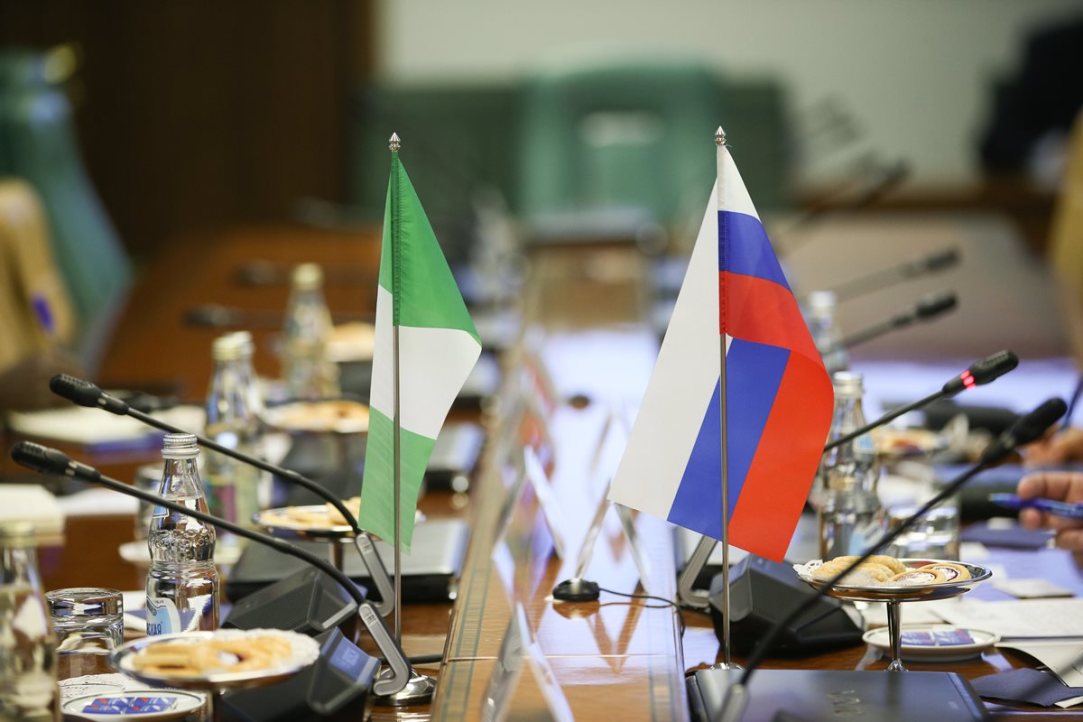
For decades, Russia has spoken loudly about its intentions in Africa but acted softly when it comes to real financial commitments. Unlike China, the United States, and even India, Russia has consistently failed to back its diplomatic gestures with the credit lines, concessionary loans, and financing guarantees that drive actual development projects.
Nigeria, Africa’s largest economy and most populous country, provides perhaps the clearest example of Russia’s economic inertia. Despite more than 60 years of diplomatic relations and repeated declarations of “strategic partnership,” Moscow’s presence in Abuja’s economic landscape remains marginal. The absence of real financing has left most Russian-Nigerian agreements as empty communiqués, in sharp contrast to the railways, roads, and ports China has built across the country, or the oil trade and financial services integration offered by the United States.
The Obasanjo Era: A Case Study in Missed Opportunities
When President Olusegun Obasanjo returned to power in 1999, Nigeria was repositioning itself after years of military dictatorship. Abuja sought new economic partnerships beyond its traditional ties with the West. Russia—still recovering from the collapse of the Soviet Union—saw an opportunity to reassert itself in Africa.
During Obasanjo’s tenure (1999–2007), Moscow pledged sweeping cooperation with Nigeria in energy, steel, and defense. The crown jewel of this diplomatic push was the proposed revival of the Ajaokuta Steel Complex, Nigeria’s most ambitious industrial project, which had stalled for decades despite billions of dollars in investments. Russia, through its state-owned firms and technical experts, promised to provide financing, technology, and training to bring Ajaokuta back to life.
Yet two decades later, Ajaokuta remains in ruins. The Russian commitment never translated into cash, and Abuja was left to restart talks with new partners. Similarly, plans for joint oil exploration ventures and expanded defense cooperation fizzled out after initial memoranda of understanding.
Obasanjo’s government signed a number of documents with Moscow, but few projects ever moved beyond the paper stage. Nigerian officials who participated in those negotiations later admitted that Russia’s biggest weakness was its lack of financing. Unlike China, which came armed with Exim Bank loans and turnkey contractors, Russia offered expertise but no capital.
The lesson was clear: without structured financial support, Russian promises could not compete with the billions China was already pouring into Nigerian infrastructure.
Nigeria’s Trade Reality: Russia as a Minor Player
The absence of financing is not just anecdotal—it shows in the numbers.
Nigeria’s Trade with Russia vs. China and the U.S.
Partner Nigeria’s Exports (USD) Nigeria’s Imports (USD) Balance / Impact
Russia ~$1.5 million (2024) ~$2.09 billion (2024) Negligible exports; deficit, no capital inflows
China ~$2.03 billion (2024) ~$17 billion+ annually Infrastructure-backed deficit (rail, power, ports)
United States ~$4.4 billion (2022) Balanced imports & services More stable, diversified cooperation
Russia accounts for less than 1% of Nigeria’s trade, and the structure of that trade is unbalanced. Nigeria imports wheat, fertilizers, and some machinery from Russia, but exports almost nothing back. By contrast, China has become Nigeria’s largest trading partner, financing and building railways, power plants, and free trade zones. The U.S., though less visible in physical infrastructure, remains Nigeria’s biggest crude oil buyer while providing access to financial services and technology.
Despite Russia’s frequent declarations of friendship, Abuja does not see Moscow among its top ten trading partners.
Why Russia Keeps Missing the Mark
Several factors explain why Russia’s Africa strategy remains symbolic rather than substantive:
1. No financial institutions to support deals
• China’s Exim Bank and policy lenders ensure African projects come with credit lines.
• The U.S. offers development financing through agencies like OPIC (now DFC).
• Russia, by contrast, has no institutional mechanism to provide African governments with the capital needed to implement deals.
2. Global sanctions and liquidity crunch
• Since 2014, and especially after the 2022 invasion of Ukraine, Russia has faced severe financial sanctions.
• Its banks are largely cut off from the international system, making it difficult to provide long-term credit abroad.
3. Legacy of distrust
• The failure to deliver on projects like Ajaokuta has left Nigerian policymakers skeptical.
• Moscow’s record of unfulfilled promises weakens its credibility compared to Beijing or Washington.
4. Strong competition
• China and India bring financing, technology, and workers.
• The U.S. leverages its markets and financial systems.
• Russia lacks the same competitive edge, leaving it with little more than symbolic gestures.
Nigeria’s Perspective: Choosing Real Partners Over Rhetoric
From Abuja’s standpoint, the comparison is stark. China may saddle Nigeria with debt, but it also delivers tangible assets: modern railways, airport terminals, and industrial parks. The U.S. offers not just oil trade but also investment in services, banking, and security.
Russia, by contrast, offers friendship, rhetoric, and occasional defense hardware sales. While these may have symbolic value, they do little to advance Nigeria’s long-term development goals.
A Nigerian economist summarized the dilemma bluntly: “Russia brings words; China builds rails; America buys oil. We can’t run an economy on words.”
For policymakers in Abuja, the choice is not ideological but practical. Nigeria needs financing, infrastructure, and technology transfer. Any partner unable to provide those tools risks being sidelined.
Lessons from the Past Two Decades
Looking back, Nigeria’s engagement with Russia since the Obasanjo era highlights three major lessons:
• Agreements must be tied to financing. Without money, MoUs are meaningless.
• Geopolitics without economics is hollow. Russia may seek allies against Western sanctions, but Nigeria’s priority is development.
• Partnerships must deliver measurable outcomes. China’s rail projects may be debt-heavy, but at least they exist. Russia’s projects remain in the realm of rhetoric.
The Broader African Picture
Nigeria is not alone in this experience. Across Africa, Russia has announced major investments in mining, energy, and defense. Yet very few projects have been completed. The exceptions—such as nuclear power cooperation with Egypt or arms deals with Algeria—are driven more by geopolitics than development financing.
In 2023, Russia hosted its second Russia-Africa Summit in St. Petersburg, promising billions in investment. But African leaders quietly noted the absence of clear financing mechanisms. The pledges, like those made to Nigeria, remain aspirational.
By contrast, the U.S.-Africa Leaders Summit and China-Africa Cooperation Forum both provide detailed financing frameworks that African governments can rely on.
Can Russia Still Catch Up?
Despite its current weakness, Russia still has avenues to remain relevant:
• Agriculture: Russia is a key wheat supplier to Nigeria and could expand into broader agribusiness cooperation.
• Energy: With Nigeria seeking to monetize gas reserves, Russia’s expertise in LNG could be valuable—if backed by financing.
• Technology: Russia’s defense and space industries could offer niche partnerships if they include funding.
But without addressing its financing gap, these opportunities will remain out of reach.
Final Thoughts: What Nigeria Must Do
For Nigeria, the key lesson is simple: measure diplomacy by delivery. Symbolic alliances may have value in global forums, but they cannot replace capital, infrastructure, and trade. Abuja must continue to diversify its partners, but prioritize those who provide tangible results.
Two decades after Obasanjo sought to revive Ajaokuta with Russian help, Nigeria must accept a sobering reality: Russia, for now, is more of a rhetorical ally than a financial partner. Unless Moscow restructures its economic diplomacy with real financing instruments, it will remain a marginal player in Africa’s transformation.
As Africa’s largest economy, Nigeria cannot afford another decade of promises without projects. The future of its development lies with partners who not only shake hands and group photographs but also ability to write the checks. Nigeria and many other African States are desirous to partner with potential foreign investors with adequate funds for investment in the continent. The second ‘re-awakening’ must feature noticeable improvement in the living standards of the estimated 1.4 billion people.


Lack of Financial Support Holding Back Russia’s Economic Influence in Africa: A Case Study of Missed Opportunities in Nigeria -By Kestér Kenn Klomegâh
As Africa's largest economy, Nigeria cannot afford another decade of promises without projects. The future of its development lies with...


The Impact Of Social Media On Youth Mental Health -By Jemimah Hezekiah
Governments and tech companies also have a role to play. Enforcing anti-cyberbullying policies, offering digital literacy programs, and providing mental...

Every Night We Pray to Survive: Voices from Insecure Communities -By Rinret istifanus
As the nation debates policies and strategies, these voices remind us that insecurity is not just a headline it is...

The Cost of Building: Reflections from Inside Northern Nigerian Governance -By Naufal Ahmad
We need a new ethic of engagement. I’m not saying don’t question leaders. I’ve been an internal critic for most...


Genotype Confirmation: Why It Must Be Included As Part Of The Elements Of Marriage -By Tajudeen Abdulrauf Dasuki
Sickle cell is not a mere disease , that we count as minor issue, it is only those have it,...