
Breaking News
Lack of Rail, Road Linkages Hindering Baro Port Functionality – Minister Oyetola
Chairman of the Ad-Hoc Committee, Saidu Abdullahi, clarified that the panel’s goal is not investigative but facilitative, aiming to ensure the port becomes fully operational. He stressed the strategic value of the port to Nigeria’s trade, regional integration, and economic diversification, describing it as “immense and non-negotiable.”

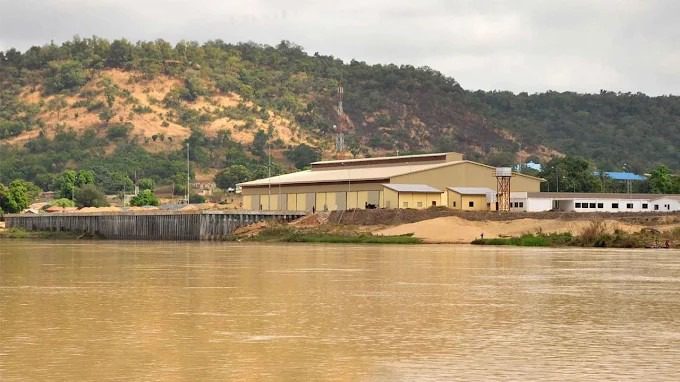
The Minister of Marine and Blue Economy, Adegboyega Oyetola, has attributed the underperformance of the Baro Inland Port—commissioned in 2019—to the absence of essential road and rail infrastructure, as well as poor navigability along the River Niger.
Speaking on Tuesday in Abuja before the House of Representatives Ad-Hoc Committee on Rehabilitation and Operationalisation of the Baro Inland Port, Oyetola said the port remains largely inactive due to these critical gaps, despite its commissioning by the previous administration.
“Although commissioned in 2019 by the past administration, the port has faced operational constraints, chief among them, the absence of critical linkages to road and rail infrastructure, and navigability challenges along the River Niger,” Oyetola said.
He added that the lack of planning at the conception stage failed to anticipate the infrastructure required to make the port operational. According to him, the Ministry of Marine and Blue Economy, established less than two years ago, inherited the project and is now working on strategies to revive it.
“The challenges are there, no doubt about it. When the issue of the port was being conceived, ordinarily, one would have expected that the infrastructure that would make it operational should have been provided,” he said.
“Part of what we’re trying to do is a lot of dredging. Unfortunately, we are hampered by the scarcity of funds.”
Despite these setbacks, Oyetola assured lawmakers of the Federal Government’s commitment under President Bola Tinubu to transform Baro into a fully functional inland port. He outlined key action points, including:
-
Improved dredging of inland waterways to enhance navigability
-
Development of road and rail connections to support cargo movement
-
Attracting private sector participation through concessions and partnerships
-
Implementing transparent governance systems
He further disclosed that the National Inland Waterways Authority (NIWA) aims to dredge up to 2,000 km of inland waterways, helping to ensure the Baro Port remains navigable throughout the year.
“Our Ministry remains unwavering in its determination to transform Baro from a dormant facility into a thriving inland gateway. We are working closely with the Federal Ministries of Works and Transportation to deliver an integrated framework that combines infrastructure, operational efficiency, and private sector participation,” he said.
Historical and Financial Context
NIWA’s Managing Director, Bola Oyebamiji, provided historical context, recalling that the Baro Port was originally established in 1908 by Lord Lugard to support the transport of agricultural products and livestock—serving as a key link between northern and southern Nigeria.
Oyebamiji reinforced Oyetola’s concerns, identifying the lack of dredging and inadequate transport connectivity as central challenges.
He also revealed that the project was awarded for ₦3.56 billion under the Muhammadu Buhari administration, with ₦3.35 billion (94%) already disbursed to the contractor.
Transport Ministry’s Efforts
Minister of Transportation, Sa’idu Alkali, also present at the session, said efforts are underway to construct a rail line to connect Baro Port with the national rail network. He acknowledged funding shortfalls and called on the National Assembly for increased budgetary support to complete the necessary infrastructure.
Lawmakers Seek Quick Action
Chairman of the Ad-Hoc Committee, Saidu Abdullahi, clarified that the panel’s goal is not investigative but facilitative, aiming to ensure the port becomes fully operational. He stressed the strategic value of the port to Nigeria’s trade, regional integration, and economic diversification, describing it as “immense and non-negotiable.”
The committee announced plans for an on-site assessment visit to Baro Port on Saturday, August 16, to evaluate its current state and determine the next steps for its rehabilitation and activation.



When Nations Break Their Reformers: Why EFCC Cannot Carry Nigeria’s Burden Alone — And Why Power Must Fear God -By Prof. John Egbeazien Oshodi
Public frustration with the EFCC over perceived selective enforcement is understandable. Nigerians see some arrests carried out suddenly and forcefully,...

Poor, Poor, Maduro -By IfeanyiChukwu Afuba
Little wonder his ouster elicited celebrations. The ease of his capture is telling. There is only one explanation for the...


Why African Leaders Must Fix Governance Before Crying Sovereignty -By Isaac Asabor
One of the great contradictions of African leadership today is selective morality. Leaders speak passionately about international law while violating...


Baba Has Entered The Classroom -By Isaac Asabor
If what Trump is doing is walking into a noisy global classroom and insisting on discipline, then let us be...


As Trump Exposes Why Tinubu Must Go Sooner -By SKC Ogbonnia
The Nigerian president is not only culpable of heinous crimes, but he is also weakened beyond redemption. His continued stay...