
Breaking News
Lagos Traders Struggle as Styrofoam Vanishes From Markets Months After Ban
Lagos traders are facing rising costs and reduced sales months after the state banned styrofoam. Vendors report expensive alternatives, secret sales, and enforcement pressure as environmental experts defend the policy.

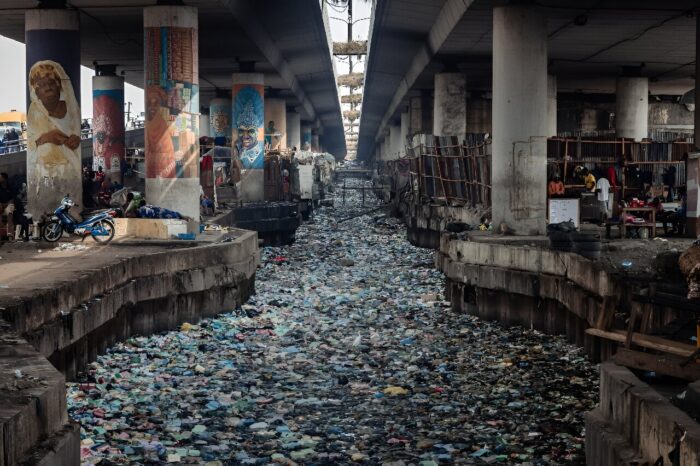
Nearly five months after the Lagos State Government outlawed styrofoam products, many traders are still dealing with significant financial losses and operational challenges. The ban has deepened the divide between traders—whose businesses have been hit hard—and environmental advocates who insist the policy is essential for public health and environmental protection.
A News Agency of Nigeria (NAN) survey across several Lagos markets and food vending spots revealed concerns over rising packaging costs, limited affordable alternatives, and inconsistent enforcement.
Mrs. Cynthia Ofoji, a trader in foam and plastic food packs, said her business has suffered sharply since the ban. She explained that a pack of 100 styrofoam plates that once sold for ₦3,800 now has plastic replacements priced between ₦11,000 and ₦14,000.
“The small plastic pack is ₦11,000, and the normal size is ₦14,000. The ban has led to a drop in sales. Customers prefer the cheaper styrofoam, but the government does not want us to sell it,” she said.
At a night market in Ikorodu, food vendor Mrs. Iyabo Adebayo shared the same frustration. She relies heavily on styrofoam containers for her noodles business and said the cost of plastic alternatives is unbearable.
“Customers complain when I increase the price because of packaging. I don’t have affordable alternatives,” she added.
At Oshodi Market, a trader who requested anonymity said many sellers are still secretly trading styrofoam.
“Styrofoams are wrapped in different covers and hidden inside other goods to avoid the wrath of the law. It’s only the seller and the customer that know how to go about it to avoid being arrested by Lagos State Government officials during an enforcement raid,” she said.
In Abule Market, Ajao Estate, petty traders still use small black nylon bags to package goods. Abu, a tomato seller, admitted he knows about the ban but has struggled to find suitable replacements.
“We will only comply if the government provides the necessary alternatives,” he insisted.
Experts Back the Policy
Some environmental and health experts support the government’s action.
Omodara Precious, a microbiology student at the University of Lagos, highlighted the dangers of styrofoam.
“It takes a long time to degrade, blocks drainage systems, and releases toxins when heated. It is also unsafe for microwaving,” he said.
The ban has also impacted related packaging businesses.
Mrs. Abimbola Omotola, who sells nylon and polyester packaging, noted that manufacturers are shifting production toward thicker nylons, while many lighter variants have disappeared from the market.
Mechanical engineer Mr. Emmanuel Ajishafe from Ikorodu said the policy can only succeed with stronger public awareness and better waste-management systems.
“The ban will not work without proper waste disposal routines. Government must invest in more waste-management infrastructure and provide affordable alternatives for small businesses,” he said.
He urged support for recycling programs and warned that the transition should not cripple micro-enterprises already battling rising costs.
Full Enforcement Began July 1, 2025
NAN reports that Lagos began fully enforcing the ban on July 1, 2025, targeting Single-Use Plastics (under 40 microns), such as styrofoam packs, disposable cups, plastic straws, cutlery, and lightweight nylon bags.
Commissioner for Environment and Water Resources, Mr. Tokunbo Wahab, said at a briefing that any market or store found storing or selling banned SUPs would be sealed and the goods confiscated.
“There will be no going back from July 1 on the enforcement of the ban of single-use plastics, which is less than 40 microns in Lagos State,” he said.
He noted that the government had given extensive awareness and a six-month grace period after initially announcing the ban in January 2024.
Wahab added that the decision is rooted in protecting public safety, stressing that residents’ well-being “would not be compromised.”
To support the transition, the state has also launched a Plastic Waste Management Fund under a public-private partnership to enhance waste collection, recycling and overall environmental management.
Opinion Nigeria News



Wanted! Where Is Our National Interest? -By Abdu Abdullahi
Indeed, the idea of the national interest is very striking by its pronounced and provocative vacuum in Nigeria.This spells doom...

The ECOWAS Democracy Paradox: A Flawed Arbiter in an Era of Autocratic Drift -By Jeff Okoroafor
As ECOWAS condemns Guinea-Bissau's coup, I analyze how its failure to address "constitutional coups" by elected leaders has eroded credibility...

South Africa Takes A Break From G20 -By Kestér Kenn Klomegâh
The United States this month took over the year-long presidency of the group of leading economies after largely boycotting South...


Did America Happen to Ademiluyi? -By Zayd Ibn Isah
If we must fix Nigeria, it will not be by glorifying foreign lands or demonising our own, but by confronting...


The Children We Hide: Why Society Must Stop Shaming Special Needs Children -By Bello Humulkhair
A small boy sits at the corner of his classroom not because he cannot play, not because he does not...