
Global Issues
Lessons for Today: MLK for Continental African Leadership – A Psychoafricalytic Mirror for Power, Dignity, and Continental Renewal -By Psychologist John Egbeazien Oshodi
When African leaders abandon indigenous wisdom, they often adopt the colonial logic of control. Citizens become subjects. Protest becomes treason. Opposition becomes criminality. The state becomes a policing project rather than a communal home. King’s moral framework challenges this drift by reminding Africa that governance is not simply command. Governance is care, restraint, and responsibility.

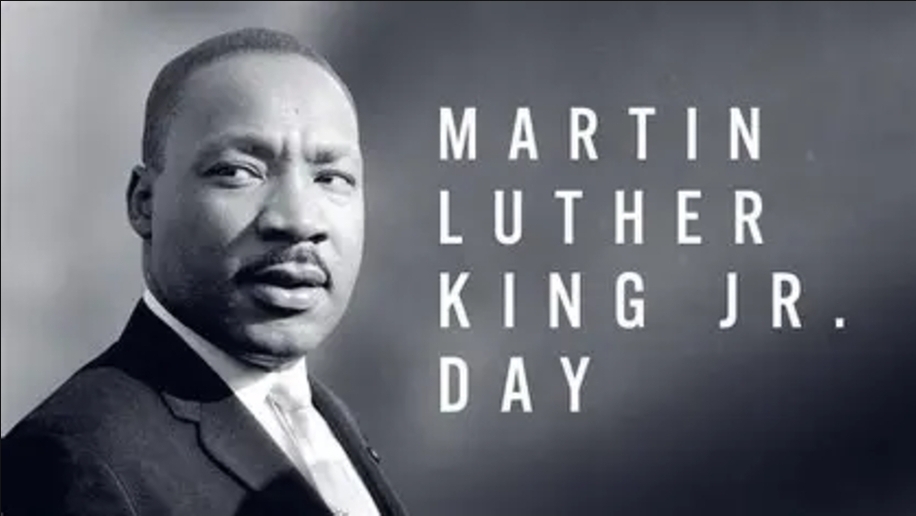
As the world celebrates Dr. Martin Luther King Jr., Africa should not treat his legacy as foreign ceremony. King belongs to the moral library of all peoples who have suffered domination, humiliation, and state sponsored fear. His struggle was American in location, but universal in meaning. He fought the machinery that turns a citizen into a suspect, the system that trains the oppressed to doubt themselves, and the leadership reflex that mistakes force for authority.
King gave the world a sentence that reads like a continental constitution for human solidarity: “We are caught in an inescapable network of mutuality, tied in a single garment of destiny. Whatever affects one directly, affects all indirectly.” That statement is not poetry alone. It is governance science. It means Africa cannot heal through isolated national pride while the continent bleeds through poverty, manipulated conflict, and leadership that rules through intimidation. It means no African leader can claim success while citizens live with fear, hunger, and abandonment, because a nation is only as dignified as its most vulnerable lives.
In Psychoafricalysis, a framework I use to examine African human behavior and leadership patterns, we recognize that many African states still carry what can be called a colonized psyche. This is not an insult to our people or our leaders. It is a careful diagnosis of a repeated mindset shaped by history and prolonged exposure to foreign domination. A colonized psyche shows itself when leaders feel the need to seek approval from outside powers before they feel legitimate at home, when they copy foreign governance models that do not match African communal realities, and when they rely on police and military force to command citizens instead of earning public trust through performance and fairness.
Dr. King’s message offers a powerful correction. He reminds African leadership that dignity is not imported from abroad and legitimacy is not produced through intimidation. True authority is earned by conscience, sustained by justice, and protected by truth.
King’s Moral Authority and the Crisis of African Power
Many African leaders are trapped in a performance of power. They announce strength while governing from insecurity. They surround themselves with guards, convoys, and intimidation, not because the people are enemies, but because the leader fears accountability. The leader who cannot tolerate criticism often becomes the leader who criminalizes dissent. The state then becomes a nervous system, always reacting, always threatening, always escalating. Citizens learn to whisper. Institutions learn to kneel. The nation learns to pretend.
King gives African leadership a direct corrective that cuts through all propaganda: “Power without love is reckless and abusive, and love without power is sentimental and anemic.” This quote belongs in every presidential office and every parliament chamber on the continent because it explains why so many governments collapse into cruelty. Force without conscience becomes oppression. Compassion without institutional strength becomes weakness. A mature leader must build lawful power that serves the people, and moral love that restrains the ego.
In Africa today, too many regimes rely on fear because fear is cheaper than trust. Trust requires honesty. Trust requires competent institutions. Trust requires the leader to accept limits. Fear requires only weapons, propaganda, and a willingness to punish. King refused to build a future on fear, even when hate surrounded him. His authority was not manufactured by brutality. It was built by moral discipline. African leadership must decide whether it wants to be feared for a season or respected across generations.
Defining Indigenous Wisdom
Indigenous wisdom is not a romantic return to an imagined past. It is the continent’s original social technology, developed through centuries of communal life, moral accountability, and survival under scarcity. It is a system that understood something modern governance often forgets: societies do not hold together through weapons alone. They hold together through meaning, belonging, mutual obligation, and shared moral expectations.
King provides a sentence that aligns naturally with African communal psychology: “All life is interrelated.” That single line speaks to Ubuntu and its deeper psychology, the truth that the self is incomplete without the community, and that the community is endangered when leadership becomes predatory.
Indigenous wisdom centers collective identity. It prioritizes the we, not only the I. It defines security as social trust, community vigilance, and neighborly responsibility, not permanent militarization of public life. It defines leadership as elder servant responsibility, where power is a sacred trust, not a private treasure. In many African societies, leadership historically came with expectations, and failure could bring shame, removal, or spiritual consequences. Modern leadership has too often replaced that accountability with immunity.
When African leaders abandon indigenous wisdom, they often adopt the colonial logic of control. Citizens become subjects. Protest becomes treason. Opposition becomes criminality. The state becomes a policing project rather than a communal home. King’s moral framework challenges this drift by reminding Africa that governance is not simply command. Governance is care, restraint, and responsibility.
The Crisis of the Inferiority Complex
One of the most painful African wounds is the inferiority complex. It shows itself when leaders treat foreign approval as a medal and treat local citizens as disposable. It shows itself when policies are designed for external applause rather than internal welfare. It shows itself when African elites celebrate foreign visitors while local hospitals collapse. It shows itself when the continent exports raw wealth and imports humiliation.
King warned that oppression survives when the oppressed accept a bent posture: “No man can ride your back unless it is bent.” That sentence is a psychological map. It explains why a people can possess resources yet remain dominated, why a continent can hold elections yet remain in fear, and why citizens can be numerically powerful yet politically powerless. When Africans doubt their worth, they tolerate exploitation. When Africans doubt their identity, they imitate systems that do not fit. When Africans doubt their own brilliance, they treat their own brothers and sisters as enemies.
This is why internal divisions become so deadly. Ethnic hatred. religious hostility. regional suspicion. political cultism. These fractures are often amplified by elites because a divided people cannot unify around accountability. A people at war with themselves cannot confront corruption with one voice. King’s lesson is not sentimental unity. It is strategic moral unity. It is the decision to stop bending to psychological manipulation and stand upright in dignity.
Culturally Oriented Education as Mental Liberation
Africa cannot fully free itself without freeing its educational imagination. Many African schools still teach a subtle message: your highest achievement is to resemble someone else. This produces graduates who can quote external theories yet cannot apply knowledge to local realities. It produces professionals who can pass exams yet cannot rebuild institutions. It produces leaders who can speak in international rooms yet cannot serve citizens at home.
King’s words should be placed at the center of Africa’s educational reform: “Education must enable one to sift and weigh evidence, to discern the true from the false, the real from the unreal, and the facts from the fiction.” That is not only academic instruction. It is anti propaganda training. It is an antidote to manipulation. It teaches citizens how to recognize lies, how to resist tribal incitement, and how to expose leadership deception.
King also demanded moral formation, not cleverness alone: “Intelligence plus character, that is the goal of true education.” Africa suffers today not because it lacks intelligent people, but because too many institutions reward intelligence without conscience. That combination produces sophisticated corruption. It produces brilliant looting. It produces educated cruelty. A culturally oriented African education must build competence and integrity together. It must teach Africa’s history, Africa’s psychological strengths, Africa’s communal ethics, and Africa’s responsibility to future generations.
In Psychoafricalysis, culturally oriented education is mental sovereignty. It is the restoration of African self belief. It is the training of young minds to value community, reject corruption, and see leadership as service. Until that happens, Africa will keep producing leaders who can manage budgets but cannot manage their own appetites.
Economic Corruption and the Personalized Resource
Economic corruption in Africa is not only theft of money. It is theft of time. It is theft of possibility. It is theft of the future. When leaders convert public wealth into private empires, they are not merely committing financial misconduct. They are inflicting psychological violence on the next generation. They are training youth to believe that morality is weakness and that success belongs only to the shameless.
King warned with moral clarity that societies die spiritually when they fund force and neglect human uplift: “A nation that continues year after year to spend more money on military defense than on programs of social uplift is approaching spiritual death.” This sentence is brutally relevant to African budgets where security spending rises while schools decay, hospitals collapse, and youth unemployment spreads like a slow national sickness.
The tragedy deepens when militarism becomes a shield for greed. In too many places, police and soldiers are deployed not to protect the people, but to protect the elite from the people. When a hungry citizen protests, the state responds with batons. When a journalist reports, the state responds with threats. When youth demand jobs, the state responds with intimidation. This is governance as occupation. It is leadership as fear management. King would recognize this pattern immediately, because it resembles the system he confronted, and he would insist that Africa must not normalize it.
The Triple Evils and the African Crisis
King’s famous diagnosis of the triple evils remains a mirror for Africa, even as the forms evolve. Africa’s triple crisis often shows itself as poverty, internal division, and militarized governance. Poverty persists in resource rich states. Internal division is manipulated into endless conflict. Militarized governance becomes the shortcut for leaders who cannot build legitimacy through performance and trust.
King’s moral logic destroys the fantasy that violence can build peace: “Darkness cannot drive out darkness: only light can do that. Hate cannot drive out hate: only love can do that.” This is not soft language. It is political realism. Brutality breeds resentment. Repression breeds rebellion. Violence breeds trauma. Trauma breeds social collapse.
In Psychoafricalysis, we call this internalized warfare. A continent bleeds itself while elites benefit. Citizens are turned into enemies of each other, so they do not unite against corruption. Ethnic identity becomes a weapon. Religious affiliation becomes a battlefield. Political parties become tribes. Meanwhile, the real enemy often sits comfortably in elite offices, feeding on division. King’s lesson here is an African lesson too: if the people can be united by dignity, they can defeat manipulation. If the people remain divided by engineered hatred, they will continue to lose their future.
Comparison: The Choice Facing African Leaders
Issue The Failed Force Model The MLK /Psychoafricalytic Model
Governance philosophy Rule by fear and propaganda Rule by conscience and public accountability
Security approach Militarization of daily life Social trust with community rooted protection
Leadership identity Big man dominance Elder servant stewardship and restraint
Public resources State wealth as private inheritance Public wealth as sacred trust for development
Education External validation and imitation Culturally grounded mental liberation
Citizen voice Dissent treated as threat Dissent treated as democratic feedback
Social cohesion Division as political tool Collective dignity as national glue
Legacy Ego monuments Institutions that outlive the leader
King’s timeline pressure is clear and should confront every leader today: “The time is always right to do what is right.” There is no perfect season to start governing ethically. There is only the decision to stop postponing justice.
A Kingian Message to African Presidents and Governors
African leadership must understand that legitimacy is not a speech. It is a lived moral record. A leader’s greatness is not measured by titles, convoys, or international photo opportunities. It is measured by whether citizens can live without fear, work without humiliation, and age without abandonment.
King’s final warning belongs to every African public servant who has learned silence as survival and corruption as normal: “Our lives begin to end the day we become silent about things that matter.” Silence is not neutrality. Silence is participation in decay. When leaders see suffering and remain unmoved, they teach the nation that pain is ordinary. When institutions see corruption and remain quiet, they teach the youth that dishonor is profitable. When citizens see brutality and accept it, they teach the state that cruelty is sustainable.
To honor Dr. King in Africa is not to quote him once a year. It is to build the kind of governance he demanded: justice anchored in dignity, power disciplined by love, education grounded in truth, and leadership defined by service. Africa does not lack resources. Africa does not lack intelligence. Africa does not lack cultural wisdom. Africa lacks consistent ethical leadership and the institutional courage to restrain the predatory ego.
King’s life offers Africa a simple but painful lesson. Where fear governs, development becomes performance. Where conscience governs, a new Africa becomes possible.
About the Author
Prof. John Egbeazien Oshodi is an American psychologist, an expert in policing and corrections, and an educator with expertise in forensic, legal, clinical, and cross-cultural psychology, including public ethical policy. A native of Uromi, Edo State, Nigeria, and son of a 37-year veteran of the Nigeria Police Force, he has long worked at the intersection of psychology, justice, and governance. In 2011, he helped introduce advanced forensic psychology to Nigeria through the National Universities Commission and Nasarawa State University, where he served as Associate Professor of Psychology.
He teaches in the Doctorate in Clinical and School Psychology at Nova Southeastern University; the Doctorate Clinical Psychology, BS Psychology, and BS Tempo Criminal Justice programs at Walden University; and lectures virtually in Management and Leadership Studies at Weldios University and ISCOM University. He is also the President and Chief Psychologist at the Oshodi Foundation, Center for Psychological and Forensic Services, United States.
Prof. Oshodi is a Black Republican in the United States but belongs to no political party in Nigeria—his work is guided solely by justice, good governance, democracy, and Africa’s development. He is the founder of Psychoafricalysis (Psychoafricalytic Psychology), a culturally grounded framework that integrates African sociocultural realities, historical awareness, and future-oriented identity. He has authored more than 500 articles, multiple books, and numerous peer-reviewed works on Africentric psychology, higher education reform, forensic and correctional psychology, African democracy, and decolonized models of clinical and community engagement.



The Pragmatism of Principle: Redefining Loyalty in an Age of Change -By Florence Ozor
While I do not endorse political nomadism, one must acknowledge that strategic realignment can be expedient. Take Peter Obi: after...


Lessons for Today: MLK for Continental African Leadership – A Psychoafricalytic Mirror for Power, Dignity, and Continental Renewal -By Psychologist John Egbeazien Oshodi
When African leaders abandon indigenous wisdom, they often adopt the colonial logic of control. Citizens become subjects. Protest becomes treason....


The Poverty Crisis: A Global Challenge to Human Dignity and Development -By Jennifer Joab
The poverty crisis is not just an economic problem but a profound human tragedy that affects the social, political, and...

Good Governance as a Tool for National Development -By Blessing Matthew
Good governance prioritizes the interests and welfare of the people above personal or sectional interests. It encourages transparency, accountability, rule...


Role of Youths in Nation Building -By Kusompwa Lazarus Motiyedi
It is true that today’s youth did not experience the horrors of the Nigerian Civil War or the severe economic...