
Economic Issues
Loan Sharks In Nigeria: To Be Or Not To Be? -By Seun Elere
As bad as all these may look, these companies are also contributing the Nigerian economy. Hundreds of graduates and youths are employed by these companies and the fact that they carried out their transactions through the usual banks means that they also pay tax. They are also helping to provide needed short term capital and access to credit to many businesses and Nigerians alike.

A Loan Shark has three (3) major characteristics: s/he gives loans at extremely high interest; s/he has strict terms of collection upon failure; and operates outside the law. They use blackmail (emotional and physical) as well as threats to enforce repayment. Loan sharks are often referred to as predatory lenders – a term interpreted to mean lending practices that impose unfair, deceptive, or abusive loan terms on borrowers. Predatory lenders take advantage of borrower’s circumstances or ignorance. They offer you loans with unimaginable interest rates, unrealistic repayment period and a repayment term that sets you up to default from the get-go.
Predatory lending assume the form of a payday loan but most of them have a tenure of 7, 8 and 14 days. Another form of predatory lending operational in Nigeria is the auto title loan. These loan companies (e.g Cashdrive) give loan to car owners and use the car as collateral for the loan. Needless to say the loan sum are usually far lesser than the value of the car.
Loan sharks have succeeded in sending many into debt trap. They thrive in societies where access to credit is restricted or impaired and demand for credit is high. Unfortunately, this affects both educated and less educated Nigerians. Education or not, one must eat, right? There are bills to be paid, food prices are soaring, ever increasing inflation rates and the resultant extremely high cost of living in Nigeria have all contributed to the misfortune of Nigerians and of course successes recorded by the loan sharks. Those who patronize these lenders are not gullible, they are only made vulnerable by the extreme economic condition in the country. Of course, only someone without a problem needs to be appeased to say Amen to the priest’s prayers.
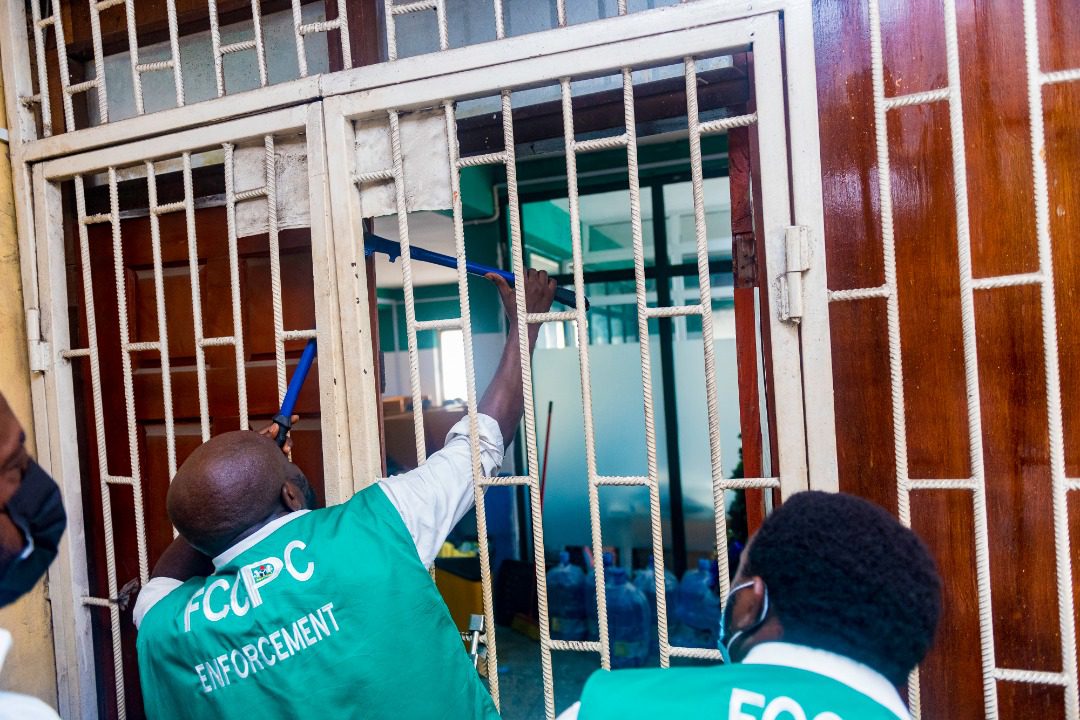
Unfortunately, these guys have send many people to their early graves. As far back as 2017, we have started reading about several cases of suicide that were mostly linked to the operation of these loan sharks. I remember a particular story of a woman who had even jumped into the lagoon but was rescued by divers. She narrated that she was indebted to two microfinance banks (N60,000 and N90,000) and they were troubling her life so she decided to terminate her life. A Channel TV report of August 2, 2020 on the story of a man who attempted suicide because he couldn’t repay a loan he took from a microfinance bank (N390,000 six month loan with 36% interest rate) is another pointer to the grievous impact of loan shark on mental health. There has also been reported surge in number of suicides and suicide attempts on the third mainland bridge in Lagos. We probably have far too many cases that were not reported. Also, a few of us must have received text messages labeling some persons we know (at times those we do not even know) as fraudsters just because they defaulted. These incidents probably prompted the Federal Competition and Consumer Protection Commission (FCCPC) to set up a task force, albeit belatedly, to investigate some of the allegations of wrong doings and exploitation against the so called loan sharks. It is very interesting to note that we barely saw any open condemnation or remarks by the apex bank before the intervention of the FCCPC.
As bad as all these may look, these companies are also contributing the Nigerian economy. Hundreds of graduates and youths are employed by these companies and the fact that they carried out their transactions through the usual banks means that they also pay tax. They are also helping to provide needed short term capital and access to credit to many businesses and Nigerians alike.
In 2021, fascinated by the operation of these loan sharks and the general outcry that greets their mode of operation, I conducted a quick study to gain full insights into why, despite all these casualties and outcry, the loan sharks thrive in Nigeria. I disseminated questionnaire and encouraged anonymity to get factual responses whilst protecting the identity of the respondents. I also conducted analysis of a few of these companies I personally interacted with. The following are the top finding, many are not new and merely confirm our suspicion or reinforced them:
a. Restricted access to credit or complete lack of it is the main fertile ground breeding the loan sharks. I found that over 50% of my respondents have personally patronized a loan shark while over 47% know someone that has patronized them. Over 95% found it very easy to access fund through the loan sharks and over 40% of them had at least 2 of the loan apps they were owing at the time of the interview. Despite the fact that over 60% reported ill treatment by the loan sharks, patronage is still very high. Interestingly, over 45% of the respondents have applied for loan in at least 1 commercial Bank and over 63% of them got their application denied mostly due to the fact that they were not salary earner. A few of them mentioned credit report and documentation. Until we boost access to credit for all, it may be preposterous to think we can end loan shark in Nigeria. Banks, that used to extend their quick credit services to all customer, now restrict them to salaried customers. Others not only restrict it to salaried customers but civil servants or employees of a pre-profiled organizations. Since one of the objectives of the BVN regime is to mitigate default, it might be beneficial to review our credit restrictions.
b. Regulate them, don’t ban them: 75% of the respondents want the loan firms regulated by the Federal Government but not banned. I was mildly shocked by this myself but on a second thought, these firms provide quick access to credit and provide employment for Nigerians. Nigeria and Nigerians would benefit even more if this sector is properly regulated, properly monitored and erring ones sanctioned to serve as detterrent to others.
c. They are not ghosts: it is deceptive to think or say that these loan firms are untraceable. They market their products, call their customers and hound defaulters using regular telecommunication networks as all of us, they operate via Android application and they use known payment platforms (like Monify, Paystack, Flutterwave, etc) and very popular banks (like Wema, Sterling, Zenith, etc) as receiving banks. Definitely, they can be traced even though there are reports that some of them are owned by non-Nigerians.
d. Many of the loan apps are owned by an entity: there are no many loan sharks but a few of them operating with several applications and in different names. Apps like Palmcredit, New credit, xcash and xcrosscash are operated by Newedge Financials while loan personal, creditall, neocash, nextcredit, found one, SoftNaira, etc are operated by a firm known as Ajax. Loan apps owned by the same firm are very similar in the way they operate and even the app dashboard will indicate this.
Many are borrowing not to live big or feed their families but are borrowing to repay loans because they could not bear the embarrassment that would ensue should they fail to repay. It is also obvious that a lender that gives you N70,000 and expects you to repay N90,000 in seven (7) days has set you up for default and it is an intentional act to keep you entrapped. There is therefore a need for thorough regulation and monitoring of the activities of these lenders. The CBN cannot claim ignorance of the existence of these companies.
Improved access to credit will naturally make these guys unpopular. A policy that restricts access to loan to civil servant or bank staff only is not only discriminatory but an indication of a government that is willing to throw its citizen to the wolfs. The CBN’s policy that allows the blacklisting of BVN of customers with non-performing loans has already taken care of the tendency to default. Easy access to credit not only by individuals but SMEs will, in no small ways, help to grow the economy. Tailor-made programs and lending platforms should be considered for all income categories. Having banks that deny non-government staff access to credit will only provide fertile ground for loan sharking in Nigeria.
In conclusion, we need to learn to be human, to be our brother’s/sister’s keeper, show affection, show love, reach out to those you feel are going through rough patches. Let us be less judgmental, less gossipy and when people reach out to us for financial help, if you do have, please give. Having a friend or family member dragged everywhere over N5,000 isn’t something that should give joy to anyone.



Singapore’s Leaders Built An Economy; Nigeria’s Keep Building Excuses -By Isaac Asabor
Singapore paired economic growth with social stability. Through the Housing Development Board, the government built large-scale public housing, providing affordable...

Tax Considerations for CFD Traders in South Africa: What Experienced Traders Should Know
What looks like a sweet profit on your platform screen can shrink fast once the tax bill hits. When you're...


Russia–India Dialogue Provides Platform for Strengthening Bilateral Entrepreneurship -By Kestér Kenn Klomegâh
The Dialogue was organized by the Indian Business Alliance, the Business Council for Cooperation with India, the Government of Moscow,...


The Kampala Declaration: How African Youth Can Lead Food System Transformation to Accelerate the Achievement of Zero Hunger by 2030 -By Emeka Christian Umunnakwe
If Africa is serious about achieving Zero Hunger by 2030, these perceptions must be confronted with deliberate action. Young people...


China Finances New ECOWAS Headquarters -By Kestér Kenn Klomegâh
In accordance with the agreement concluded between the ECOWAS and the Government of China, the building by the Shanghai Construction...