
Forgotten Dairies
Lukarawa: A New Terror Group or an Existing Terror Group in Disguise -By Tope Akinyetun
Additional research is required to underscore the group’s objectives, membership strength, structure and hierarchy, leadership, motivating factors, and operations. Therefore, it behooves scholars of conflict studies to unravel this puzzle by treating this group as a security threat and proffering solutions to address the impasse in the country and prevent the further proliferation of armed groups in the group.

Background
It is aphoristic that violence is ubiquitous in Nigeria. This is evidenced by the spread of violent activity spearheaded by various armed non-state actors in Nigeria. When viewed in terms of geopolitical zones, Nigeria is divided into six zones: southwest, south-south, south-east, north-west, north-east, and north-central. Each of these zones is currently overrun by different armed groups and faces insecurity challenges. While the southwest is challenged by the non-violent secessionist agenda of numerous groups under the aegis of the Alliance for Yoruba Democratic Movement (AYDM), it is equally plagued by the violent activities of armed herdsmen, kidnapping, cybercrime, and armed robbery. The south-south is a hotspot for violence because of the activities of various militant groups that demand environmental justice and resource control. Although the government intervened by designing and implementing the Amnesty programme aimed at rehabilitating the affected persons through disarmament, demobilization, and reintegration, the programme is challenged by politicization, corruption allegations, and insincerity. As a result, agitation and spasms of violence have been renewed.
The southeast region is presently one of the most militarized areas in the country because of the activities of the Indigenous People of Biafra (IPOB) and the Eastern Security Network (ESN). While the activities of the group are targeted at secession and demands for the Republic of Biafra, it has recently adopted violent means in its approach, leading to the destruction of property and loss of lives and the restriction of movements on Mondays, enforcing a self-imposed sit-at-home. As a result, the federal government labeled it a terrorist organization. Meanwhile, the North East is the epicenter of insurgency due to the activities of the Boko Haram sect which has reigned in the region since the early 2010s and spread to neighbouring countries such as Chad, Niger and Cameroon, thus earning the status of a transnational insurgent group. The sect is known for its use of extreme violence, including kidnapping, arson, and bombing. The group has increased the humanitarian needs of the region and the incidence of displacement and hunger. In the northwest, armed bandits have taken over many communities, forming a parallel government, demanding taxes from residents, and constituting informal governance. These groups have adopted vicious means of asserting their dominance, including kidnapping, arson, cattle rustling, sporadic shooting, and maiming.
On the other hand, the northcentral is plagued by religious intolerance and the activities of armed herdsmen, who engage in recurring battles with farmers over the encroachment of farmland. In turn, reprisal attacks have led to cattle rustling, mass killing, and incessant attacks. However, the inability of the Nigerian government to secure its territories not only undermines national security but also provides impetus for more armed groups to rise up, thus intensifying the country’s fragility. It is against this backdrop that the emergence of the ‘Lakurawas’ calls for serious attention. The objective here is to analyze this emergence to determine whether the group is a new terror cell or an existing cell in disguise. Although little is known about this group, available information from secondary sources is used to characterize it before proceeding to compare it to known armed groups in the country.
The Lakurawas: What is Known?
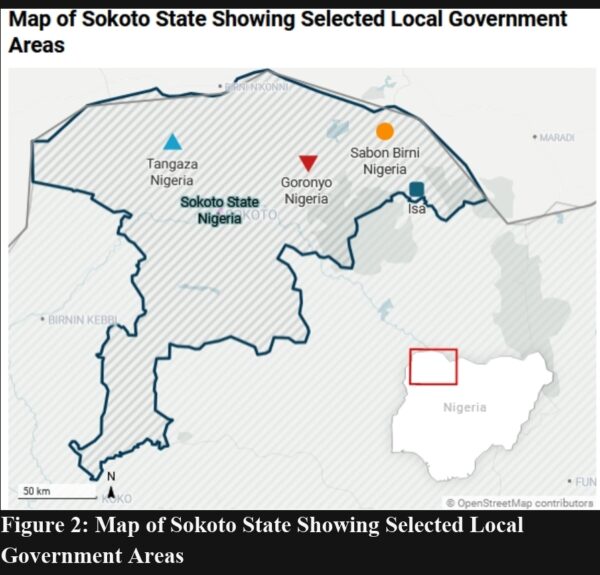
The Deputy Governor of Sokoto State, Idris Gobir recently raised concerns about the emergence of a new terror group in the state known as ‘Lakurawas.’ He claimed that the group is faith-based and possesses sophisticated weapons perpetuating criminal activities in five local governments of the state. Sokoto state is one of the four states affected by violence in the North West region. According to the Armed Conflict Location & Event Data (ACLED), 427 events across 157 locations were recorded in Sokoto State between January 1, 2020, and November 1, 2024. These events involving violence against civilians, battles and explosions/remote violence were recorded in different parts of the state, especially Gatawa, Sabon Birni, Goronyo and Isa (see Figures 1 and 2) . This underscores the prevalence of violence by armed non-state actors in the state.
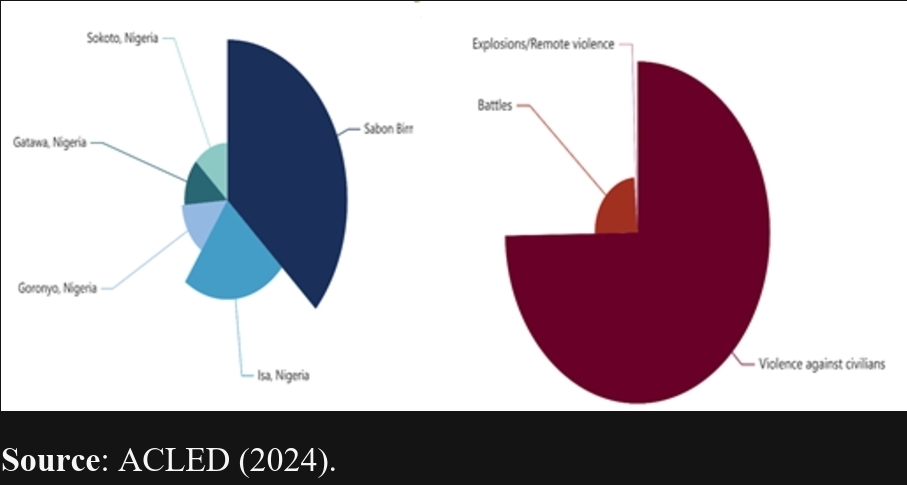
Figure 1: Incidence of Violence by Non-State Actors in Sokoto State
Although Sokoto is enmeshed in an array of incidents, including communal clashes, gunmen attacks, and banditry, banditry constitutes the most severe security concern, leading to kidnapping, death, and injury. These activities have led to serious humanitarian crises and the displacement of thousands. Banditry in the state is attributable to socioeconomic and sociopolitical vulnerabilities such as bad governance, poverty, illiteracy, youth unemployment, weak security apparatus, and ungoverned spaces. This necessitates the urgency in identifying the origin and operations of the Lakurawa to ascertain the best security measures to address it before it festers like other armed groups in the country.
The Lakurawa is believed to hold sway in Tangaza Local Government Area of Sokoto State away from areas such as Isa, Goronyo, and Sabon Birni popularly known to be under the control of bandits indicating that the area may be under a new group trying to hijack a domain for itself. Moreover, given the distance of the group’s location from the other groups, one may be forced to agree that it is a new group (see Figure 2).
Recent reports indicate that the group was a foreign religious group that migrated from the Niger Republic, Mali, and Libya. The group is leveraging the prevalent poverty and unemployment in the state to offer cash incentives of N1,000,000 to youth for membership. The recent Multidimensional Poverty Index survey by the Nigerian government shows that Sokoto State is ranked among the poorest states at a rate of 5.8 million (i.e. 90.6%) of its 6.4 million population deemed multidimensionally poor with a 14.5% unemployment and 19.2% underemployment rate. This explains the group’s tactic of offering money for membership, especially to young people who are vulnerable to recruitment by terror groups, in exchange for making a living. This is however troubling for a country with a youth bulge such as Nigeria. The group, believed to be residing in the forest, allegedly enforces taxes on community members and engages in burgling and robbery. It is also believed that the group possesses arms including drones to monitor security operatives.
Salman notes that the group has been in existence for some years claiming to be fighting against bandits and criminals in the region. This viewpoint is alluded to by Brujine and Gehrling that upon the group’s migration from the Republic of Niger in 2018, it was welcomed for its stance against criminality and the protection it provided against bandits until the relationship severed due to disagreement over the Islamic State in Greater Sahara (ISGS) governance style. Salman furthers that the group is armed and seeks to impose its religious ethos on residents of the community. The group is said to be currently expanding from Tangaza to other local government areas such as Gudu, Illela and Biji.
Lakurawa is the Hausa translation of ‘the recruits’ in French. Record from the literature shows that Tangaza traditional rulers invited the group from the Niger Republic to provide protection against bandits from Zamfara State. As a result, an estimated 200 jihadis reportedly arrived at the local governments of Gudu and Tangaza in Sokoto from Niger. The militants refused to be addressed as Boko Haram but rather mujahideen, al-Qa`ida, and Ansaru. After a while, the group began to exert its influence and impose harsh penalties on Muslims guilty of religious infringement, including dancing. They also imposed taxes on pastoralists and community members, and launched attacks on local security forces. The group’s harassment of Fulani herders forced the latter to arm themselves with others, turning to banditry. After the experiment failed, the community leader sought to sack Lakurawa without success. The membership of the group is believed to consist of members of the Jama’at Nasr al-Islam wal-Muslimin (JNIM) and Ansaru groups as eye witnesses describe them as having the physical characteristics of Arabs. The group’s entry in Nigeria, in addition to exposing the country’s porous borders, marked the first attempt by Sahelian jihadist groups to locate the operations base in Nigeria. However, the group became active again in Sokoto in 2022 indicating that it has recruited some of its kinsmen from the Tolobe pastoralists in the northwest region. ,
Discussion and Conclusion
From the foregoing, Lakuwara does not appear to be a new group. Having traced its existence and incursion into Nigeria to 2018, it can be described as a armed militant group in the country. However, one may opine that the group is not well known compared to other dominant groups, such as the Boko Haram, ISIS-West Africa (ISWA), and Ansaru. This does not undermine the group’s ability to foment terror. The group’s access to sophisticated weapons, capability for violence, and recruitment of young people using cash is a pointer to the group’s level of organization and future plans. That the group has been able to stay under the radar since 2018, with little attention paid to it in the literature until the recent address by the Sokoto state government speaks to its structuring. Moreover, given the group’s affiliations with Ansaru, ISGS, and JNIM, it is safe to assert that it is not a new group, yet it is not one of these groups. The ability to draw members from these different groups indicates that they share deep affiliations with them, but it is different. In addition, the fact that members of the group are described as Arabs from the Niger Republic is further proof that the group is not of Nigerian origin. Its affinity with Niger is also evidenced in the group’s name translated from the French word ‘les recrues’ which means ‘the recruit’, and considering that Niger is a francophone country, this makes sense. Furthermore, the group reportedly rejected the label Boko Haram, but rather claimed it has connections with the al-Qaeda in the Islamic Maghreb (AQIM). It however chose to be referred to as mujahideen, which emphasizes on foreign connections. Mujahideen describes a group of Muslim practitioners who fight Jihad on behalf of religion or God. The term is affiliated with jihad wars in Afghanistan, Iran, Iraq, Cyprus and the Arab Spring. This explains why the group was described by Deputy Governor Gobir as a “faith-based and idealistic group”. By implication, the group cannot be associated with either Boko Haram or banditry.
While Boko Haram has been described as a religious fundamentalist group, it has never claimed to be a Mujahideen, and the group itself rejected the Boko Haram label. Furthermore, the group’s penchant for punishing religious infractions confirmed its religious inclination. Moreover, bandit groups in Nigeria are not associated with religious extremism; rather, the term is used to refer to an array of economic crimes, such as kidnapping, illegal mining, robbery, and assault committed by faceless groups. To this end, Lakuwara’s nomenclature indicates that it has foreign characteristics and is distinct from previously known groups in Nigeria. Although the group appears to operate as a bandit, its actions are not consistent with banditry, as it has played both sides. At inception, the group was responsible for protecting the people of Northern Sokoto from marauders and bandits from Zamfara before recent reports of the group’s involvement in robbery and extortion. Hence, while the group may not have started as a bandit group, it is unclear what its present and future orientations are. Finally, the group represents the Jihadi expansion in Nigeria, indicating that it is not an indigenous group. However, since it interacts with other groups in the region and because of its membership mix from the existing groups in the country, the group may have changed tactics and shifted focus, moving from a religious fundamental sect seeking to entrench jihadism in Nigeria to promote economic interests.
Given the above discussion, it is clear that little is known about the Lakuwara group beyond how it came into the country, where it came from, and some of the groups it was affiliated with. Additional research is required to underscore the group’s objectives, membership strength, structure and hierarchy, leadership, motivating factors, and operations. Therefore, it behooves scholars of conflict studies to unravel this puzzle by treating this group as a security threat and proffering solutions to address the impasse in the country and prevent the further proliferation of armed groups in the group.
In conclusion, while the group has operated in the country since 2018, the recent address by the Deputy Governor of Sokoto State calls attention to the group’s existence and sophistication, highlighting its ability to promote terror and inflame the volatile security situation in the country. If the activities of the Boko Haram sect in the North East and bandits in the North West are anything to go by, the Lakurawa, if left unattended, may not spread to other states in the region, if not the entire region. This calls for a decisive response from both the state and federal government to nip the situation in the bud before it festers. This requires leveraging community policing by recruiting community members to provide information about the group and to address the security lacuna in the region. In addition, it is imperative that attention be paid to the sociocultural, sociopolitical, and socioeconomic conditions, giving impetus to the proliferation of armed groups in the region. Socioculturally, the government must respond to perverted religious teachings by leveraging civil society and renowned clerics to address fallacious ones. Sociopolitical factors such as bad governance, porous borders, and ungoverned spaces that allow for the free reign of terror groups must be addressed practically. Socioeconomic conditions such as poverty, unemployment, low human development index, and inequality allowing for the easy recruitment of young people by terror groups must be reversed through empowerment and skill development programs, capacity building, social protection, and reorientation.


Every Night We Pray to Survive: Voices from Insecure Communities -By Rinret istifanus
As the nation debates policies and strategies, these voices remind us that insecurity is not just a headline it is...

The Cost of Building: Reflections from Inside Northern Nigerian Governance -By Naufal Ahmad
We need a new ethic of engagement. I’m not saying don’t question leaders. I’ve been an internal critic for most...


Genotype Confirmation: Why It Must Be Included As Part Of The Elements Of Marriage -By Tajudeen Abdulrauf Dasuki
Sickle cell is not a mere disease , that we count as minor issue, it is only those have it,...

Between The Palace And The Police: Where Does Justice For Don Pedro Obaseki Lie? -By Isaac Asabor
Justice cannot lie in fear. It cannot lie in mobs. It cannot lie in silence. Justice lies in a firm...

“I Will Tell Trump For You”: Nigeria’s Age-Old Habit Of Outsourcing Accountability -By Isaac Asabor
The problem is that Nigeria’s “big brother” is rarely in a position to intervene meaningfully. Tweets, speeches, and public condemnation...