
Article of Faith
Matthew, Hyacinth, and Bianca: A Sacrilegious Trinity of Deniers -By Vitus Ozoke, PhD
If genocide must wait until the elite lose their heads, then Nigeria is being governed by mad men in suits and skirts. If extermination only exists when the rich are touched, then justice is already dead. If truth needs permission before it may speak, then Christianity in power has lost its soul. And when future historians ask, “Where were the Christian leaders?” the answer will be simple: They were busy protecting political careers, while congregants buried parents and children.

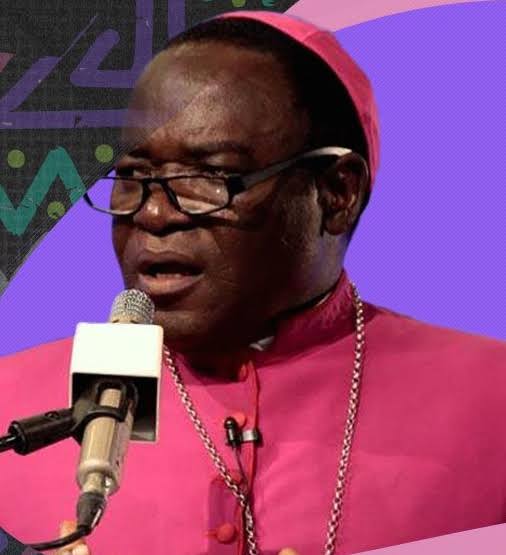
One of the earliest warning signs of mass atrocity is not violence itself, but the refusal by those in authority to name it accurately. In Nigeria, thousands of civilians – many of them Christians in the Middle Belt and northern regions – have been killed or displaced over the last decade. Yet, some influential Christian elites within government and religious institutions have either directly dismissed claims that Christians are facing systematic or genocidal violence or retweeted the government’s official position that denies such claims. These denials deserve international attention, not because disagreement is unusual in conflict analysis, but because silence from power is never neutral.
When influential Nigerian Christians deny that their fellow Christians are facing genocidal violence in parts of Nigeria, the question should not only be whether they are wrong, but why such denial is possible at all. The trinity Christian genocide deniers – Governor Hyacinth Alia of Benue State, Bishop Matthew Hassan Kukah of Sokoto Diocese, and Minister of State for Foreign Affairs Bianca Ojukwu – occupy positions that give them access to reports, intelligence briefings, international contacts, and firsthand information well beyond what the average citizen possesses. That makes their dismissals not just personal opinions but powerful interventions in public understanding. When these leaders speak, their words shape what is considered believable – and what is quietly erased.
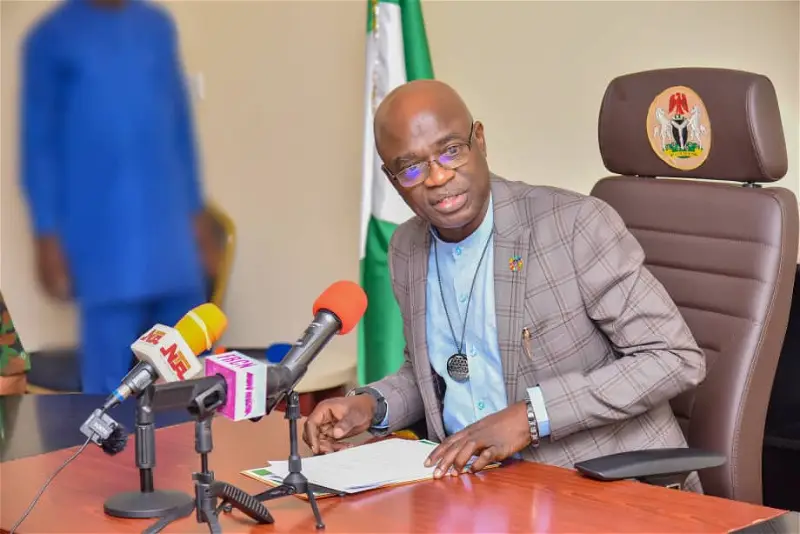
This trinity of deniers may be Christians by confession. But in their denials of Christian genocide, they speak not as shepherds or witnesses – they speak as insulated elites. And insulation has a way of convincing people that a fire in the village is merely smoke in the distance. The question, therefore, becomes, what explains their refusal to name what so many poor Christians in Nigeria experience as organized destruction? Is it semantics? Is it politics? Is it class? Is it cowardice? Or is it simply comfort and convenience?
One explanation is that genocide is often treated as a legal term rather than a moral description. Public officials may resist the term because of its international implications: it entails legal obligations, diplomatic consequences, and reputational damage to the state. To acknowledge it is to invite pressure from foreign governments, international bodies, and human rights organizations. Governments, therefore, often prefer softer language – “banditry,” “farmer-herder conflict,” “communal violence,” or “insecurity.” These terms may capture fragments of reality, but they also obscure patterns, intent, and targeting. In this sense, denial may be less about ignorance and more about institutional self-preservation.
Genocide is not just a legal word. It is a moral alarm bell. And when influential people argue endlessly over whether a slaughter qualifies under “Article II of the Genocide Convention,” while villages are burned and congregations wiped out, language itself becomes an accomplice. These denials rest on technical gymnastics: “It’s not genocide, it’s communal conflict.” “It’s not religious, it’s economic.” “It’s not extermination, it’s insecurity.” “It’s complicated.” But complexity is not innocence. Murder does not become morally smaller because it is poorly classified. Rape does not become acceptable because the attacker had multiple motives. And extermination does not stop being extermination because politicians prefer softer words. To refuse to name evil is to launder it.
Another explanation is class distance. Violence in Nigeria is not evenly distributed. It is endured primarily by rural communities – farmers, villagers, worshippers in unprotected congregations – while urban political elites live behind guards, gates, and power, and move in heavy convoys of siren-blaring, bulletproofed motorcades. Their lived reality does not resemble that of those facing daily threats. When suffering occurs far from privilege, it becomes easier to reclassify it as “complex,” “exaggerated,” or “misrepresented.” The elite’s concern for their own physical safety also creates emotional and moral distance. Distance breeds reinterpretation; safety encourages abstraction.
There is also the problem of political risk. Acknowledging targeted violence alters alliances. It disrupts delicate ethnic and religious balances within government structures. It creates expectations for decisive action. Silence, on the other hand, costs nothing immediately. And in systems where survival depends on not angering powerful blocs, truth often becomes negotiable. Yet elite denial carries a heavy price. When leaders refuse to name systemic violence, victims lose both visibility and dignity. Language determines memory. If suffering is never clearly described, it can never be clearly addressed. Communities are left alone not only in grief but in historical erasure. But leadership exists precisely to see what the vulnerable cannot escape.
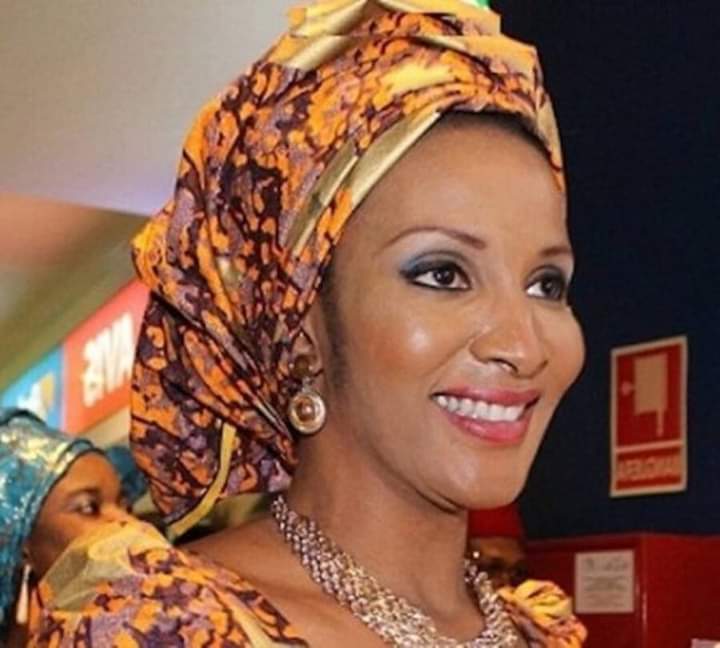
Bianca Odimegwu Ojukwu
There is an old allegory about a madman who says he will not worry about a man carrying a knife until he looks for his own head and does not find it. Until then, he continues laughing, walking, eating, unbothered. That madman is Gov. Alia of Benue. That madman is Bianca Ojukwu. That man is Bishop Matthew Hassan Kukah. Their madman mentality captures the danger of elite detachment. When leaders measure reality only by personal impact, catastrophe must become personal before it becomes real. When these high-profile Nigerian Christians in power deny what millions experience as extermination, displacement, and systematic terror, it raises a disturbing question: Do you only believe in genocide when you personally are bleeding?
To deny mass suffering because one is protected from it is not prudence; it is moral failure. Denial has consequences beyond language. It determines whether victims are seen. International funding decisions, humanitarian access, foreign policy pressures, and even asylum assessments are shaped by how a crisis is named. When leaders minimize or deny targeted violence, they affect not just national narratives but global response mechanisms. The question is not whether every act of violence meets a precise legal threshold. The question is whether public officials are willing to describe reality honestly – even when honesty carries political cost. History judges not only perpetrators of violence, but also those who stood near it, saw it clearly, and renamed it into oblivion. The refusal to name suffering does not erase it. It multiplies it.
But let’s ask for the sake of clarity: Is the word Christian the same thing to the farmer in Southern Kaduna as it is to the Abuja trinity? To the woman hiding in a church at night, hoping armed men do not set it on fire, “Christian” is an identity and a risk. But to the Alia-Bianca-Kukah trinity, Christian is both brand and passport. The Christianity of those in power comes with armored cars, visas, and international dinners. The Christianity of the poor comes with funerals. So, it is not that genocide has a different definition for them. It is that human life has a different value depending on who lives it, and where they live it. To this trinity elite, the victims are not “us.” They are a background statistic. They are inconvenient ghosts interrupting careers. Genocide only becomes real when it knocks on ornamented golden gates.
In legal analysis, an admission against self-interest is considered uniquely credible because it requires an individual to acknowledge a reality that ostensibly harms their own position. At first glance, one might expect Christian leaders denying the persecution of Christians to fall into this category – an instance where the denial should be read as compelling. Yet in the case of this trinity of elite deniers, the presumption collapses because their interests are not aligned with the communities they purport to represent. Their functional identity in this context is not religious but political.
If their primary incentive is to preserve political alliances, maintain access to state power, or protect national image, then denying Christian genocide is not a statement against interest at all; it is a strategic affirmation of their true interest. The ambiguity – or rather, the reordering – of their self-interest reframes their denial not as credible evidence of the absence of genocide, but as evidence of a political calculus in which the suffering of ordinary Christians is expendable, and truth is subordinated to the imperatives of state loyalty and elite survival.
Is politics teaching these brilliant and beautiful minds to lie to themselves – and to those who rely on their words and counsel? I ask because this trinity is anything but ignorant. So, if it is not ignorance, can it be that power has taught them how to speak without truth? Admitting genocide has consequences: It angers the ruling coalition, disrupts religious “balancing”, threatens the national image, complicates diplomacy, and forces moral action. And moral action is inconvenient to systems built on silence. So, instead of confronting the burning house, they argue about whether the fire is natural gas or petrol. Instead of defending victims, they defend Nigeria’s “image.” As though a corpse cares about branding.
Why do these three walk through blood and still say there is no knife? Because they still fly business class? Leadership in the context of mass violence is not merely administrative. It is moral. The role of authority is to articulate reality, not dissolve it into euphemisms. Naming atrocity is not radical. It is the first step toward prevention. History does not remember suffering in the abstract; it remembers who refused to acknowledge it. International actors should start asking uncomfortable but necessary questions: Who benefits from denial? Who pays for silence? Who disappears when leaders soften the truth? Refusing to name violence does not reduce it. It only makes it easier to repeat.
History is littered with elites who were shocked – shocked! – to discover genocide only when it arrived at their gates. Germany. Rwanda. Bosnia. Myanmar. Armenia. In every case, there was a period when the educated, the comfortable, and the respected insisted it was “exaggeration” until it wasn’t. We should not politicize blood because when suffering becomes political currency, the victims become disposable. Their deaths are weighed not by grief, but by usefulness. If your suffering does not serve an agenda, it will be denied.
If your corpses inconvenience a narrative, they will be buried twice – once in the ground, and once in silence. And that is the final insult. To be killed and then told it never happened. To die and then be accused of exaggerating. To scream and watch well-dressed Christians in air-conditioned rooms debate whether your blood is “real enough.”
The gospel does not speak like that. Christianity does not deny suffering. Christianity names suffering. Jesus did not tell Lazarus’ sisters, “Actually, this is complicated.” He wept. The gospel does not ask victims for balance sheets. It asks shepherds to bleed with their sheep. And any Christianity that sides with power against the wounded is not Christianity. It is a political costume.
Here is my final take. If genocide must wait until the elite lose their heads, then Nigeria is being governed by mad men in suits and skirts. If extermination only exists when the rich are touched, then justice is already dead. If truth needs permission before it may speak, then Christianity in power has lost its soul. And when future historians ask, “Where were the Christian leaders?” the answer will be simple: They were busy protecting political careers, while congregants buried parents and children.
Dr. Vitus Ozoke is a lawyer, human rights activist, and public affairs analyst based in the United States. He writes on politics, governance, and the moral costs of leadership failure in Africa.



The Pragmatism of Principle: Redefining Loyalty in an Age of Change -By Florence Ozor
While I do not endorse political nomadism, one must acknowledge that strategic realignment can be expedient. Take Peter Obi: after...

Lessons for Today: MLK for Continental African Leadership – A Psychoafricalytic Mirror for Power, Dignity, and Continental Renewal -By Psychologist John Egbeazien Oshodi
When African leaders abandon indigenous wisdom, they often adopt the colonial logic of control. Citizens become subjects. Protest becomes treason....


The Poverty Crisis: A Global Challenge to Human Dignity and Development -By Jennifer Joab
The poverty crisis is not just an economic problem but a profound human tragedy that affects the social, political, and...

Good Governance as a Tool for National Development -By Blessing Matthew
Good governance prioritizes the interests and welfare of the people above personal or sectional interests. It encourages transparency, accountability, rule...


Role of Youths in Nation Building -By Kusompwa Lazarus Motiyedi
It is true that today’s youth did not experience the horrors of the Nigerian Civil War or the severe economic...